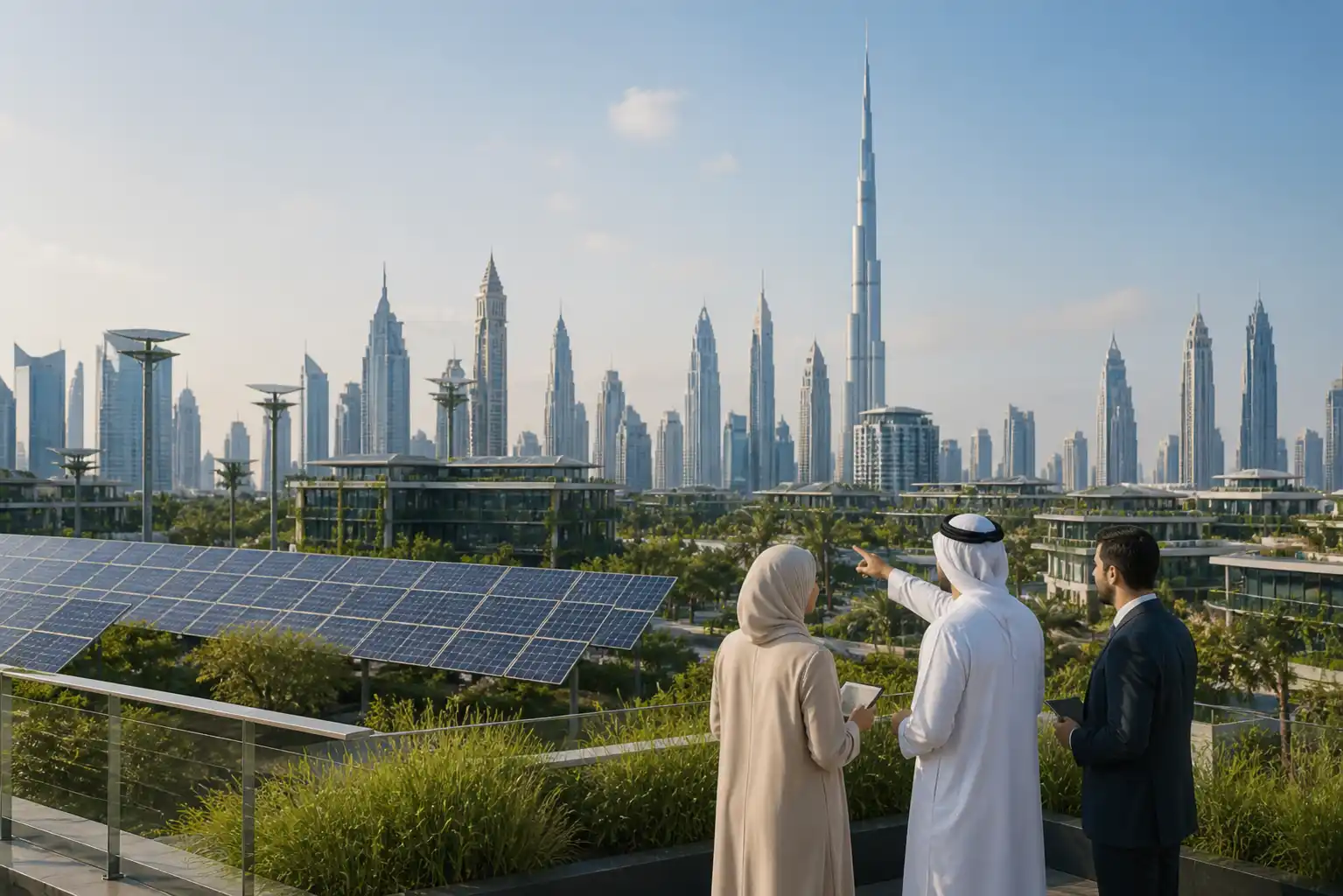
Cloud seeding is not a method for creating rain from clear skies. Instead, it attempts to modify suitable clouds by introducing particles that can influence cloud microphysics and precipitation formation. The UAE’s approach combines operational cloud-seeding flights with radar observations, satellite information, atmospheric measurements, modelling and ongoing research.
The country’s work has also expanded beyond conventional aircraft-based operations. Through the UAE Research Program for Rain Enhancement Science (UAEREP), researchers are investigating new seeding materials, unmanned aerial systems, artificial intelligence, cloud physics, numerical modelling and other technologies designed to improve understanding of rainfall enhancement.
What Is Cloud Seeding?
Cloud seeding is a form of weather modification in which particles are introduced into suitable clouds to influence the formation and growth of water droplets or ice particles.
In the UAE, cloud-seeding operations commonly involve specially equipped aircraft that release seeding materials into targeted cloud formations. The objective is to encourage processes that can increase precipitation from clouds that already contain the necessary atmospheric conditions.
The distinction is important: cloud seeding does not manufacture clouds. It cannot simply turn clear skies into rain. The World Meteorological Organization notes that weather-modification techniques operate at local to regional scales and that the energy involved in weather systems makes large-scale creation of rain systems impossible.
Why Does the UAE Use Cloud Seeding?
Water security is a significant challenge for countries with hot, dry climates. The UAE has limited naturally occurring freshwater resources, while high temperatures and evaporation increase pressure on available water.
Rainfall enhancement is therefore researched as one potential component of a broader water-security strategy rather than as a replacement for desalination, groundwater management, conservation or other water technologies.
The UAE Research Program for Rain Enhancement Science identifies water security as a major motivation for advancing rainfall-enhancement research. Its strategic plan also describes the programme as an international research platform focused on developing new technologies and scientific methodologies.
This work fits within the country’s broader investment in scientific innovation in the UAE, where research and technology are being applied to environmental and resource-management challenges.
How Dubai Cloud Seeding Operations Work
Cloud-seeding operations require much more than simply sending an aircraft into the sky.
Meteorologists first monitor atmospheric conditions using weather radar, satellite observations, weather stations and numerical forecasting systems. They look for cloud formations and atmospheric conditions that could potentially support a rainfall-enhancement operation.
When suitable clouds are identified, specially equipped aircraft can be deployed to release seeding materials in or around the targeted cloud.
The process can be broadly understood as four stages:
- Weather monitoring: Radar, satellite and atmospheric observations are used to identify developing cloud systems.
- Cloud assessment: Scientists examine cloud structure, moisture, temperature, winds and other atmospheric conditions.
- Seeding operation: Aircraft release appropriate seeding materials into selected clouds.
- Evaluation: Radar, rainfall observations, aircraft measurements and scientific models are used to study what happened after the intervention.
This scientific monitoring is essential because cloud systems are naturally variable. A cloud may change rapidly, and not every potentially suitable cloud will respond in the same way.
What Materials Are Used for Cloud Seeding?
Cloud-seeding methods vary according to cloud type and the physical process researchers are trying to influence.
In the UAE, research and operational work has included the use of hygroscopic materials designed to influence liquid-water cloud processes. The country’s research programme is also investigating new materials and methods that could improve rainfall enhancement under specific atmospheric conditions.
The UAEREP strategic plan reports research into nanotechnology-based seeding materials, including a locally manufactured core-shell sodium chloride and titanium dioxide material used in UAE cloud-seeding operations.
Research does not automatically mean that every experimental material becomes part of routine operations. New techniques need to be evaluated through laboratory experiments, modelling, field campaigns and scientific analysis.
The Role of Radar and Weather Forecasting
Accurate weather information is central to rainfall enhancement.
The UAE’s National Center of Meteorology operates weather radars, satellite services, weather stations and numerical weather-prediction capabilities. These systems provide information used to understand developing atmospheric conditions.
Radar can help meteorologists identify precipitation structures and track the development and movement of clouds. Satellite observations provide broader regional information, while ground stations contribute measurements of atmospheric and surface conditions.
The National Center of Meteorology also maintains a dedicated cloud-seeding programme and rain-enhancement infrastructure.
How Artificial Intelligence Is Changing Rain Enhancement Research
Artificial intelligence and machine learning are becoming increasingly relevant to rainfall-enhancement research because modern meteorological systems generate enormous quantities of data.
The UAE’s rain-enhancement research programme has supported AI and machine-learning models designed to identify potentially seedable clouds and forecast rainfall using satellite and radar information. The UAEREP strategic plan reports that such models can support rainfall forecasting up to several hours ahead.
AI can potentially help researchers:
- Identify cloud formations with relevant characteristics.
- Analyse large volumes of radar and satellite observations.
- Improve short-term rainfall forecasting.
- Support decisions about where and when research flights may be useful.
- Compare observations from different cloud-seeding experiments.
- Improve numerical modelling of cloud and precipitation processes.
This technology connects naturally with wider developments in artificial intelligence and intelligent systems across the UAE.
UAE Research Program for Rain Enhancement Science
The UAE Research Program for Rain Enhancement Science, commonly known as UAEREP, was launched in 2015 to support international research into rainfall enhancement.
The programme is designed to encourage scientific collaboration and develop new approaches to rain enhancement, particularly for challenging environments such as arid regions.
Its research portfolio has expanded beyond conventional cloud-seeding techniques. According to the programme’s 2025–2030 strategic plan, funded work has included new seeding materials, unmanned aerial systems, cloud-formation experiments, cloud chambers, atmospheric measurement campaigns, numerical models and AI-based forecasting tools.
The programme reported more than 1,000 hours of research flight operations and atmospheric measurements, more than 100 scientific papers and conference presentations, and engagement with researchers from dozens of countries.
New Technologies Being Tested
The UAE’s rainfall-enhancement research extends into several emerging technologies.
Unmanned Aerial Systems
Researchers are investigating unmanned aerial systems for cloud measurements, atmospheric sensing and potential future seeding applications. These systems could provide new ways to collect measurements in environments where conventional aircraft operations are difficult or expensive.
Advanced Seeding Materials
Research teams are examining how the physical and chemical properties of seeding particles influence cloud microphysics. The objective is to better understand which materials may be effective under particular cloud conditions.
Cloud Chambers
Controlled laboratory environments can help scientists study cloud formation and particle interactions without relying exclusively on unpredictable outdoor conditions.
Numerical Modelling
Computer models can simulate atmospheric processes and help researchers investigate how clouds, aerosols, temperature, humidity and precipitation interact.
AI and Machine Learning
Data-driven systems can help analyse patterns across large meteorological datasets and support improved cloud identification and forecasting.
Can Cloud Seeding Solve the UAE’s Water Scarcity Problem?
No single technology can solve water scarcity by itself.
Cloud seeding depends on naturally occurring clouds with suitable atmospheric characteristics. If those conditions do not exist, there is no cloud for the technology to modify.
The World Meteorological Organization also emphasizes that the effectiveness of weather modification depends strongly on cloud type and environmental conditions. Results from one cloud-seeding experiment cannot automatically be transferred to another region or cloud environment.
For the UAE, rainfall enhancement is therefore better understood as one element of a broader water-security system that includes desalination, groundwater management, water conservation, wastewater treatment, efficient agriculture and long-term resource planning.
Cloud Seeding and Desalination Are Different
The UAE relies heavily on desalination because natural freshwater availability is limited. Cloud seeding addresses a different part of the water system.
Desalination produces freshwater by treating seawater, while cloud seeding attempts to enhance precipitation from naturally occurring clouds.
These technologies should not be viewed as direct substitutes. Rainfall enhancement is dependent on atmospheric conditions, whereas desalination can operate independently of rainfall-producing clouds.
The practical water-security strategy is therefore likely to involve multiple sources and technologies rather than dependence on one method.
Potential Environmental Benefits
When successful under appropriate conditions, rainfall enhancement may contribute additional precipitation that can support natural water systems.
Potential benefits discussed in the context of rain enhancement include:
- Increasing rainfall from suitable clouds.
- Supporting water availability in arid environments.
- Contributing to groundwater recharge where precipitation reaches suitable catchments.
- Supporting agricultural and ecological water needs.
- Adding another tool to broader water-security planning.
However, these potential benefits should not be interpreted as guaranteed outcomes. Measuring the additional precipitation caused specifically by seeding can be scientifically difficult because natural rainfall varies considerably from one cloud system to another.
What Does the Science Say About Cloud Seeding?
Cloud seeding is an established area of atmospheric research, but its effectiveness is not identical in every environment.
The World Meteorological Organization states that there is evidence that cloud microstructure can be modified through appropriate seeding methods under suitable conditions. At the same time, it emphasizes that precipitation responses vary according to cloud type and that more research is needed to quantify when and where modification is effective.
This distinction is particularly important when discussing the UAE. The country’s research programme is not simply about claiming that cloud seeding always produces rain. A major objective is to understand the physical processes involved and identify the conditions under which rainfall enhancement can be measured reliably.
Why Measuring Effectiveness Is Difficult
Rainfall naturally varies from cloud to cloud. Wind, temperature, humidity, cloud dynamics, atmospheric aerosols and other variables can influence precipitation.
That makes it difficult to answer a simple question such as “How much extra rain did cloud seeding produce?” without carefully designed experiments.
The WMO recommends rigorous experimental design, including appropriate randomization, objective evaluation criteria, statistical analysis and physical observations.
These requirements help separate the effects of an intervention from rainfall that might have occurred naturally.
Is Cloud Seeding Safe?
Environmental and health considerations are an important part of responsible weather-modification research.
The WMO reports that published studies have not found significant impacts on human health or the environment from silver iodide and other commonly used seeding agents in past weather-modification operations. It also notes that new agents or substantially larger quantities should be evaluated for potential environmental and health effects.
This is why ongoing monitoring, scientific evaluation and transparent research remain important components of rainfall-enhancement programmes.
Cloud Seeding Is Part of a Larger UAE Sustainability Strategy
Rain enhancement should be considered alongside the UAE’s other environmental and resource initiatives.
The country is also investing in renewable energy, sustainable agriculture, water-management technologies and environmental research. Readers interested in this broader context can explore renewable energy in the UAE and renewable and non-renewable resources in the UAE.
Agricultural innovation is another relevant area because efficient food production in an arid environment requires careful management of water resources. Technologies such as controlled-environment agriculture, smart irrigation and other modern farming methods can complement broader water-security efforts.
Cloud seeding therefore forms one part of a much larger technological response to environmental constraints.
International Interest in UAE Rain Enhancement Research
The UAE’s experience has attracted international scientific interest because rainfall enhancement is particularly relevant to countries facing water stress and arid or semi-arid climates.
The UAE has used international research partnerships to study cloud physics, atmospheric processes, seeding materials and new technologies. The UAEREP strategic plan describes participation by researchers from more than 70 countries and a portfolio of funded projects developed through international collaboration.
International collaboration is valuable because cloud physics is complex and different geographic regions can produce very different atmospheric conditions.
The Future of Dubai Cloud Seeding and UAE Rain Enhancement
The future of rainfall enhancement in the UAE is likely to involve increasingly sophisticated combinations of atmospheric observations, AI, modelling, sensors and targeted field experiments.
Research priorities identified by UAEREP include optimized seeding materials, improved modelling, cloud-chamber experiments, advanced measurement systems and better understanding of cloud microphysics.
Future developments could also involve more autonomous platforms, improved real-time cloud analysis and increasingly detailed numerical simulations.
The objective is not simply to conduct more cloud-seeding flights. A major scientific goal is to understand when, where and why rainfall enhancement works and how its results can be measured accurately.
Frequently Asked Questions About Dubai Cloud Seeding
What is Dubai cloud seeding?
Dubai cloud seeding refers to rainfall-enhancement activities conducted within the UAE’s wider national rain-enhancement programme. Specially equipped aircraft can introduce seeding materials into suitable clouds to influence precipitation processes.
Does cloud seeding create rain from clear skies?
No. Cloud seeding requires suitable clouds and atmospheric conditions. It is intended to modify precipitation processes within existing clouds rather than create rain clouds from clear skies.
Who conducts cloud-seeding operations in the UAE?
The UAE’s National Center of Meteorology operates the country’s rain-enhancement programme and provides meteorological monitoring, research and operational capabilities.
Does cloud seeding solve water scarcity?
No. Cloud seeding is one potential component of water-security planning. Its effectiveness depends on suitable atmospheric conditions, so it cannot replace desalination, conservation, groundwater management and other water resources.
Does the UAE use artificial intelligence for cloud seeding?
Yes. UAE rainfall-enhancement research includes AI and machine-learning applications for identifying suitable clouds and improving rainfall forecasting and operational decision support.
Is cloud seeding scientifically proven to work everywhere?
No. Scientific evidence indicates that cloud microphysics can be modified under appropriate conditions, but effectiveness varies according to cloud type and atmospheric environment. The WMO recommends continued research and rigorous evaluation of weather-modification programmes.
Conclusion
Dubai cloud seeding is part of a much broader UAE effort to apply atmospheric science and technology to water-security challenges. The programme combines aircraft operations with radar, satellite observations, numerical modelling, atmospheric research and increasingly sophisticated digital tools.
The UAE’s research investment is also moving beyond conventional cloud seeding. New materials, unmanned systems, cloud chambers, AI models and advanced atmospheric measurements are being investigated to improve understanding of rainfall enhancement.
At the same time, cloud seeding has clear scientific limitations. It requires suitable clouds, does not create weather systems from nothing, and must be evaluated carefully against natural rainfall variability.
For the UAE, the most important role of rainfall enhancement may therefore be as one component of a diversified water-security strategy. Combined with desalination, conservation, sustainable agriculture, environmental research and technological innovation, it represents an ongoing effort to manage water resources in one of the world’s most challenging climatic environments.