Learning how to stay hydrated in the UAE heat is not optional advice for tourists; it is a basic survival skill for anyone who lives, works or exercises in the Emirates. Summer temperatures regularly pass 45°C, humidity along the coast pushes the feels-like temperature higher still, and air conditioning hides how much water your body loses the moment you step outside. The good news is that dehydration is almost entirely preventable once you understand your daily targets, the early warning signs, and the habits that keep fluid levels steady through the hottest months.
How Much Water Do You Actually Need?
The familiar two-litre rule is a winter minimum in the UAE, not a summer target. In hot months, adults who spend even part of the day outdoors should aim for roughly three litres, spread steadily across the day rather than taken in a few large drinks. Outdoor workers, delivery riders and anyone exercising outside may need considerably more, and official guidance for labourers in the Emirates has long emphasised regular water and rest breaks during the midday heat.
A simple check beats any app: urine colour. Pale straw means you are on track; dark yellow means drink now, not later. Thirst is a late signal, so build drinking into routines — a glass on waking, a bottle at your desk, and a refill before every journey. This kind of daily habit-building sits at the heart of the broader wellness trends taking hold across the UAE, where prevention is replacing cure in how residents manage their health.
Early Signs of Dehydration to Watch For
Dehydration creeps up quietly. The first signs are easy to dismiss: a dull headache, unusual tiredness, dry mouth, difficulty concentrating, and muscle cramps during or after activity. Children show it as irritability and fewer toilet trips; older residents may feel dizzy when standing. Treat these as instructions, not inconveniences — move into shade or air conditioning, drink water with a pinch of salt or an electrolyte drink, and rest.
Confusion, a racing pulse, vomiting, or skin that stays pinched after being pressed are red flags for heat exhaustion or heatstroke, which is a medical emergency in this climate. Call for help and cool the person down while you wait. Knowing where to get treated quickly matters, so it is worth reading up on the best healthcare services in the UAE before you need them, and checking that your health insurance in the UAE covers emergency care at the hospitals nearest your home and workplace.
Water Is Not the Whole Story: Electrolytes
Sweat takes salt and potassium with it, which is why drinking large amounts of plain water alone can still leave you feeling washed out after a long day in the heat. Electrolyte drinks, oral rehydration salts from any pharmacy, and ordinary food — bananas, yoghurt, soups, salted nuts — replace what sweat removes. Coconut water is widely available in UAE supermarkets and works well for moderate losses.
Be cautious with caffeine and energy drinks. A morning coffee is fine for most people, but relying on caffeinated drinks through a hot afternoon works against hydration. Sugary sodas are little better; they add calories without replacing salts. Keep water as the default and use electrolyte drinks around exercise, outdoor work and long drives.
Hydration at Work, at School and in Training
Different routines need different tactics. Desk workers in chilled offices often under-drink because they rarely feel hot; keep a marked bottle and finish it twice a day. Parents should send children to school and outdoor play with a full bottle and remind them to drink at every break, because children overheat faster than adults and complain later.
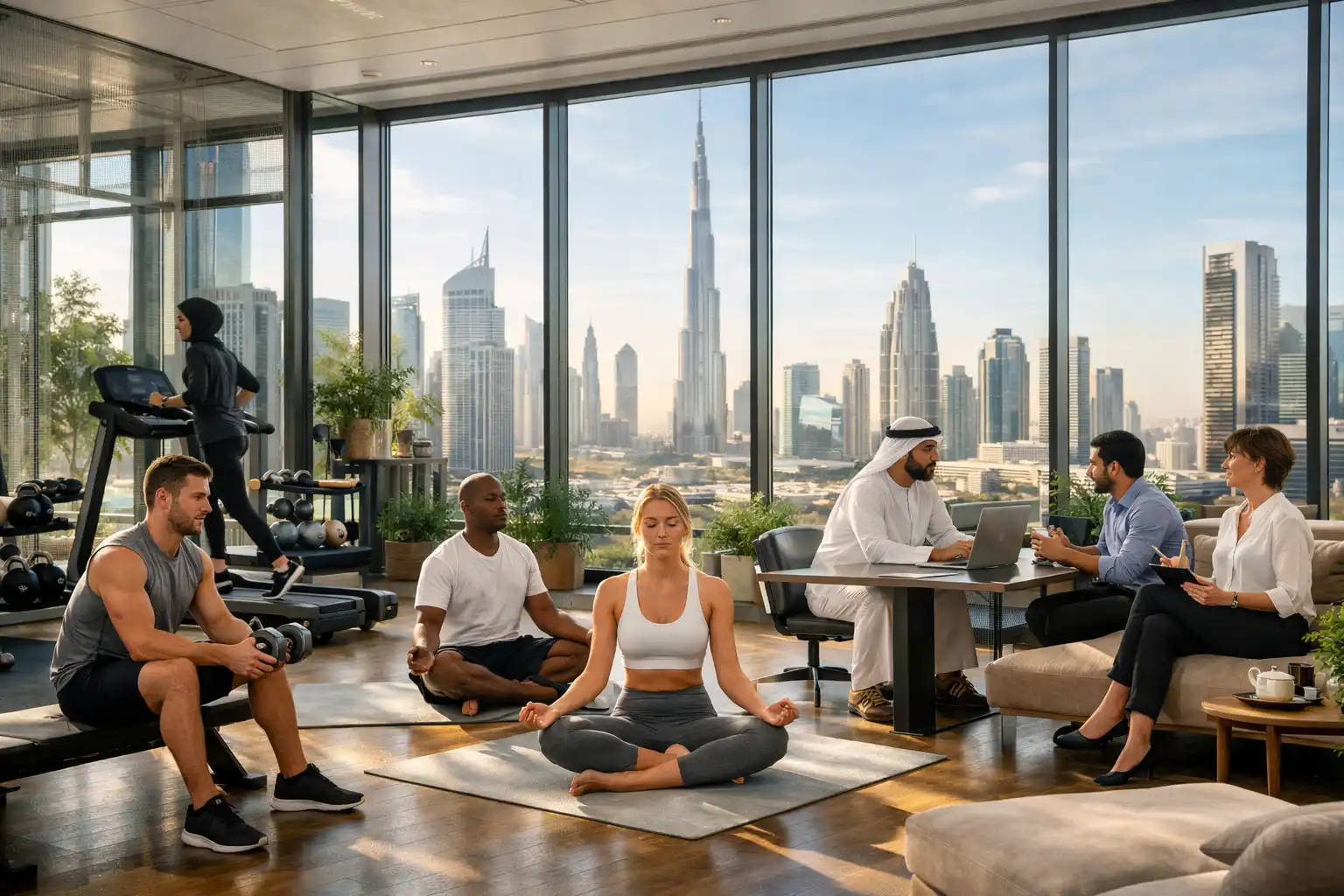
For fitness, the strategy is to move training indoors or to the early morning and evening in summer, exactly the pattern described in our guide to indoor exercise in Dubai. Weigh yourself before and after long sessions: every kilogram lost is roughly a litre of fluid to replace. Building hydration into a training plan also supports the balanced approach set out in our components of physical fitness guide, where recovery is treated as seriously as the workout itself.
Hydration Myths That Catch People Out
A few persistent myths undo good intentions every summer. The first is that you cannot overheat on a cloudy or humid day; in the UAE, humidity is precisely what makes sweat stop cooling you, so muggy evenings can be more dangerous than dry afternoons. The second is that feeling fine in air conditioning means you are hydrated. Chilled indoor air is dry air, and office workers lose more fluid through skin and breathing than they realise, which is why the afternoon headache is a shared experience in Gulf offices.
The third myth is that sports drinks are always better than water. For activity under an hour, water is enough; electrolyte drinks earn their place during long sessions, heavy sweating or illness. The last is that children will drink when they need to. They often will not, especially mid-game, so adults have to schedule drinks for them the same way schools schedule breaks. Clearing up these myths matters because most heat illness in the Emirates happens during ordinary routines, not extreme adventures.
Signs You Are Getting It Right
When hydration is working, the evidence is boring in the best way: steady energy through the afternoon, no end-of-day headache, clear thinking during the school and work run, and workouts that feel repeatable rather than heroic. Keep a one-week log in the hottest month, note how much you drink and how you feel at 4pm, and adjust the bottle size rather than your willpower. Systems beat intentions in a climate like this, and the system is simple — drink early, drink steadily, replace salts when you sweat heavily, and rest in the shade when your body asks.
Small Habits That Make the Difference
Start the day with water before coffee. Carry a bottle everywhere and refill it at the coolers found in malls, offices, mosques and metro stations across the Emirates. Eat water-rich foods — watermelon, cucumber, oranges and salads — especially at lunch. Dress in light, loose clothing and use shade during the midday peak. During Ramadan, load fluids steadily between iftar and suhoor rather than drinking a large volume at once.
Finally, look out for others. New arrivals, elderly neighbours and outdoor workers are the most vulnerable people in the UAE summer, and a offered bottle of water is a small kindness that can prevent a serious incident. Heat also affects mood and sleep, a connection explored in our article on mental health awareness in the UAE. Stay ahead of thirst, and the Emirates’ long summer becomes far more manageable.