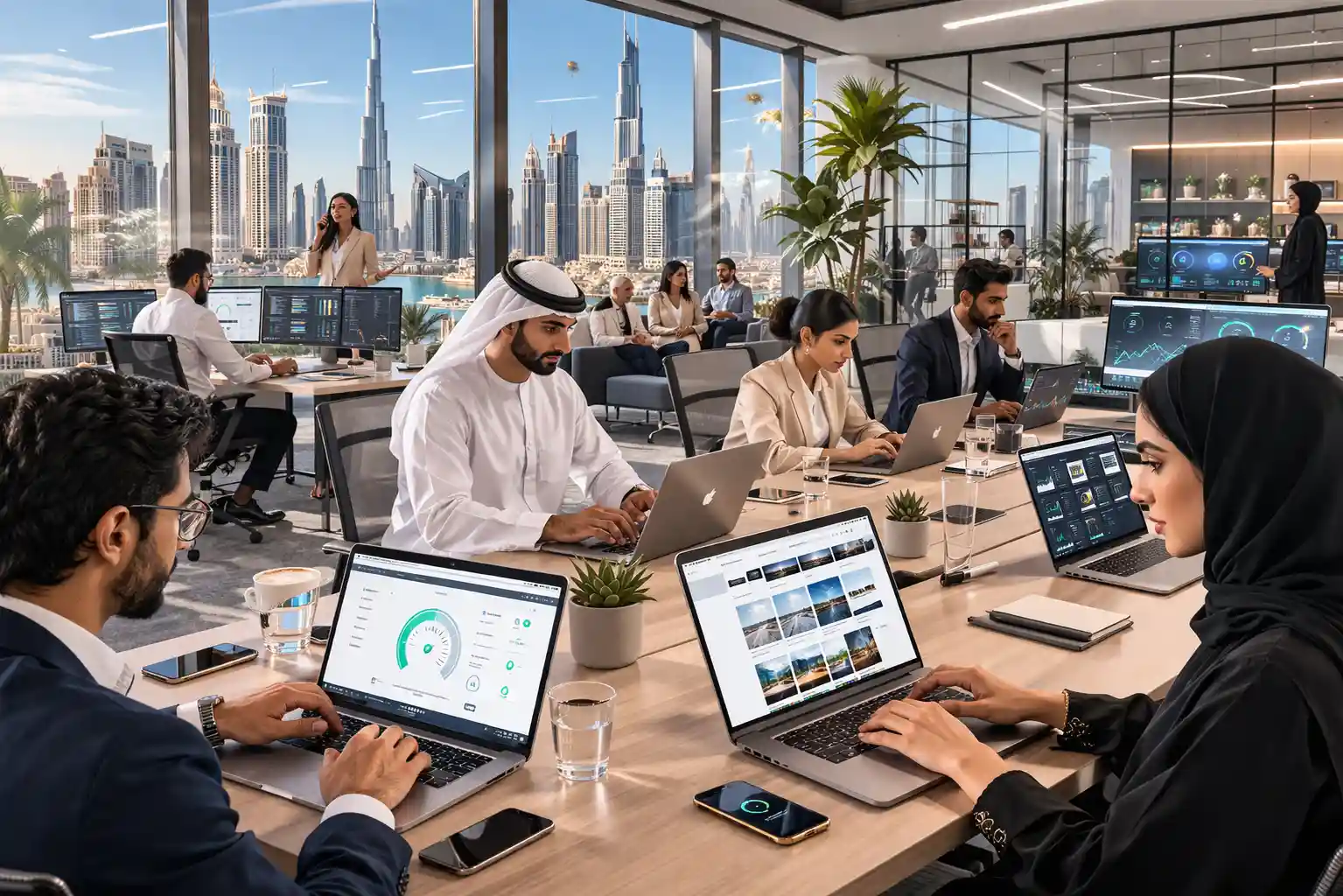
The UAE’s digital economy has expanded rapidly over the past decade, creating strong demand for modern UI/UX design across startups, e-commerce platforms, mobile applications, fintech companies, healthcare systems, and corporate digital services.
As businesses compete to improve customer engagement and online experiences, user interface (UI) and user experience (UX) design have become essential parts of digital product development in the UAE.
Companies are no longer focused only on attractive visuals. Modern digital platforms now prioritize usability, accessibility, performance, navigation, and customer satisfaction alongside visual branding.
This shift has positioned UI/UX design as one of the fastest-growing creative and technology sectors within the UAE.
Why UI/UX Design Matters in the UAE
The UAE has one of the world’s most digitally connected populations, with high smartphone usage, strong e-commerce growth, and widespread adoption of digital services.
Consumers increasingly expect websites and applications to provide:
- Fast performance
- Easy navigation
- Mobile responsiveness
- Modern visual design
- Personalized experiences
- Simple checkout and booking systems
Businesses that fail to provide smooth digital experiences often struggle to retain users and maintain engagement.
This growing emphasis on digital usability strongly connects with graphic design trends in UAE, where visual communication increasingly supports customer interaction and online branding.
Growth of Startups and Digital Platforms
The UAE startup ecosystem has played a major role in increasing demand for UI/UX design services.
Technology startups, fintech companies, food delivery platforms, travel apps, healthcare portals, and e-commerce businesses all rely heavily on user-centered design to compete in crowded digital markets.
Many startups now prioritize UI/UX design during the earliest stages of product development to improve customer retention and platform usability.
Modern digital branding strategies also closely relate to logo design trends UAE, where businesses create visually consistent experiences across websites, apps, and social media platforms.
Mobile-First Design Is Dominating
Mobile-first design has become one of the strongest UI/UX trends in the UAE due to extremely high smartphone usage rates.
Most users now access services primarily through mobile devices, making responsive layouts and app optimization essential.
Businesses increasingly focus on:
- Fast-loading mobile interfaces
- Simple navigation menus
- Touch-friendly interactions
- Optimized mobile checkout systems
- Clean interface layouts
Mobile usability now directly affects customer satisfaction, engagement, and conversion rates.
Minimalist and Modern Interface Design
Minimalism continues dominating UI design trends across UAE digital businesses.
Modern interfaces commonly feature:
- Clean layouts
- Simple navigation structures
- Soft color palettes
- Bold typography
- Large visual spacing
- Minimal distractions
Minimalist interfaces improve readability and usability while also creating premium digital experiences that align with UAE luxury branding aesthetics.
Arabic Language and Localization
Localization has become increasingly important for digital businesses operating in the UAE.
Many companies now design bilingual platforms supporting both Arabic and English users.
Arabic typography, right-to-left interface design, and culturally relevant visuals are becoming essential parts of digital product development.
This focus on regional identity also connects with Arabic calligraphy UAE, where Arabic typography continues influencing modern visual communication and creative industries.
E-Commerce and Customer Experience
E-commerce growth in the UAE has significantly increased investment in UX design.
Online stores now focus heavily on improving:
- Product browsing experiences
- Checkout simplicity
- Payment systems
- Search functionality
- Visual product presentation
- Customer trust and accessibility
User-friendly interfaces directly impact sales performance, customer retention, and brand credibility within competitive online markets.
Hospitality and Service Industry Applications
UI/UX design is also becoming increasingly important across UAE hospitality, tourism, healthcare, and transportation sectors.
Hotels, airlines, restaurants, and healthcare providers now invest heavily in digital booking systems, mobile applications, and customer service platforms.
These industries prioritize seamless user journeys to improve customer convenience and service efficiency.
Connection Between Physical and Digital Design
Modern businesses increasingly combine digital branding with physical customer experiences.
Retail stores, cafes, hotels, and offices often integrate digital screens, interactive interfaces, and branded digital systems into physical environments.
This relationship between digital usability and environmental aesthetics also connects closely with interior design styles UAE, where customer experience extends into physical spaces.
AI and Emerging Design Technologies
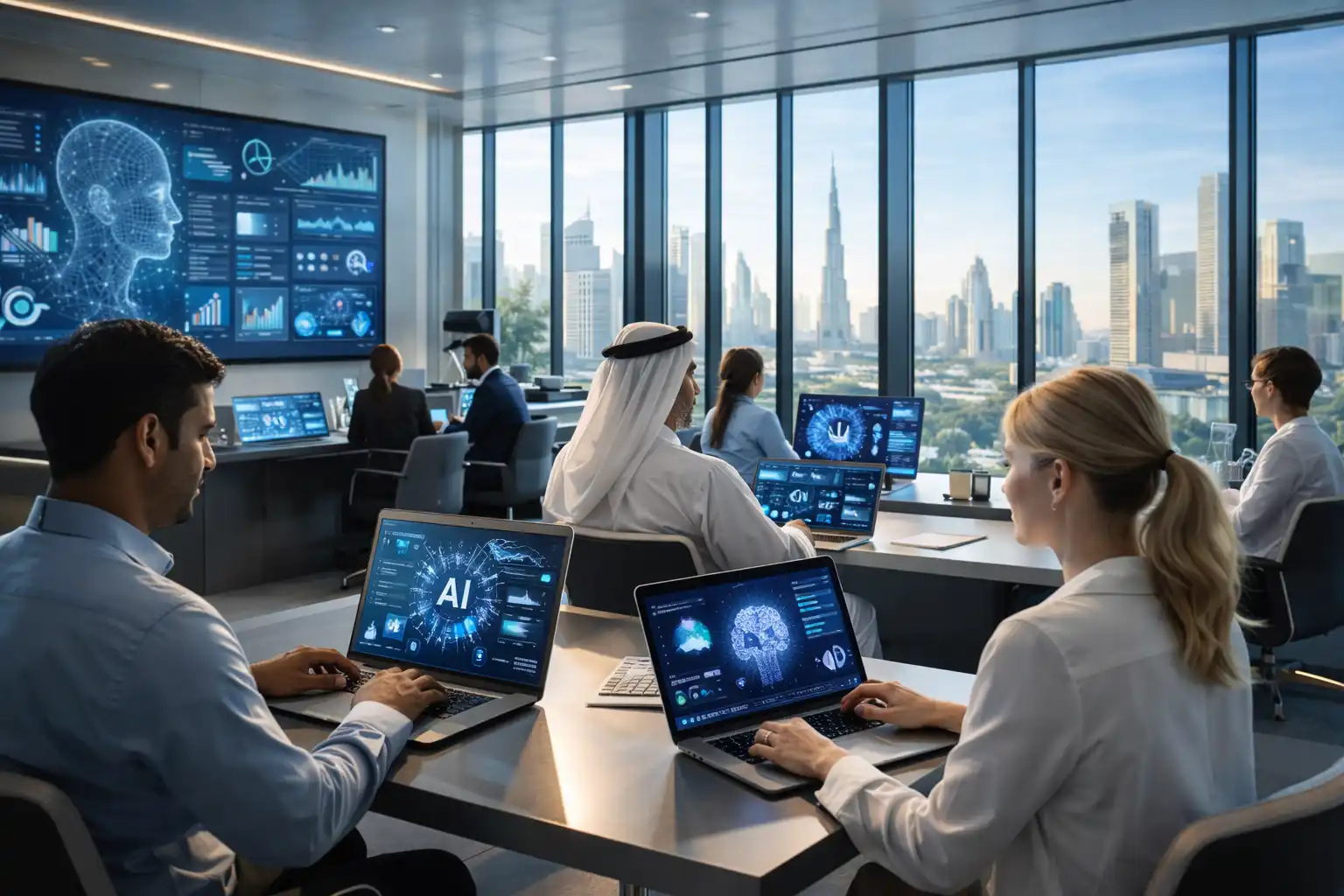
Artificial intelligence and automation tools are gradually changing UI/UX workflows across UAE digital industries.
Designers increasingly use AI-assisted prototyping, personalization systems, user behavior analysis, and automated testing tools to improve design efficiency.
However, creativity, strategic thinking, empathy, and human-centered problem solving remain essential skills within professional UX design.
Future of UI/UX Design in the UAE
The future of UI/UX design in the UAE remains highly promising as digital transformation, smart city initiatives, e-commerce, fintech, and AI technologies continue expanding.
Businesses are expected to invest more heavily in user-centered experiences, accessibility, personalization, and mobile-first digital products.
According to the Dubai Future Foundation, innovation, smart technologies, and digital transformation continue shaping the UAE’s future economic and technological landscape.
As the UAE strengthens its position as a global technology and innovation hub, UI/UX design will remain one of the most important drivers of digital customer experience and creative business growth.