Dubai is a highly international city where residents from many nationalities live and work alongside Emirati communities. English is widely used in everyday commercial and professional settings, while Arabic remains the official language of the UAE. The country’s official fact sheet also notes that many other languages are widely spoken, reflecting the multicultural nature of the population. Read the official UAE fact sheet.
For expats considering a move, Dubai can offer a comfortable and highly connected urban lifestyle, but it can also be expensive depending on housing choices, location, transportation, dining habits, and entertainment preferences.
This Dubai lifestyle guide for expats explains what modern city life really looks like, from choosing a home and commuting to building a social life, managing expenses, adapting to local culture, and making the most of the opportunities Dubai offers.
What Is Life Like in Dubai for Expats?
Life in Dubai is fast-paced, multicultural, and strongly influenced by modern urban infrastructure.
Expats can live close to business districts, beaches, shopping destinations, restaurants, schools, parks, entertainment venues, and public transportation. The city also offers residential communities ranging from compact apartments for young professionals to large villas designed for families.
The lifestyle can be highly convenient, but convenience often comes with a cost.
Your experience can change considerably depending on:
- Where you live
- Where you work
- Whether you own a car
- Whether you live alone or with family
- How often you eat out
- How much you spend on entertainment
- Whether your employer provides housing or other benefits
This is why there is no single “average” Dubai lifestyle for every expat.
Why Do Expats Choose Dubai?
Dubai attracts expats for a combination of professional, financial, lifestyle, and personal reasons.
International Career Opportunities
Dubai has a diverse economy with opportunities across technology, finance, healthcare, tourism, hospitality, real estate, logistics, retail, professional services, and entrepreneurship.
For skilled professionals, the city can provide access to multinational companies and regional business networks.
Multicultural Environment
One of the most noticeable aspects of Dubai is its international population.
Expats can interact with people from different countries and cultural backgrounds in workplaces, residential communities, restaurants, schools, gyms, social groups, and professional events.
Modern Infrastructure
Dubai has developed extensive infrastructure around transportation, digital services, residential communities, shopping, healthcare, education, hospitality, and entertainment.
The UAE Government’s official portal provides dedicated information for people moving to the country covering visas, Emirates ID, housing, transportation, jobs, finance, and other practical matters. Explore the official UAE life and services portal.
Global Connectivity
Dubai’s international airport network and geographical position make international travel relatively convenient for residents who regularly visit family, travel for business, or explore other countries.
The UAE Government lists Dubai International Airport among the country’s major international aviation hubs and notes the broad international connectivity available from Dubai. See official UAE travel information.
Dubai Lifestyle: What Modern City Life Really Looks Like
Modern Dubai life is not limited to skyscrapers and luxury shopping.
For most residents, everyday life is a combination of work, commuting, grocery shopping, household responsibilities, exercise, dining, family time, social activities, and occasional entertainment.
The difference is that many of these activities are available within highly developed urban communities.
A typical weekday for an expat might involve:
- Morning commuting to work
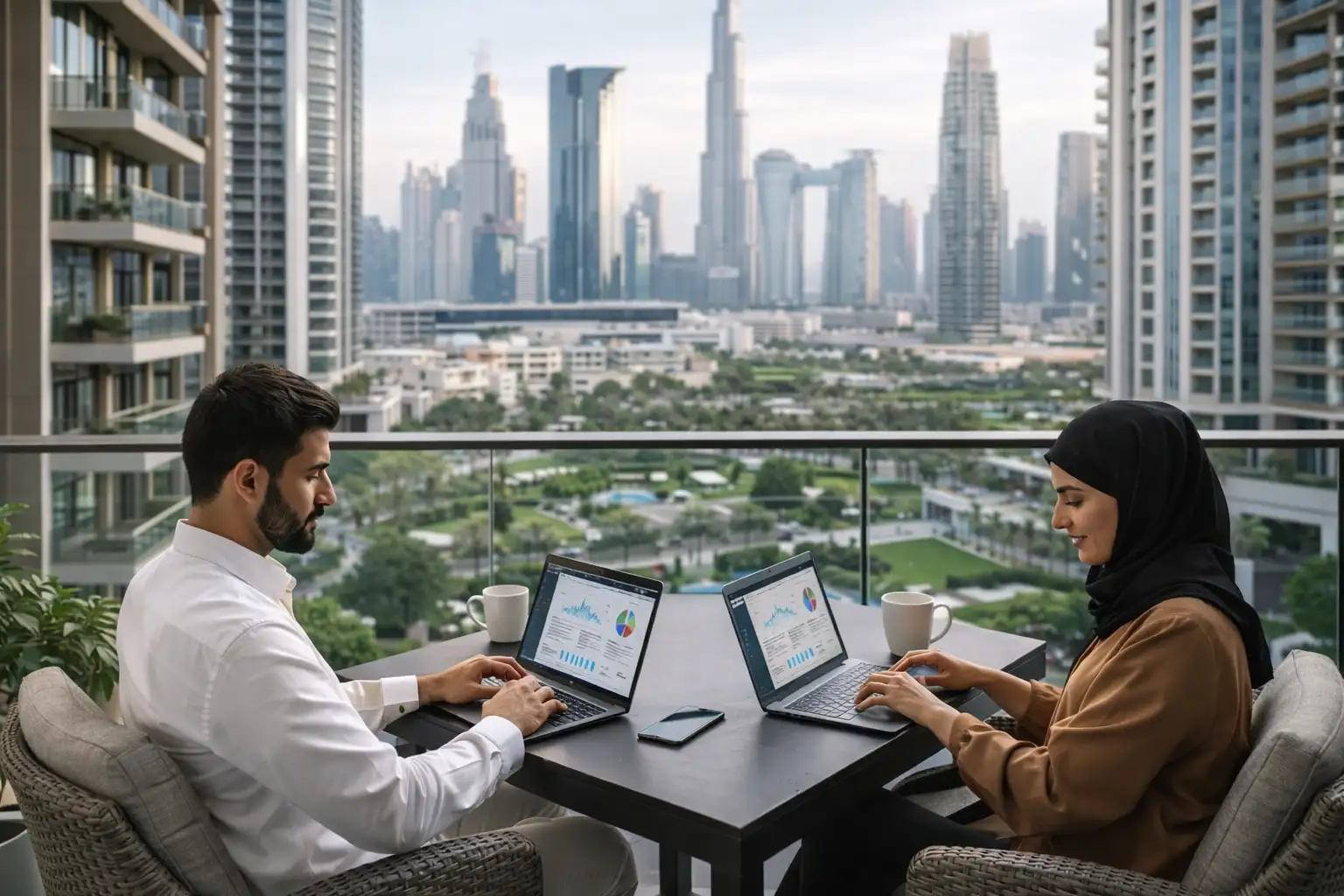
- Working in a business district or office community
- Using delivery services or shopping after work
- Exercising at a nearby gym
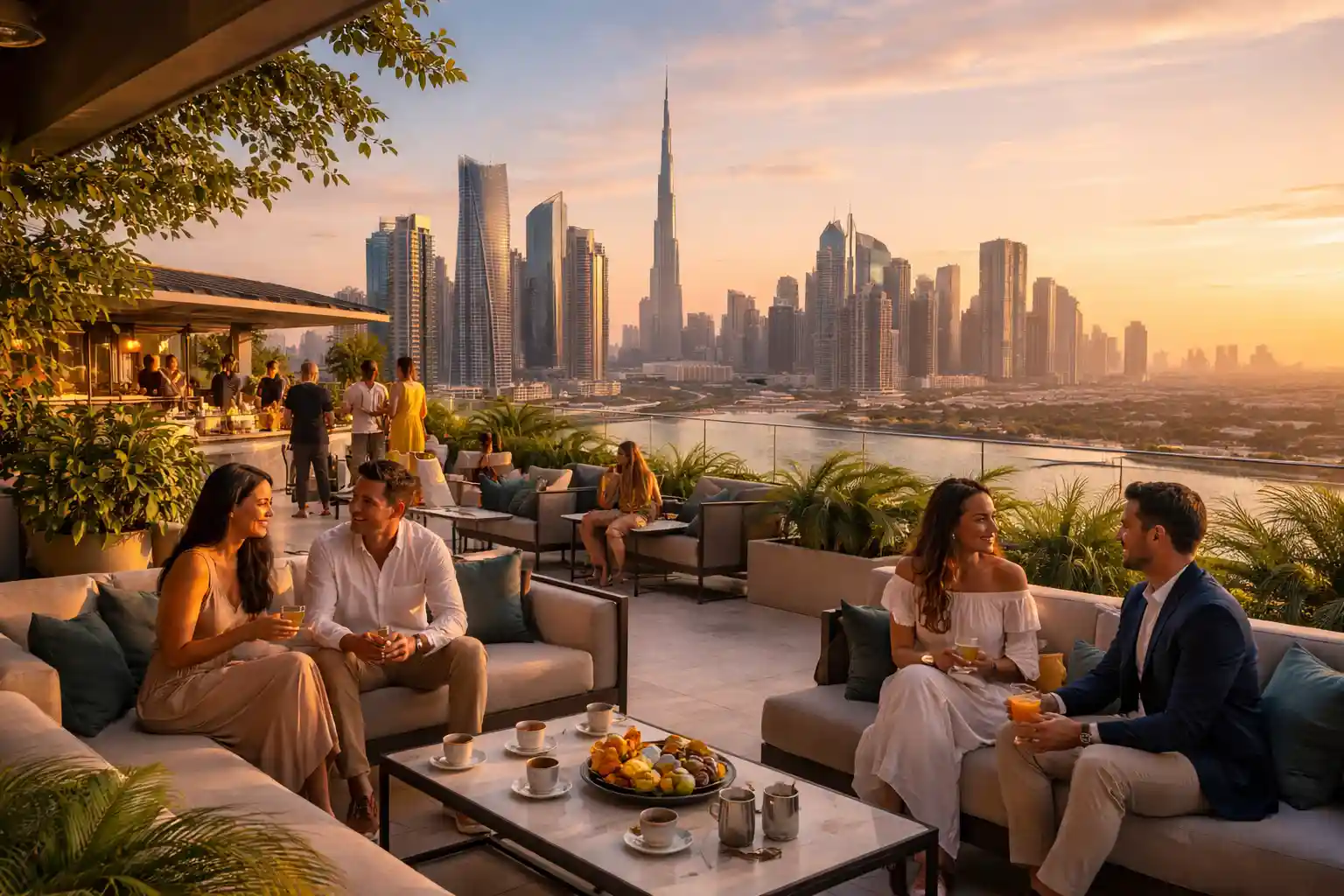
- Meeting friends for coffee or dinner
- Returning to an apartment or residential community
Weekends may involve beaches, malls, restaurants, parks, family gatherings, outdoor activities, cultural attractions, or short trips outside Dubai.
Housing and Where Expats Live in Dubai
Housing is one of the biggest lifestyle decisions for expats.
Dubai offers a wide range of residential options, from high-rise apartments in central locations to villas and townhouses in family-oriented communities.
Popular areas can include:
- Dubai Marina
- Jumeirah Lake Towers
- Business Bay
- Downtown Dubai
- Jumeirah
- Al Barsha
- Dubai Silicon Oasis
- International City
- Deira
The right location depends on your budget, workplace, transportation needs, family situation, and preferred lifestyle.
Rent can vary substantially by location, property size, building quality, amenities, and proximity to major business or leisure areas. The UAE Government notes that rent depends on factors including property location and size, while Dubai tenancy arrangements are governed by local rules. See official UAE information about leasing property.
For a more detailed look at housing costs, read our guide to the average rent in Dubai in 2026.
Renting a Home in Dubai
Expats normally need to consider more than the advertised monthly rental amount.
Your housing budget can also involve:
- Security deposit
- Agency fees where applicable
- Utility deposits
- Electricity and water
- Cooling costs
- Internet
- Housing-related charges
- Furniture if the property is unfurnished
The UAE Government states that Dubai landlords must register lease agreements with the Dubai Land Department, while housing fees are calculated based on annual rental charges and added to monthly electricity and water bills. Review the official leasing guidance.
Cost of Living for Expats in Dubai
Dubai can accommodate different budgets, but lifestyle choices have a major impact on total spending.
Housing is usually one of the biggest expenses, followed by transportation, food, utilities, education for families, insurance, entertainment, and personal spending.
A person living in a modest apartment and cooking regularly can have a very different monthly budget from someone living in a premium area, eating at restaurants frequently, using taxis daily, and spending heavily on entertainment.
This is why expats should create a budget based on their actual lifestyle rather than relying on a single citywide average.
Our Dubai vs Abu Dhabi cost-of-living comparison can also help people considering different UAE cities.
Food and Dining in Dubai
Food is one of the easiest areas in which to adjust your spending.
Dubai has everything from inexpensive local restaurants and cafeterias to international chains, specialty cafés, hotel restaurants, and high-end fine dining.
Expats who cook regularly can generally control food costs more effectively than people who rely heavily on restaurant meals and delivery services.
Grocery shopping also offers considerable choice, with supermarkets carrying local, regional, and imported products.
Imported products can sometimes cost more, particularly when compared with locally produced alternatives.
For a detailed look at everyday food budgeting, see our guide to food expenses in Dubai.
Transportation and Daily Commuting
Transportation is another important part of expat life.
Dubai has a combination of metro, tram, buses, taxis, ride-hailing services, and private vehicles.
The official UAE Government confirms that Dubai has metro and tram services as well as buses and taxis. The Dubai Metro is a driverless automated rail system, while the Nol card is used for public transportation in Dubai. See official UAE public transportation information.
Dubai Metro
The Metro can be particularly useful for people living and working near stations.
It can reduce the need for daily driving and may make commuting more predictable during busy periods.
Taxis and Ride-Hailing
Taxis are widely available, while ride-hailing applications can provide additional convenience.
They can be useful when your home or workplace is not close to a Metro station.
Driving in Dubai
Many expats eventually consider owning or leasing a car, particularly families or people living in areas with limited direct public-transport access.
Car ownership introduces additional costs such as fuel, insurance, parking, servicing, registration, and financing.
The best transportation option therefore depends heavily on where you live and work.
Work Life and Career Culture in Dubai
Professional life in Dubai can be highly international.
Many workplaces include employees from several nationalities, which means communication styles and professional expectations can vary.
Expats often need to adapt to a work environment that combines international business practices with local cultural expectations.
Professional networking can be particularly valuable in Dubai because business relationships and personal connections often overlap.
Industry events, conferences, professional communities, coworking spaces, and business gatherings can help newcomers build useful networks.
Work-Life Balance
Work-life balance varies significantly by industry and employer.
Some professionals may have structured working hours and flexible arrangements, while others in sectors such as hospitality, finance, retail, real estate, and entrepreneurship may work longer or less predictable schedules.
Expats should evaluate the entire employment package rather than salary alone.
Important considerations can include:
- Basic salary
- Housing allowance
- Health insurance
- Annual leave
- Transportation allowance
- Airfare benefits where applicable
- Working hours
- Bonus structure
- End-of-service benefits
Social Life for Expats in Dubai
Building a social network is one of the most important parts of settling into Dubai.
The city’s multicultural environment means newcomers can find communities based on nationality, profession, hobbies, sports, food, religion, education, or shared interests.
Common social activities include:
- Coffee meetups
- Restaurant outings
- Beach days
- Fitness classes
- Sports clubs
- Professional networking
- Community events
- Cultural activities
- Shopping
- Family gatherings
New expats often find it easier to build friendships by participating consistently in activities rather than waiting for social connections to develop automatically.
Dubai’s Multicultural Environment
Dubai’s multicultural character is one of its defining lifestyle features.
Arabic and English are visible throughout the city, while many other languages are commonly spoken by residents.
This creates an environment where expats can maintain connections with their own cultures while also experiencing different traditions.
However, living in a multicultural city still requires cultural awareness.
Understanding local etiquette, public behavior, dress expectations in different settings, religious practices, and social customs can make the transition smoother.
The UAE Government describes Emirati culture as being rooted in traditional Arab and Islamic values while also highlighting tolerance and coexistence. Learn about UAE culture and heritage.
Understanding Local Culture as an Expat
Dubai is highly modern, but it is not culturally identical to Western or other international cities.
Expats should understand that modern infrastructure and international business do not replace local cultural traditions.
Respect for local customs is particularly important during religious occasions and when visiting traditional neighborhoods, government facilities, family-oriented spaces, and cultural sites.
The official UAE cultural guidance highlights the importance of traditional Arab and Islamic values in the country’s heritage and social life. Explore official information about UAE social life.
Shopping and Entertainment
Shopping is deeply integrated into Dubai’s lifestyle.
Residents have access to large shopping malls, neighborhood retail centers, supermarkets, specialty stores, online shopping platforms, and local markets.
Entertainment is equally diverse.
Depending on your interests, you can spend free time at:
- Beaches
- Restaurants
- Cafés
- Gyms
- Cinemas
- Shopping malls
- Concert venues
- Cultural attractions
- Desert experiences
- Public parks
Dubai’s official tourism platform describes the city as offering a wide range of attractions, neighborhoods, cultural experiences, dining, shopping, and entertainment. Explore Dubai’s official city guide.
Outdoor Life in Dubai
Dubai’s climate strongly influences how residents plan outdoor activities.
During the cooler months, beaches, parks, outdoor cafés, walking areas, desert activities, and community events become particularly popular.
During the hotter months, many residents shift more of their daily activities indoors.
This seasonal rhythm is an important adjustment for new expats.
Instead of expecting the same outdoor routine throughout the year, residents often plan outdoor activities around comfortable weather and spend more time in air-conditioned indoor spaces during the hottest periods.
Healthcare and Everyday Services
Healthcare is an important consideration for anyone moving to Dubai, particularly families.
Expats should understand what healthcare coverage is provided through their employment arrangement and what additional coverage may be necessary.
Everyday services are generally highly digitized, and residents can access many government and commercial services through online platforms and mobile applications.
The UAE Government’s moving-to-the-country resources cover areas including healthcare, education, visas, Emirates ID, transportation, finance, and housing. Explore the official moving-to-the-UAE resources.
Family Life in Dubai
Dubai can be attractive to expat families because residential communities, schools, healthcare facilities, parks, shopping centers, and family-oriented entertainment are available across the city.
However, family living can also be considerably more expensive than living alone.
Parents should budget for:
- Family-sized accommodation
- School fees where applicable
- Healthcare
- Transportation
- Groceries
- Activities for children
- Childcare where required
Location becomes particularly important for families because commuting time can affect both work and school routines.
Education and Schooling for Expats
Families moving to Dubai should research schools before choosing a residential area.
The availability, curriculum, location, fees, transport arrangements, and admission requirements can all influence where a family decides to live.
For parents, choosing housing first and investigating school options later can create unnecessary commuting problems.
A better approach is to compare schools and neighborhoods together.
Utilities and Monthly Household Costs
Utilities are another part of the monthly budget that new residents should not overlook.
Electricity and water are supplied through Dubai Electricity and Water Authority (DEWA), while household budgets may also include cooling, internet, mobile services, and housing-related charges.
Utility consumption can vary significantly depending on apartment size, number of residents, appliances, and especially air-conditioning use.
Our guide to the average DEWA bill in Dubai explains the main factors that influence household utility costs.
Climate and Adjusting to Dubai Weather
The climate is one of the biggest lifestyle adjustments for many expats.
Dubai experiences long hot periods, so residents often organize daily routines around indoor cooling and seasonal outdoor opportunities.
Air conditioning is an important part of everyday life in homes, offices, vehicles, shopping centers, restaurants, and public buildings.
New residents should also adapt their clothing, hydration habits, exercise routines, and outdoor schedules to the climate.
Religion and Cultural Awareness
Islam is the official religion of the UAE, while expatriate residents practice their respective religions within the country’s policy of tolerance and coexistence. See the official UAE fact sheet.
Expats do not need to abandon their own cultural identities, but understanding Islamic traditions and local customs can help them navigate daily life respectfully.
Ramadan is particularly important. Daily routines, working patterns, dining arrangements, and public behavior can change during the holy month.
Newcomers should check current official guidance and observe local expectations rather than relying solely on assumptions from other countries.
Is Dubai Expensive for Expats?
Dubai can be expensive, but the answer depends heavily on lifestyle.
A major distinction is between living in Dubai and living a luxury Dubai lifestyle.
Premium housing, frequent fine dining, luxury shopping, private schooling, international travel, and regular entertainment can create very high expenses.
On the other hand, residents can reduce costs through careful housing choices, public transportation, home cooking, local shopping, and controlled entertainment spending.
The key is to match your lifestyle with your income rather than trying to copy the spending habits commonly shown in Dubai-focused social media content.
Dubai Lifestyle for Young Professionals
Young professionals often benefit from Dubai’s combination of career opportunities, networking, entertainment, and international communities.
Living close to work can be particularly valuable because it reduces commuting time and makes it easier to participate in social activities after work.
Areas with good public transportation, restaurants, gyms, cafés, and coworking spaces can be attractive for single professionals.
However, young professionals should be careful not to allow lifestyle inflation to consume their income.
A high salary can disappear quickly if rent, restaurants, ride-hailing, shopping, subscriptions, and entertainment are not controlled.
Dubai Lifestyle for Families
Families generally prioritize different factors from young professionals.
They may focus more on:
- School quality and location
- Family-sized homes
- Community facilities
- Healthcare access
- Green spaces
- Transportation
- Safety and convenience
Family life can be comfortable in Dubai, but housing and education can significantly increase the household budget.
Dubai Lifestyle for Women Expats
Women expats are part of Dubai’s highly international professional and social environment.
Women work across industries including technology, finance, healthcare, education, hospitality, retail, media, and entrepreneurship.
Daily life can include public transportation, professional networking, fitness, dining, shopping, cultural activities, and community events.
Women moving to Dubai should still understand local laws and cultural expectations, just as any other expat should.
For a more focused guide, read our article on expat life in Dubai for women.
Building a Comfortable Expat Lifestyle
A comfortable Dubai lifestyle usually comes from planning rather than simply earning more money.
New residents can improve their experience by:
- Choosing housing based on both rent and commute.
- Creating a realistic monthly budget.
- Understanding transportation costs.
- Researching schools before choosing a family neighborhood.
- Learning basic local cultural etiquette.
- Building a social network.
- Exploring affordable activities alongside premium experiences.
- Taking advantage of public transportation when practical.
- Keeping emergency savings.
- Reviewing lifestyle expenses regularly.
Common Challenges Expats Face in Dubai
High Housing Costs
Rent can consume a significant portion of an expat’s income, particularly in premium neighborhoods.
Fast-Paced Lifestyle
Dubai’s professional environment can be demanding, and newcomers may need time to establish a sustainable work-life routine.
Cultural Adjustment
Even in an international city, local customs and laws matter. Cultural awareness is essential.
Summer Climate
Hot weather can restrict outdoor activities for parts of the year and requires adjustment.
Lifestyle Inflation
The city’s abundance of restaurants, shopping, entertainment, and luxury experiences can make overspending easy.
Social Adjustment
Although Dubai is highly multicultural, building meaningful friendships can still take effort, particularly for people arriving without an existing network.
What Makes Dubai Different From Other Global Cities?
Dubai combines several characteristics that are rarely found together at the same scale.
It is simultaneously a global business center, tourism destination, multicultural residential city, logistics hub, luxury retail market, and rapidly developing technology environment.
This combination produces a lifestyle where international influences coexist with local Emirati culture.
Visit Dubai describes the city as a modern metropolis while highlighting its cultural heritage, neighborhoods, attractions, and local experiences. Explore Dubai’s official city overview.
Tips for Expats Moving to Dubai
- Research your neighborhood carefully: Distance from work can affect both your budget and quality of life.
- Calculate your complete housing cost: Do not look only at advertised rent.
- Check transportation before signing a lease: A cheaper apartment can become expensive if commuting is difficult.
- Research schools early: This is particularly important for families.
- Understand local customs: Cultural awareness makes adaptation easier.
- Budget for summer utilities: Air-conditioning use can affect household costs.
- Build a social network: Join professional and community activities.
- Avoid unnecessary lifestyle inflation: Dubai offers luxury at almost every price point.
- Keep emergency savings: Moving countries involves unexpected expenses.
- Use official government sources: Visa, housing, employment, transportation, and legal requirements can change.
Frequently Asked Questions
Is Dubai a good place for expats to live?
Dubai can be attractive for expats because of its international environment, career opportunities, modern infrastructure, transportation, entertainment, and access to global markets. However, housing and lifestyle costs can be significant, so suitability depends on income, family situation, and personal priorities.
What is daily life like in Dubai for expats?
Daily life commonly combines work, commuting, shopping, exercise, dining, family activities, and social events. The exact experience depends heavily on where you live, where you work, your budget, and whether you use public transportation or own a car.
Is Dubai expensive for expats?
Dubai can be expensive, particularly for housing, private education, premium dining, and luxury entertainment. However, residents can manage costs by choosing appropriate neighborhoods, using public transportation, cooking at home, and controlling discretionary spending.
Where do most expats live in Dubai?
Expats live across many parts of Dubai, including areas such as Dubai Marina, Jumeirah Lake Towers, Business Bay, Downtown Dubai, Jumeirah, Al Barsha, Deira, and other residential communities. The best area depends on budget, commute, family needs, and lifestyle preferences.
Is public transportation good in Dubai?
Dubai has an extensive public transportation network that includes Metro, tram, buses, and taxis. The Metro can be particularly useful for residents living and working near stations.
Can expats enjoy a social life in Dubai?
Yes. Dubai has a highly multicultural population and offers restaurants, cafés, sports clubs, beaches, professional networks, cultural events, entertainment venues, and community activities that can help newcomers build social connections.
Do expats need to understand UAE culture?
Yes. Dubai is highly international, but it remains part of the UAE and local laws, traditions, and cultural expectations apply. Understanding Emirati and Islamic cultural values helps expats adapt respectfully.
What is the biggest challenge of living in Dubai?
Challenges vary, but common issues include housing costs, climate, commuting, lifestyle inflation, cultural adjustment, and maintaining work-life balance.
Final Thoughts
The Dubai lifestyle for expats is best understood as a balance between modern convenience and local culture.
Dubai offers an international environment, strong infrastructure, diverse communities, extensive entertainment, career opportunities, and a high level of day-to-day convenience. At the same time, residents need to manage housing costs, transportation, climate, cultural adjustment, and lifestyle spending carefully.
The most successful expats are not necessarily those who spend the most. They are often the people who choose a suitable neighborhood, understand their real monthly costs, build meaningful social connections, respect local culture, and create a lifestyle that matches their priorities.
Before moving, use official UAE resources for information about visas, housing, transportation, employment, and other legal requirements. The UAE Government’s dedicated Life in the UAE portal is a useful starting point for newcomers.
Dubai can offer an exciting and rewarding life for expats, but modern city living works best when convenience is combined with financial planning, cultural awareness, and realistic expectations.