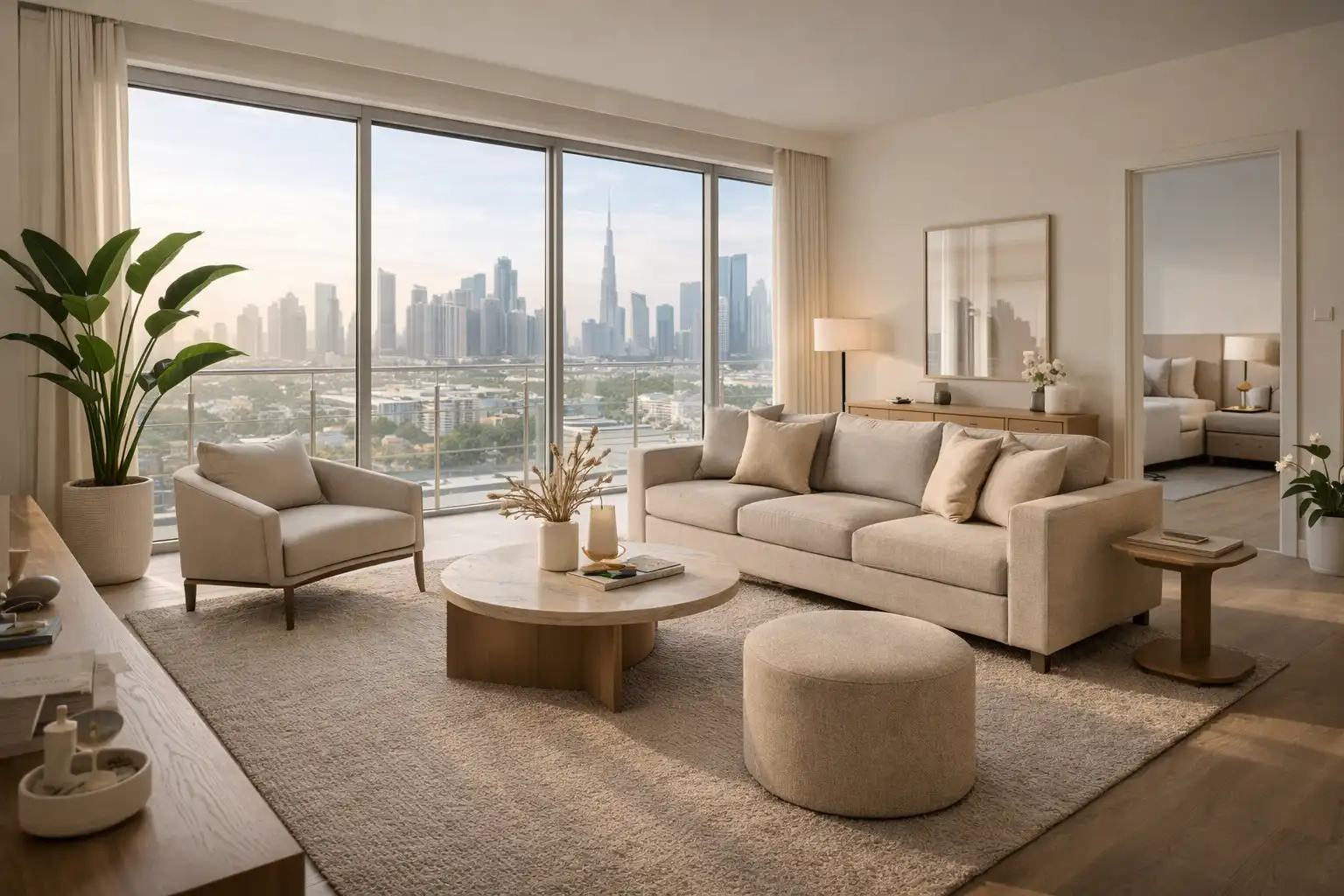
Smart home technology is becoming increasingly relevant to homeowners and residents across the UAE. From automated lighting and intelligent air-conditioning controls to connected security systems and water-monitoring devices, modern home technology is moving beyond individual gadgets toward integrated systems that can improve convenience, security, comfort, and resource management.
This trend is particularly relevant in the UAE, where high cooling demand, smart-city development, digital services, and sustainability initiatives are influencing the way residents think about their homes. Dubai Electricity and Water Authority (DEWA), for example, provides digital tools that allow residential customers to monitor electricity and water consumption, receive reports, identify unusual usage, and access conservation guidance.
For homeowners planning a renovation or technology upgrade, the most useful approach is not necessarily to automate everything. Instead, it is to choose technologies that solve a real problem and can work reliably together.
What Is a Smart Home?
A smart home uses connected devices and digital systems to automate, monitor, or remotely control different parts of a property. Depending on the setup, residents may control lighting, cooling, security, appliances, entertainment, water monitoring, and other systems through smartphone applications, voice interfaces, schedules, sensors, or centralized control platforms.
Some systems work independently, while more advanced homes connect several categories of devices into a single automation ecosystem.
In the UAE, smart-home technology can be especially useful when it is designed around local priorities such as air-conditioning management, energy efficiency, home security, water conservation, and indoor comfort.
Smart Home Upgrades Trending in the UAE
1. Smart Lighting Systems
Smart lighting remains one of the easiest ways to introduce automation into a home. Connected bulbs, switches, dimmers, motion sensors, and lighting scenes can allow residents to control illumination according to time, occupancy, activity, or personal preference.
For example, lights can be scheduled to turn on during the evening, switched off automatically when rooms are empty, or grouped into different scenes for entertaining, relaxing, or working.
For homeowners renovating a property, smart switches can also provide a more integrated solution than simply replacing individual bulbs.
2. Smart Air-Conditioning and Climate Control
Air conditioning is one of the most important areas to consider when planning a smart home in the UAE. Smart thermostats, temperature sensors, scheduling systems, and occupancy-based controls can help residents manage cooling according to how different spaces are being used.
Rather than keeping every room at the same setting throughout the day, a smart system can be configured around occupancy and schedules where the installed HVAC equipment supports those controls.
This can improve comfort while giving homeowners better visibility into how their cooling systems are being used.
3. Smart Energy Monitoring
Energy monitoring is another important smart-home upgrade. Connected monitoring systems can help residents understand consumption patterns and identify appliances or periods associated with higher electricity use.
This complements DEWA’s existing digital consumption-management tools. DEWA’s My Sustainable Living programme allows residential customers to compare their electricity and water consumption with efficient homes in their area, review reports, and receive customized conservation tips.
For homeowners interested in reducing unnecessary consumption, combining utility-level information with device-level monitoring can provide a more detailed picture of household energy use.
4. Smart Security Systems
Connected security has become another major area of smart-home investment. Depending on the property and system, homeowners can use smart cameras, video doorbells, door and window sensors, motion detectors, smart locks, and alarm systems.
These devices can provide notifications when unusual activity is detected and can allow residents to check selected parts of their property remotely.
For villas and larger properties, integrated security can combine several sensors and cameras into one monitoring system. Apartments may benefit from simpler solutions focused on entry monitoring and indoor security.
5. Smart Door Locks and Access Control
Smart locks can provide alternatives to traditional keys. Depending on the product, access may be controlled through a mobile application, PIN, fingerprint, physical key, or other authentication method.
Temporary access can also be useful for selected situations, such as allowing a family member, cleaner, technician, or service provider to enter without permanently sharing a physical key.
Security should remain the priority when selecting connected locks. Homeowners should consider encryption, authentication, offline access, software updates, emergency entry procedures, and what happens if the internet connection fails.
6. Smart Water Monitoring and Leak Detection
Water management is particularly relevant to sustainable homes in the UAE. Smart water-monitoring technologies can help residents identify unusual consumption patterns or potential leaks.
DEWA’s smart services already include a High Water Usage Alert that can notify customers when an unusual increase in consumption is detected after the meter. DEWA also provides digital tools for monitoring electricity and water usage and encourages residents to take measures that reduce unnecessary consumption.
For homeowners, additional sensors can complement these services by monitoring selected areas of a property where leaks may otherwise go unnoticed.
7. Smart Home Hubs and Whole-Home Automation
As the number of connected devices increases, managing them individually can become inconvenient. Smart-home hubs and centralized control platforms can bring multiple devices into one ecosystem.
A homeowner might create an automation that turns off selected lights, adjusts cooling, activates security settings, and locks doors when everyone leaves the property.
The goal should be useful automation rather than complexity. A well-designed system should make everyday tasks easier rather than requiring residents to manage dozens of separate applications.
8. Smart Curtains and Blinds
Automated curtains and blinds are another upgrade becoming relevant to modern UAE interiors. Motorized window coverings can be scheduled according to time or controlled remotely.
They can also be integrated with lighting and climate routines. For example, curtains can be adjusted during certain parts of the day to manage sunlight entering a room while maintaining the desired interior environment.
9. Smart Appliances
Connected appliances can add another layer of convenience. Depending on the appliance, features can include remote monitoring, notifications, scheduling, maintenance alerts, and integration with broader home-automation systems.
However, a smart appliance is not automatically a better purchase. Homeowners should consider whether the connected features provide meaningful value and whether the appliance will remain useful if the manufacturer’s application or cloud service changes in the future.
10. Smart Entertainment and Home Theatres
Smart entertainment systems can connect televisions, speakers, streaming devices, lighting, and other equipment into automated scenes.
A home-theatre setup, for example, could combine lighting control, audio equipment, display settings, and curtains into one routine. This can be particularly appealing in villas and larger residences where dedicated entertainment spaces are available.
Smart Home Upgrades for UAE Villas
Villas generally provide more opportunities for whole-home automation because they often have multiple floors, outdoor areas, larger HVAC systems, gates, gardens, garages, and more rooms.
A villa automation plan could therefore include:
- Whole-home lighting control
- Multi-zone climate management
- Smart gates and entrance access
- Security cameras and motion sensors
- Water-leak detection
- Energy monitoring
- Automated curtains
- Garden and irrigation controls
- Pool equipment monitoring where appropriate
- Centralized home entertainment
The best configuration depends on the property rather than simply the number of devices installed.
Smart Home Upgrades for UAE Apartments
Apartment residents can also benefit from smart-home technology without undertaking a major renovation.
Practical upgrades can include smart bulbs or switches, smart plugs, security sensors, video doorbells where permitted, smart speakers, energy-monitoring devices, and compatible climate-control solutions.
Renters should pay particular attention to installation requirements. Wireless or removable devices may be more practical where permanent electrical or structural modifications are not permitted by the building or landlord.
Smart Homes and Energy Efficiency in the UAE
Energy efficiency is one of the strongest reasons to consider smart-home technology in the UAE. DEWA’s Smart Living programme is specifically designed to help residential customers understand and manage electricity and water consumption. Its digital tools include consumption dashboards, reports, comparison features, customized tips, Away Mode, and high-water-usage alerts.
Smart devices can complement this approach by giving homeowners more control over individual systems.
For example, a homeowner may use occupancy sensors to reduce unnecessary lighting, schedules to manage cooling, smart plugs to control selected standby loads, and water sensors to detect potential leaks.
These technologies should be viewed as tools for better management rather than guaranteed savings. Actual results depend on the property, equipment, occupancy, settings, installation quality, and household behaviour.
Smart Home Technology and Sustainability
Smart-home upgrades can also support broader sustainable-living goals. Dubai’s My Sustainable Living programme encourages residents to monitor consumption, compare performance, and make practical changes to improve electricity and water efficiency.
This creates an opportunity for homeowners to connect smart technology with other sustainability measures, such as efficient lighting, better cooling management, water conservation, and solar energy in the UAE.
Smart irrigation can also be relevant to villas and properties with landscaped outdoor areas. EmiratesBeacon’s smart irrigation systems in the UAE content provides a related topic for homeowners looking at connected outdoor water management.
Smart Home Interior Design in the UAE
Smart technology does not have to make an interior look technical or cluttered. Modern systems can be incorporated into lighting, switches, curtains, entertainment systems, security hardware, and other architectural elements.
Homeowners planning a broader renovation can connect technology decisions with their interior design plan. This is particularly useful when wiring, lighting positions, switches, speakers, motorized curtains, and control panels are being planned before construction or refurbishment.
For more ideas, see this related guide to smart home interior design ideas for UAE residents.
What to Check Before Installing Smart Devices
Before buying connected devices, homeowners should look beyond the feature list.
- Compatibility: Check whether devices can communicate with the preferred smart-home platform.
- Connectivity: Consider Wi-Fi coverage and whether critical devices should have alternative connectivity.
- Privacy: Review what data the device collects and how it is stored.
- Security: Use strong passwords, updated firmware, and appropriate authentication.
- Power: Understand what happens to the device during a power or internet outage.
- Installation: Confirm whether electrical or structural work is required.
- Building rules: Apartment residents should check building or landlord requirements before making permanent changes.
- Long-term support: Consider whether the manufacturer is likely to continue providing software and security updates.
- Interoperability: Avoid building the entire home around devices that only work with one closed ecosystem unless that is a deliberate choice.
Smart Home Privacy and Cybersecurity
Connected devices introduce another consideration: cybersecurity. Cameras, locks, speakers, sensors, appliances, and hubs can become part of a home’s connected network.
Homeowners should therefore change default passwords, enable available security features, keep device firmware updated, secure the home Wi-Fi network, and review permissions for mobile applications.
Devices that collect audio, video, location, or other personal information deserve particular attention. Convenience should not come at the expense of reasonable privacy controls.
How to Build a Smart Home Without Overspending
A smart home does not need to be completed in one project. A staged approach can be more practical.
- Identify the biggest problem you want to solve.
- Start with one or two useful automation categories.
- Choose devices that work with your preferred ecosystem.
- Test reliability before expanding.
- Add sensors and automation only where they provide genuine value.
- Plan permanent wiring and infrastructure during major renovations.
- Review security and privacy settings regularly.
For many homes, starting with lighting, climate control, security, or energy monitoring provides a more useful foundation than purchasing a large number of unrelated connected gadgets.
The Future of Smart Homes in the UAE
The UAE’s wider smart-city and digital-transformation environment provides a strong backdrop for connected homes. Dubai’s Internet of Things strategy was designed to expand IoT adoption, improve efficiency, protect digital assets, and support smart transformation.
More recently, the UAE’s housing sector has continued to incorporate connected technologies. In July 2026, the Sheikh Zayed Housing Programme and e& announced cooperation covering smart home automation, connected devices, high-speed home internet, and the Hassantuk early fire-detection and warning system.
This suggests that smart-home technology is increasingly being considered as part of the broader residential infrastructure rather than simply a collection of consumer gadgets.
Conclusion
Smart home upgrades in the UAE are increasingly focused on practical benefits: better control of cooling and lighting, improved security, easier monitoring, water and energy management, and more convenient everyday routines.
For homeowners, the best approach is to select technology according to the property and the problem it needs to solve. A Dubai villa may benefit from whole-home climate, security, lighting, and water automation, while an apartment resident may prefer smaller wireless upgrades.
As the UAE continues developing smart infrastructure and digital services, connected-home technology is likely to become more integrated into residential life. The strongest smart-home setup will be the one that combines useful automation with reliable connectivity, privacy, cybersecurity, and sensible resource management.