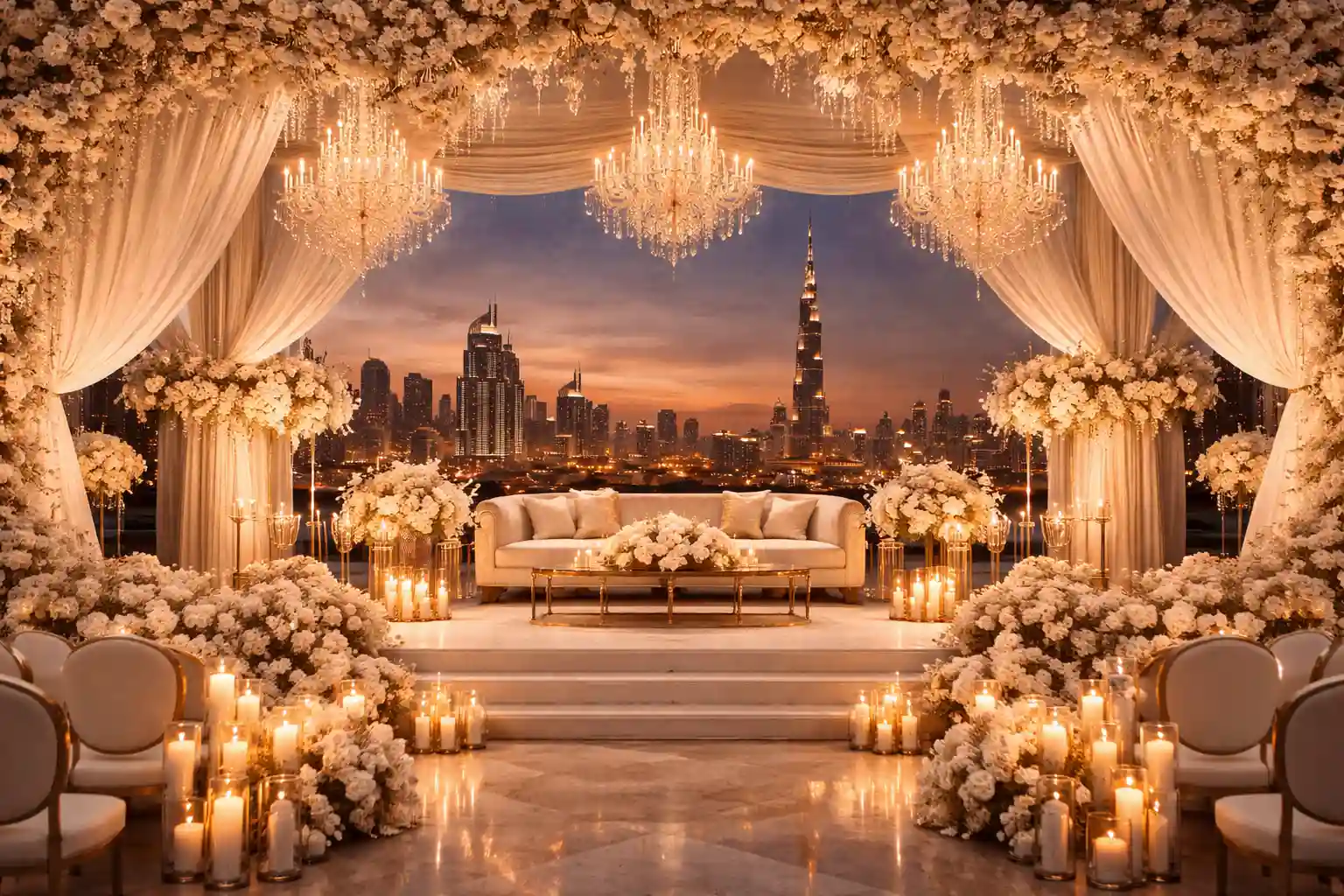
From Dubai apartments and Abu Dhabi residences to family villas across the Emirates, today’s homeowners are looking beyond decoration alone. The goal is to create interiors that work well for everyday life while still delivering the sense of luxury associated with UAE living.
Current design thinking is also placing greater emphasis on natural materials, layered lighting, sustainability, adaptable furniture, and technology that integrates quietly into the home. Dubai Municipality’s green-building guidance also highlights the importance of resource efficiency, building environments, energy, water, materials, and human comfort in sustainable design. Dubai Municipality’s green-building materials guidance provides a useful reference for homeowners and professionals considering sustainable material choices.
What Is Defining Interior Design in the UAE?
UAE interiors are shaped by several influences at once. The region’s modern architecture, multicultural population, climate, preference for entertaining at home, and appreciation for luxury all affect how residential spaces are planned.
The strongest approach is no longer about filling a room with expensive objects. Instead, successful interiors balance visual simplicity with useful functionality, comfortable materials, appropriate lighting, and carefully selected statement features.
That balance is particularly important in apartments, where every square metre matters, and in villas, where larger spaces need careful zoning to avoid feeling empty or disconnected.
1. Warm Minimalism Is Replacing Cold Minimalism
Minimalism remains influential, but its appearance is becoming warmer and more welcoming. Instead of relying heavily on stark white, cool grey, and highly polished surfaces, many modern interiors are introducing beige, sand, taupe, cream, warm wood, and muted earth tones.
Warm minimalism keeps the clean structure of contemporary design while adding tactile finishes and comfortable furniture.
- Simple furniture with soft silhouettes
- Warm neutral colour palettes
- Natural wood and stone finishes
- Soft textiles and layered fabrics
- Minimal decorative clutter
- Carefully selected statement pieces
This approach is particularly effective in modern UAE apartments because it makes smaller spaces feel calm and visually open without making them look unfinished.
2. Natural Materials Are Bringing More Warmth Indoors
Natural materials are becoming an important part of contemporary residential interiors. Wood, stone, linen, textured fabrics, rattan, and other organic finishes can soften the appearance of highly modern architecture.
Natural materials can also create contrast. A smooth stone surface can be paired with warm timber, while a contemporary sofa can be balanced with a textured rug or woven accessories.
For homeowners planning a larger renovation, choosing durable and appropriate materials is more important than simply selecting whatever is currently fashionable. Material selection should consider maintenance, humidity, heat, daily use, and the specific requirements of the property.
3. Modern Arabic Influences Are Becoming More Refined
Contemporary UAE interiors do not have to choose between international modernism and regional character. A more refined approach combines modern layouts with subtle Arabic-inspired details.
These influences can appear through geometric patterns, arches, handcrafted objects, textured walls, decorative screens, natural stone, warm metals, or carefully selected artwork.
The key is restraint. Instead of turning an entire room into a themed environment, homeowners can introduce one or two culturally meaningful elements within an otherwise contemporary setting.
For more focused inspiration, explore these modern Arabic home decor ideas for UAE villas.
4. Smart Home Technology Is Becoming Part of Interior Design
Technology is increasingly being considered during the design stage rather than added after the interior is complete.
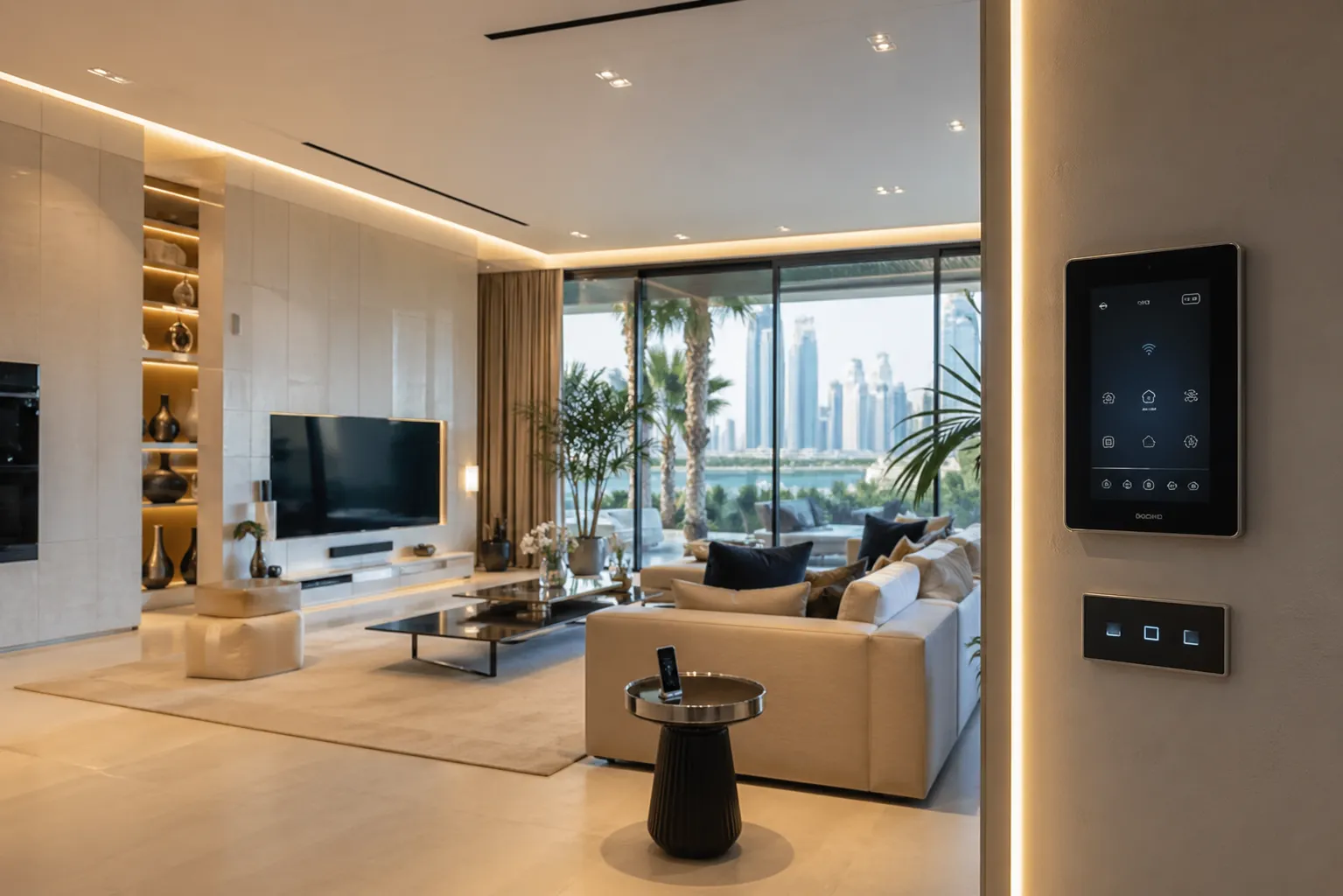
Smart lighting, automated curtains, climate controls, integrated entertainment systems, security features, and voice-controlled devices can improve convenience while keeping the visual appearance clean.
The strongest smart-home interiors make technology almost invisible. Screens, speakers, switches, sensors, and controls can be integrated into walls, ceilings, cabinetry, or furniture so that technology supports the room rather than dominating it.
Homeowners interested in combining technology with aesthetics can also explore these smart home interior design ideas for UAE residents.
5. Open-Plan Living Is Becoming More Flexible
Open-plan living continues to work well for modern homes, but today’s layouts are becoming more carefully zoned. Simply removing walls is not enough. Each area still needs a clear purpose.
A single open space might include:
- A comfortable living zone
- A dining area for family meals and entertaining
- A kitchen with practical circulation
- A small home-working corner
- A reading or relaxation area
Furniture placement, rugs, lighting, shelving, and subtle changes in flooring or ceiling treatment can define each zone without creating unnecessary visual barriers.
6. Multi-Functional Furniture Works Especially Well in Apartments
Apartment living requires thoughtful use of available space. Multi-functional furniture can help residents create rooms that adapt to different activities throughout the day.
Examples include sofa beds, extendable dining tables, storage benches, modular sofas, fold-away desks, built-in wardrobes, and furniture with concealed storage.
The objective is not to make a home feel smaller by adding clever furniture everywhere. Instead, each piece should solve a practical problem while maintaining enough visual space for comfortable movement.
For smaller residences, our guide to small apartment decor ideas for urban UAE living provides more focused inspiration.
7. Statement Lighting Is Becoming a Major Design Feature
Lighting has moved beyond basic illumination. It is now one of the most effective ways to establish mood, highlight architectural features, and create visual hierarchy.
Modern UAE homes can benefit from a combination of:
- Ambient lighting for general illumination
- Task lighting for kitchens, desks, and reading areas
- Accent lighting for artwork and architectural details
- Pendant lights above dining areas and kitchen islands
- Decorative fixtures that act as focal points
- Hidden LED lighting for softer architectural effects
Layered lighting is particularly useful because the same room may serve different purposes throughout the day. Bright functional lighting can support daytime activities, while softer accent lighting can create a more relaxed evening environment.
8. Neutral Colours Are Being Balanced With Stronger Accents
Neutral colours remain a reliable foundation for UAE interiors, but modern spaces are increasingly using carefully selected accents to prevent rooms from feeling flat.
Popular foundation colours include:
- Warm white
- Beige
- Sand
- Taupe
- Soft grey
- Muted earth tones
Accent colours can then be introduced through artwork, cushions, rugs, curtains, decorative objects, furniture, or feature walls.
This approach allows homeowners to refresh a room later without replacing the entire interior. A timeless neutral base can remain while smaller accessories change with personal preferences.
9. Curved Furniture Adds Softness to Contemporary Interiors
Curved sofas, rounded coffee tables, arched openings, circular mirrors, and softer furniture silhouettes can make modern interiors feel less rigid.
Curves are especially useful when a room contains many straight architectural lines. Introducing a rounded sofa or circular lighting fixture can create visual contrast and make the space feel more relaxed.
However, curves should be used strategically. Too many competing shapes can make a room feel visually busy, so one major curved feature can often have a stronger effect than several unrelated pieces.
10. Personalised Interiors Are More Important Than Following Every Trend
One of the most useful developments in modern interior design is the move toward personalisation. A well-designed home should reflect the people living in it rather than look like a showroom.
Personalisation can come from:
- Family photographs and artwork
- Travel collections
- Custom furniture
- Books and personal objects
- Handcrafted accessories
- Cultural details
- Favourite colours and materials
This is particularly relevant in the UAE, where residents bring diverse cultural backgrounds and design influences into their homes.
11. Bedrooms Are Becoming Calmer and More Comfortable
Bedrooms are increasingly being designed as restorative spaces rather than purely decorative rooms. Soft colours, comfortable upholstery, layered lighting, textured fabrics, and uncluttered layouts can create a more relaxing environment.
Large upholstered headboards, integrated bedside lighting, built-in storage, blackout solutions, and soft flooring elements can combine comfort with practical functionality.
For more specific bedroom inspiration, see our guide to bedroom interior design trends in Dubai.
12. Kitchens Are Becoming More Social and Functional
The kitchen is increasingly treated as part of the living environment rather than an isolated work area. Open kitchens, islands, integrated appliances, practical storage, and comfortable seating can make the space more useful for both cooking and socialising.
Modern kitchens are also benefiting from concealed storage and cleaner cabinetry because reducing visible clutter helps open-plan homes maintain a cohesive appearance.
Explore these kitchen design trends for modern UAE families for more detailed ideas.
13. Outdoor Spaces Are Becoming Extensions of the Home
Balconies, terraces, patios, and gardens can be designed as genuine living spaces rather than overlooked areas.
Comfortable outdoor furniture, appropriate lighting, shade solutions, greenery, and durable finishes can transform an outdoor area into a place for dining, relaxation, or entertaining.
This approach works particularly well for UAE villas and residences with larger terraces or gardens. The design should nevertheless account for the local climate when selecting outdoor materials and furniture.
14. Sustainability Is Influencing Material and Energy Decisions
Sustainable interior design is becoming increasingly relevant as homeowners look for durable products, efficient lighting, responsible materials, and solutions that can reduce resource consumption.
Dubai Municipality’s green-building resources emphasise resource efficiency and provide guidance around green-building materials and products. Homeowners undertaking major renovations should therefore consider not only appearance but also material performance, durability, maintenance, and environmental impact.
Practical sustainable choices can include energy-efficient lighting, durable furniture, responsibly sourced materials, low-impact finishes where appropriate, water-efficient fixtures, and designs that reduce the need for frequent replacement.
15. Texture Is Adding Depth to Modern Homes
When a room uses a restrained colour palette, texture becomes particularly important. Textured walls, natural stone, timber, boucle upholstery, woven fabrics, rugs, curtains, and decorative surfaces can add depth without introducing excessive colour.
Texture also helps prevent minimalist interiors from feeling sterile. A room with a simple colour scheme can still feel rich when several complementary materials are layered thoughtfully.
How to Choose the Right Interior Design Trend for Your UAE Home
Following every new trend is rarely the best approach. A better strategy is to identify which trends solve genuine problems in your home and which ones support your lifestyle.
Consider the Size of the Property
Smaller apartments usually benefit from efficient storage, flexible furniture, light colours, visual continuity, and carefully planned lighting. Larger villas can accommodate stronger zoning, statement furniture, feature walls, and dedicated spaces.
Consider Your Daily Routine
A family that regularly entertains guests may prioritise open living and dining areas, while someone working from home may need better acoustic separation and a dedicated workspace.
Choose Materials for Real Life
A beautiful material is not automatically a practical material. Consider maintenance requirements, durability, cleaning, climate conditions, children, pets, and how frequently a space is used before making expensive selections.
Build Around a Timeless Foundation
Large furniture pieces, flooring, cabinetry, and built-in elements are expensive and disruptive to replace. It is usually more practical to keep these elements relatively timeless and introduce stronger trends through accessories, lighting, artwork, and smaller furnishings.
Use Professional Guidance for Major Renovations
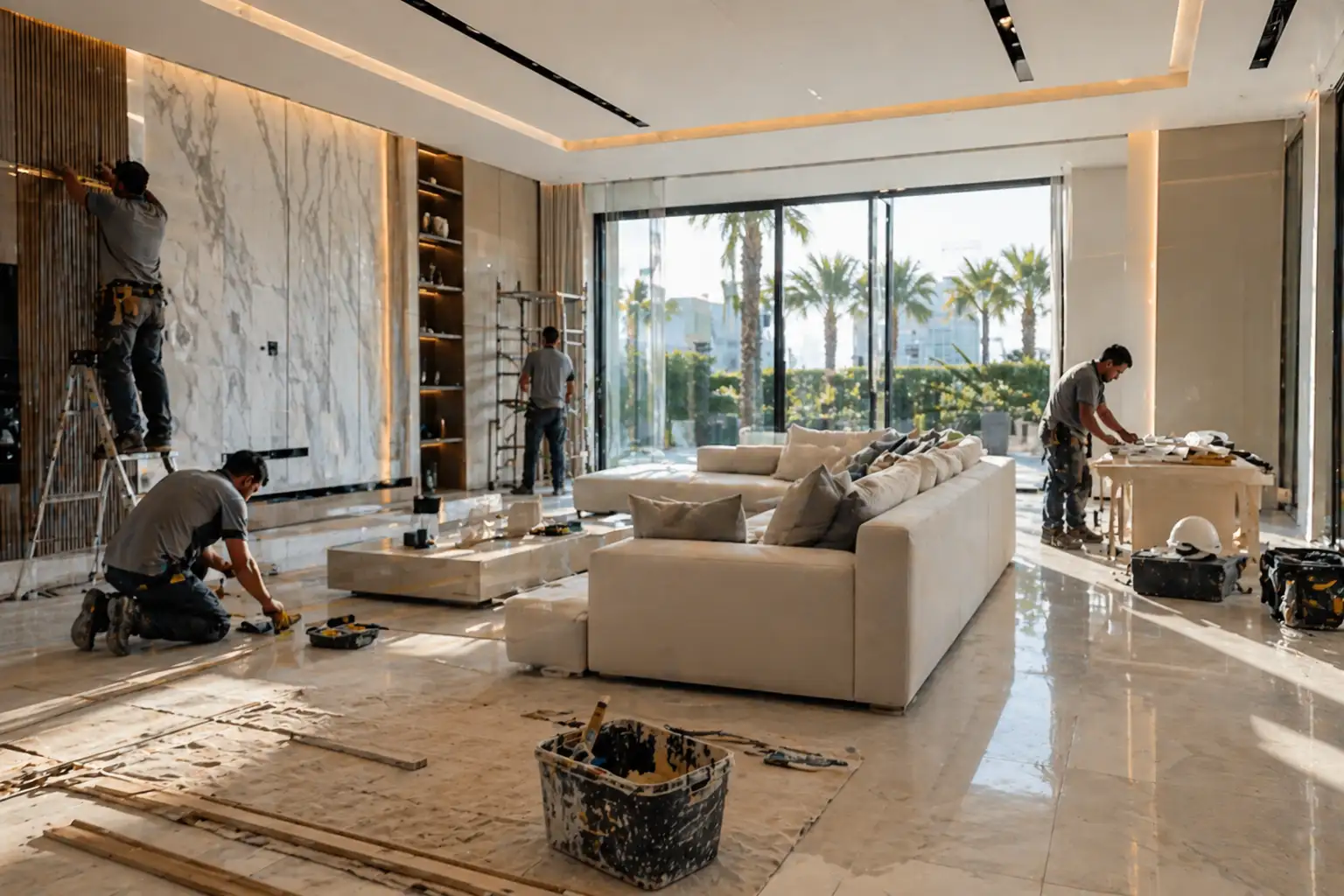
For structural changes, extensive renovations, or complex fit-out projects, professional planning can help coordinate layouts, materials, lighting, electrical requirements, storage, and finishing details.
Homeowners considering professional support can also review our guide to interior design companies in the UAE and our resource on interior fit-out services in the UAE.
Interior Design Trends in the UAE: What Matters Most?
The strongest residential interiors are not necessarily the ones that follow the greatest number of trends. They are the ones that combine aesthetics with everyday usability.
For modern UAE homes and apartments, the most useful direction is a balanced combination of warm minimalism, natural materials, flexible layouts, smart technology, layered lighting, subtle cultural influence, personal details, and sustainable choices.
Instead of designing a home around a temporary trend, homeowners can use these ideas as a framework and adapt them to the property’s architecture, climate, budget, and lifestyle.
Final Thoughts
Interior design trends in the UAE are moving toward homes that feel warmer, smarter, more flexible, and more personal. Modern luxury is increasingly about thoughtful planning rather than visual excess.
Whether you are furnishing a Dubai apartment, renovating an Abu Dhabi villa, or updating a family home elsewhere in the UAE, the best results come from combining timeless foundations with carefully selected contemporary details.
By focusing on comfort, functionality, material quality, lighting, technology, sustainability, and personal expression, homeowners can create interiors that remain attractive while continuing to work well for everyday UAE living.