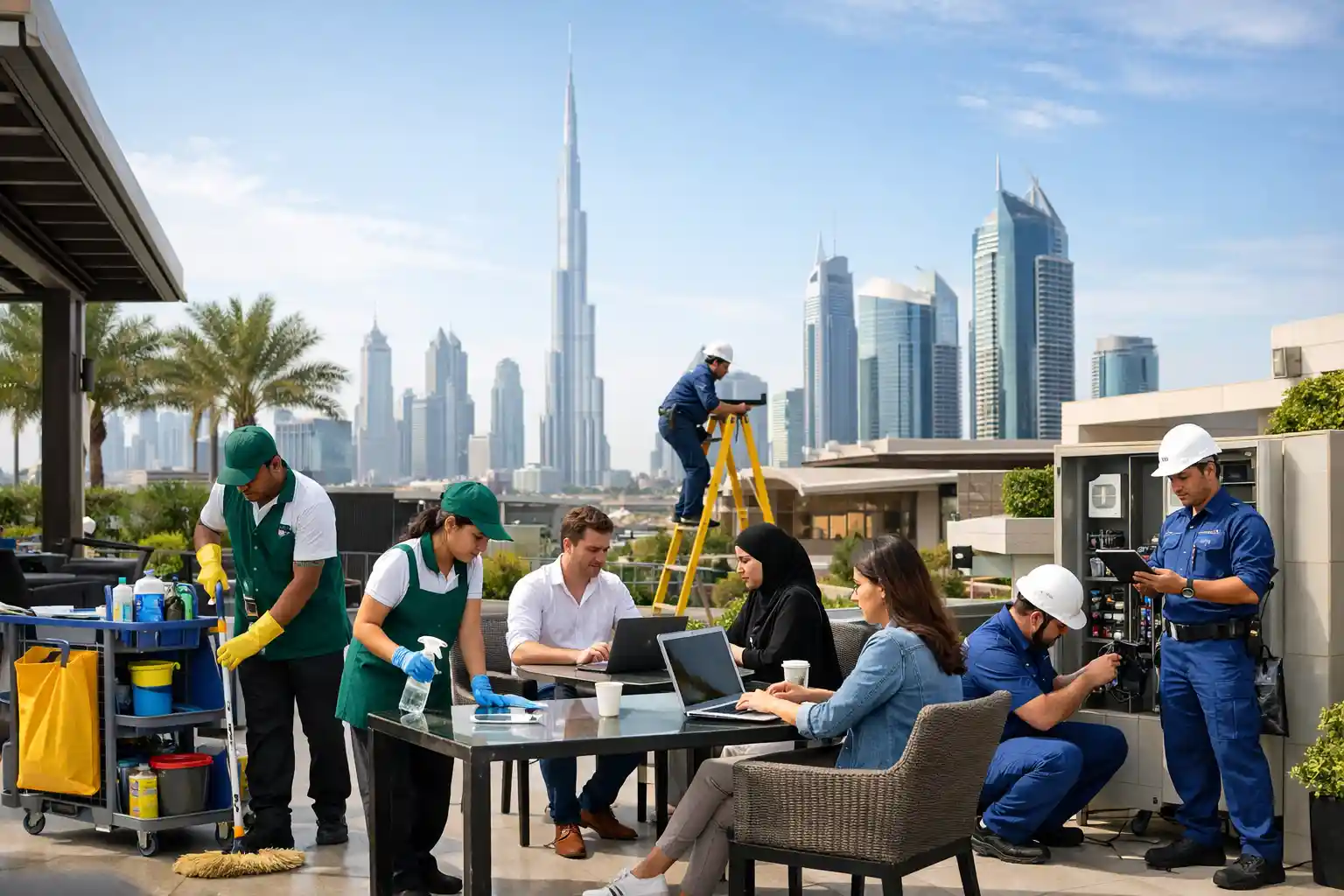
How SMEs in the UAE Are Adapting to a Changing Economic Landscape
Small and medium-sized enterprises are an essential part of the UAE’s business ecosystem, but the environment in which they operate is changing quickly. Digital adoption, evolving customer expectations, new financing options, regulatory developments, changing costs, and stronger competition are forcing SMEs to become more flexible and strategic.
For many UAE SMEs, adaptation is no longer simply about surviving difficult periods. It is about building business models that can respond quickly to new opportunities while maintaining healthy cash flow, efficient operations, and strong customer relationships.
The UAE Government continues to place significant emphasis on SMEs through initiatives such as the National SME Programme, the UAE SME Council, and the National Agenda for Entrepreneurship and SMEs. These initiatives are designed to strengthen entrepreneurship and help smaller businesses contribute to economic diversification. Learn more about UAE SME support and programmes.
Why the UAE SME Landscape Is Changing
The UAE has developed into a highly competitive and diversified business environment. SMEs now operate alongside established local companies, international businesses, technology startups, online brands, and specialized service providers.
At the same time, customers have become more digitally connected and more selective. Businesses are expected to provide convenient experiences, communicate quickly, offer competitive value, and maintain a professional digital presence.
Several forces are therefore shaping the direction of UAE SME business trends:
- Rapid digital transformation
- Changing consumer expectations
- Greater adoption of e-commerce
- Increasing use of artificial intelligence and automation
- Pressure to improve operating efficiency
- More sophisticated financial planning
- Demand for specialized products and services
- Stronger competition across many sectors
- Changing workforce expectations
- Greater attention to sustainability and responsible business
1. Digital Transformation Is Becoming a Core SME Strategy
Technology has moved from being an optional investment to an important part of business strategy. UAE SMEs are increasingly using websites, e-commerce platforms, cloud software, customer relationship management systems, analytics, digital payment solutions, and automated workflows.
Digital transformation can help smaller companies compete with larger organizations by improving speed, reducing repetitive work, and making customer information easier to manage.
For example, a small retailer can combine a physical shop with online sales, while a professional service company can use digital scheduling, online payments, customer relationship management, and automated communication.
Businesses interested in the wider technology shift can explore digital transformation in the UAE and business process optimization.
2. SMEs Are Investing More Heavily in Online Channels
One of the clearest changes in the SME landscape is the move toward digital customer acquisition and online sales.
A business no longer needs to depend entirely on a physical location to reach customers. Websites, marketplaces, social media, search engines, messaging platforms, and e-commerce systems allow SMEs to build visibility beyond their immediate neighbourhood.
This is particularly important for product-based businesses. A small UAE brand can combine a physical operation with an online store, marketplace listings, social commerce, and direct customer communication.
Businesses exploring this opportunity can also review how small businesses in the UAE can start selling online and learn more about UAE e-commerce growth.
3. Customer Expectations Are Becoming More Demanding
Today’s customers expect more than a good product. They increasingly value convenience, speed, transparency, personalization, reliable service, and easy communication.
For SMEs, this means customer experience can become a major competitive advantage.
A smaller company may not be able to match a large competitor’s advertising budget, but it can often compete through faster communication, personalized service, flexible solutions, and stronger customer relationships.
Businesses are also using social platforms to communicate directly with customers, answer questions, collect feedback, showcase products, and build communities around their brands.
4. Social Media Has Become a Business Channel
Social media is no longer simply a promotional tool for UAE SMEs. It can influence discovery, customer communication, reputation, lead generation, and sales.
Instagram, TikTok, LinkedIn, YouTube, and other platforms serve different audiences and business objectives. A consumer brand may use short-form video and visual storytelling, while a B2B company may focus more heavily on LinkedIn and educational content.
The strongest SMEs are increasingly treating social media as part of a broader digital strategy rather than relying on isolated posts.
For additional context, see social media marketing trends in the UAE.
5. Artificial Intelligence Is Changing How SMEs Work
Artificial intelligence is becoming increasingly accessible to smaller businesses. SMEs can use AI-supported tools for content creation, customer support, data analysis, workflow automation, research, forecasting, and internal productivity.
The important shift is not simply using AI because it is popular. Businesses need to identify repetitive or data-heavy processes where technology can create measurable value.
For example, an SME might use AI to help organize customer inquiries, summarize information, identify patterns in sales data, or support content workflows while keeping human oversight for important decisions.
Explore the wider topic of AI in UAE business to understand how artificial intelligence is becoming part of commercial operations.
6. Cloud Technology Is Supporting Flexible Operations
Cloud-based software is another important part of SME modernization. Instead of depending entirely on systems installed on individual office computers, businesses can use cloud platforms for accounting, collaboration, customer management, document storage, communication, and other operational needs.
This can make it easier for teams to work from different locations and gives business owners better access to information when making decisions.
Cloud technology can also support growth because businesses can often add users, services, or storage as their requirements change.
SMEs interested in this shift can explore cloud computing in the UAE.
7. Financial Resilience Has Become a Strategic Priority
Growth is important, but SMEs also need financial resilience. Changes in operating costs, supplier pricing, customer demand, and market conditions can quickly affect smaller companies.
As a result, many businesses are paying closer attention to:
- Cash-flow forecasting
- Operating expenses
- Supplier negotiations
- Inventory management
- Profit margins
- Payment collection
- Emergency reserves
- Revenue diversification
Financial discipline can give an SME more flexibility when market conditions change. A company with healthy cash management is generally better positioned to invest in technology, marketing, hiring, or expansion when opportunities appear.
8. SMEs Are Exploring More Diverse Financing Options
Traditional business finance remains important, but SMEs are also exploring a wider range of funding possibilities depending on their business model and stage of development.
Potential options may include bank financing, venture capital, private investment, fintech-based solutions, government-backed programmes, and other forms of business finance where appropriate.
The right financing structure depends on factors such as revenue stability, business stage, risk tolerance, ownership structure, and the purpose of the funding.
Businesses should therefore avoid treating funding as a substitute for a viable business model. Sustainable revenue, disciplined spending, and a clear growth strategy remain fundamental.
9. Revenue Diversification Is Reducing Business Risk
Many SMEs are becoming less dependent on a single product, customer segment, or sales channel.
A service company might introduce recurring packages, while a retailer could add online sales. A professional consultancy might create training products or subscription-based services alongside traditional consulting.
Revenue diversification can reduce concentration risk and create additional opportunities for customer retention.
However, diversification should remain controlled. Expanding into too many unrelated products or services can stretch a small company’s staff, finances, and management attention.
10. Subscription and Recurring-Revenue Models Are Gaining Attention
Recurring revenue can provide SMEs with greater visibility into future income. This is one reason subscription-based services, retainers, memberships, maintenance plans, and recurring product deliveries are becoming attractive in suitable industries.
The model works particularly well when customers receive ongoing value rather than a one-time transaction.
However, retaining subscribers requires consistent service quality. Businesses must continuously demonstrate value instead of assuming customers will remain loyal automatically.
11. SMEs Are Building More Specialized Market Positions
Competing with large companies on price alone can be difficult. Smaller businesses can often create stronger positions by serving a specific customer group or solving a specialized problem.
Niche positioning may involve:
- Serving a particular industry
- Targeting a specific customer demographic
- Offering specialized professional services
- Focusing on premium products
- Providing culturally relevant products
- Developing highly personalized services
- Serving underserved geographic markets
Specialization can make marketing more focused and help SMEs communicate a clearer value proposition.
12. Partnerships Are Helping SMEs Expand Their Capabilities
SMEs do not always need to build every capability internally. Strategic partnerships can provide access to technology, distribution networks, professional expertise, suppliers, marketing channels, and new customer groups.
For example, a small e-commerce brand may partner with a fulfillment provider, marketing agency, technology company, or complementary retailer.
Partnerships can also make market expansion less risky because businesses can share resources and expertise instead of developing every function from scratch.
13. Workforce Strategies Are Becoming More Flexible
The way SMEs recruit and manage employees is changing alongside the wider labour market. Flexible arrangements, remote collaboration, specialist contractors, and hybrid working can allow smaller businesses to access skills without building unnecessarily large office-based teams.
At the same time, SMEs need to invest in training. Digital tools, AI, cybersecurity, e-commerce, analytics, and modern customer-service expectations require employees to keep developing their skills.
A smaller company can benefit significantly when employees are encouraged to learn, experiment, and take responsibility for improving processes.
14. Employee Retention Is Becoming a Business Advantage
Hiring is only one part of workforce strategy. Retaining skilled employees can help SMEs protect institutional knowledge, maintain service quality, and reduce repeated recruitment costs.
Clear responsibilities, professional development, recognition, fair management, and a healthy workplace culture can contribute to stronger retention.
For smaller companies, the impact of losing one experienced employee can be significant because teams are often lean and individual roles may cover several functions.
15. Compliance and Regulatory Awareness Matter More as Businesses Grow
As SMEs become more sophisticated, regulatory awareness becomes increasingly important. Licensing, taxation, employment requirements, contracts, data handling, sector-specific regulations, and other obligations can affect how a business operates.
Business owners should maintain accurate records and seek qualified professional advice where the requirements are complex or change over time.
Businesses can also review business risks and regulatory compliance and understand why business compliance is essential.
16. Business Setup Choices Are Becoming More Strategic
Where and how an SME is established can influence its operating model, licensing requirements, market access, costs, and future expansion plans.
Entrepreneurs may consider mainland structures, free zones, specific economic clusters, or other available options depending on their activities and objectives.
The right choice should be based on the business activity and long-term strategy rather than choosing an option simply because it is popular.
For entrepreneurs considering setup options, our guide to business setup free zones in the UAE provides a useful starting point.
17. E-Commerce Is Creating New Opportunities for Smaller Brands
E-commerce has reduced some of the traditional barriers to entering consumer markets. SMEs can test products online, build direct customer relationships, collect data, and expand gradually.
However, digital selling also creates new responsibilities. Businesses need reliable logistics, clear product information, secure payment processes, responsive customer support, and effective returns management.
The opportunity is therefore not simply to launch an online store. The objective is to create an efficient digital customer journey from discovery through purchase and after-sales support.
18. Retail SMEs Are Combining Physical and Digital Experiences
Physical retail remains important in the UAE, but retailers are increasingly combining offline and online experiences.
A customer might discover a product on social media, visit a physical store, compare prices online, place an order through a website, and later receive a personalized offer through a digital channel.
This creates an opportunity for smaller retailers to use technology without abandoning the advantages of physical customer interaction.
The wider retail trends in the UAE show why businesses need to understand changing consumer behaviour rather than relying on traditional retail models alone.
19. Sustainability Is Becoming Part of Business Positioning
Sustainability is increasingly influencing purchasing decisions, corporate practices, and brand reputation. SMEs are responding through more efficient operations, responsible sourcing, reduced waste, energy-conscious practices, and products designed around changing consumer expectations.
For some businesses, sustainability can also reduce costs by improving resource efficiency. However, environmental claims should be accurate and supported by genuine business practices rather than used purely as marketing language.
SMEs can explore broader sustainability initiatives for UAE businesses as part of their long-term planning.
20. Business Owners Are Using Data More Actively
Data is becoming increasingly valuable for SMEs because it can help owners understand what is actually happening inside the business.
Useful indicators can include:
- Customer acquisition cost
- Conversion rate
- Average order value
- Customer retention
- Gross margin
- Inventory turnover
- Website traffic
- Marketing performance
- Cash-flow trends
The objective is not to collect as much data as possible. It is to identify the numbers that help management make better decisions.
How UAE SMEs Can Build Greater Resilience
Adaptation does not require every SME to adopt every new technology or business trend. A more practical approach is to identify the areas where change can create measurable value.
1. Review the Current Business Model
Identify the products, services, customers, and channels that generate the strongest results. Remove unnecessary complexity where possible.
2. Strengthen the Digital Foundation
Ensure the business has a professional website, reliable communication channels, secure digital systems, and an appropriate online sales or lead-generation strategy.
3. Improve Cash-Flow Visibility
Track expected income and expenses regularly. Understanding upcoming financial commitments can help owners make better decisions before problems develop.
4. Automate Repetitive Work
Look for administrative tasks that consume employee time without adding significant customer value. Appropriate automation can improve productivity and reduce errors.
5. Focus on Customer Retention
Acquiring customers can be expensive. Strong service, personalized communication, loyalty programmes, and reliable after-sales support can help businesses generate repeat revenue.
6. Build Multiple Revenue Channels Carefully
Consider whether online sales, recurring services, partnerships, or new customer segments can complement the existing business without creating excessive operational complexity.
7. Keep Monitoring the Regulatory Environment
Business owners should stay aware of relevant licensing, tax, employment, and industry requirements and obtain professional advice when necessary.
The Role of Government Support for UAE SMEs
Government support remains an important part of the UAE’s entrepreneurship ecosystem. The UAE’s National Agenda for Entrepreneurship and SMEs is designed to strengthen the country’s position as an entrepreneurial nation by 2031.
Official UAE information highlights support available to SMEs through the National SME Programme, UAE SME Council, entrepreneurship initiatives, and other programmes. Entrepreneurs can use government resources to identify relevant support rather than relying solely on informal information.
The official UAE Government platform also provides information about starting businesses, e-commerce, SME support, and other business services.
What the Future Looks Like for SMEs in the UAE
The UAE SME landscape is likely to become increasingly digital, data-driven, customer-focused, and specialized. Businesses that can adapt quickly will have an advantage over companies that depend entirely on outdated processes.
Artificial intelligence, automation, e-commerce, cloud technology, digital marketing, and specialized services will continue to create opportunities. At the same time, competition will require SMEs to maintain strong fundamentals such as cash-flow management, customer service, operational efficiency, and regulatory compliance.
The most resilient businesses will not necessarily be those that adopt every new trend. They will be those that understand their customers, measure their performance, respond quickly to change, and invest selectively in technologies and strategies that support sustainable growth.
Final Thoughts
SMEs in the UAE are adapting to a changing economic landscape by becoming more digital, flexible, customer-focused, financially disciplined, and innovative. Technology is opening new opportunities, while changing consumer expectations and competition are pushing businesses to improve their operations.
For entrepreneurs, the key is to treat adaptation as an ongoing business process rather than a one-time transformation. Reviewing the business model, improving digital capabilities, strengthening financial resilience, developing employees, understanding regulations, and listening closely to customers can create a stronger foundation for long-term growth.
As the UAE continues developing its diversified and innovation-focused economy, adaptable SMEs will remain an important part of the country’s broader business ecosystem.