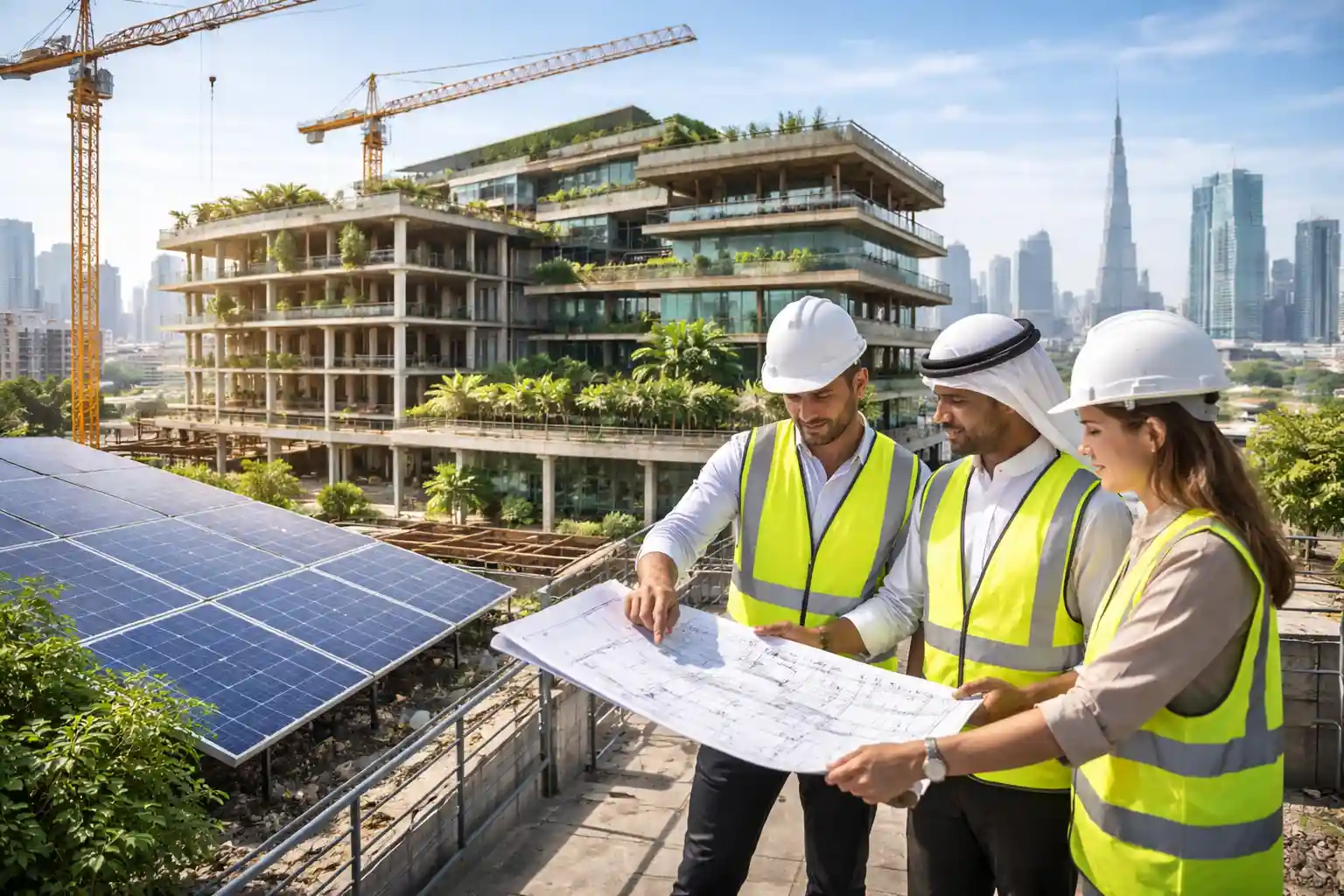
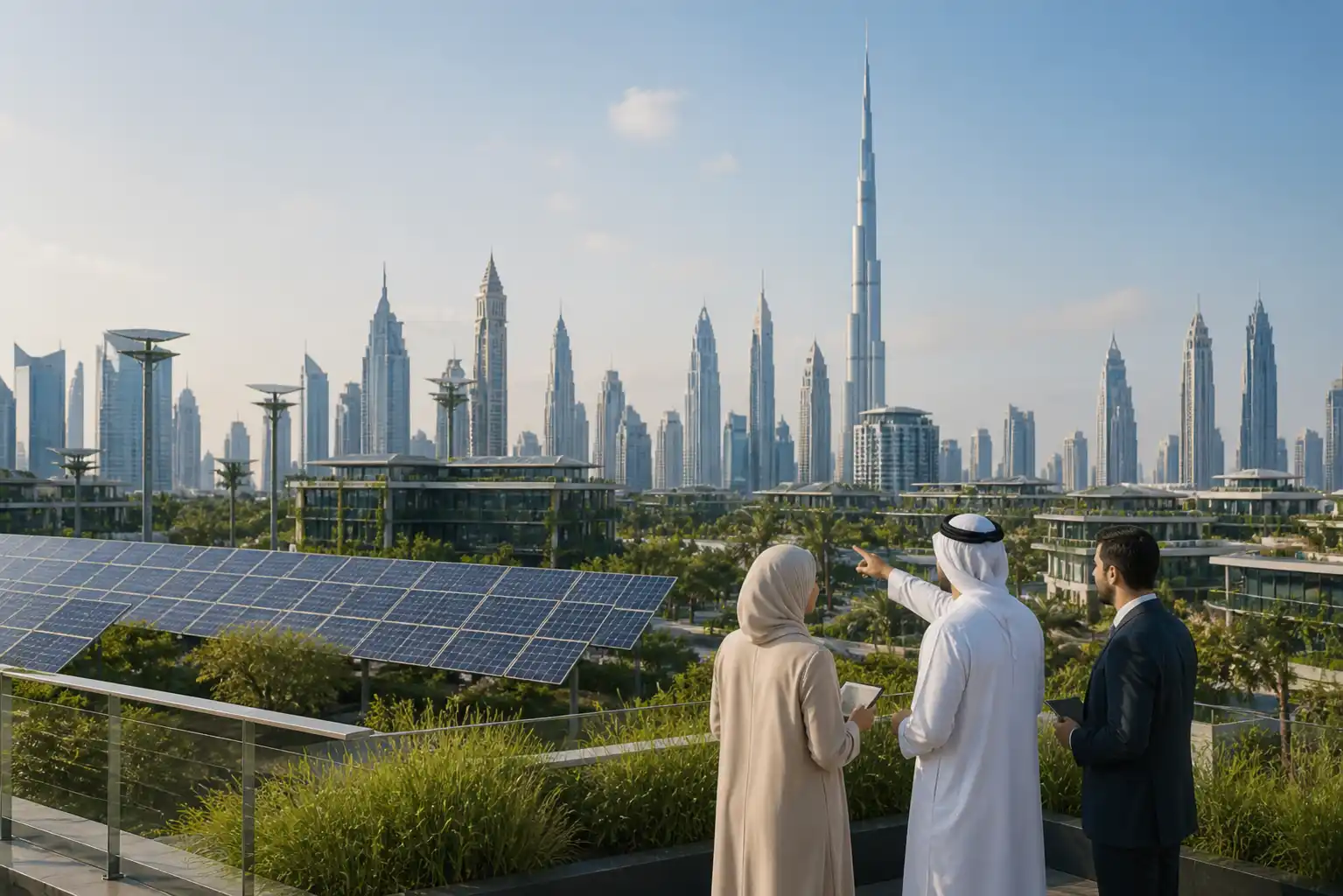
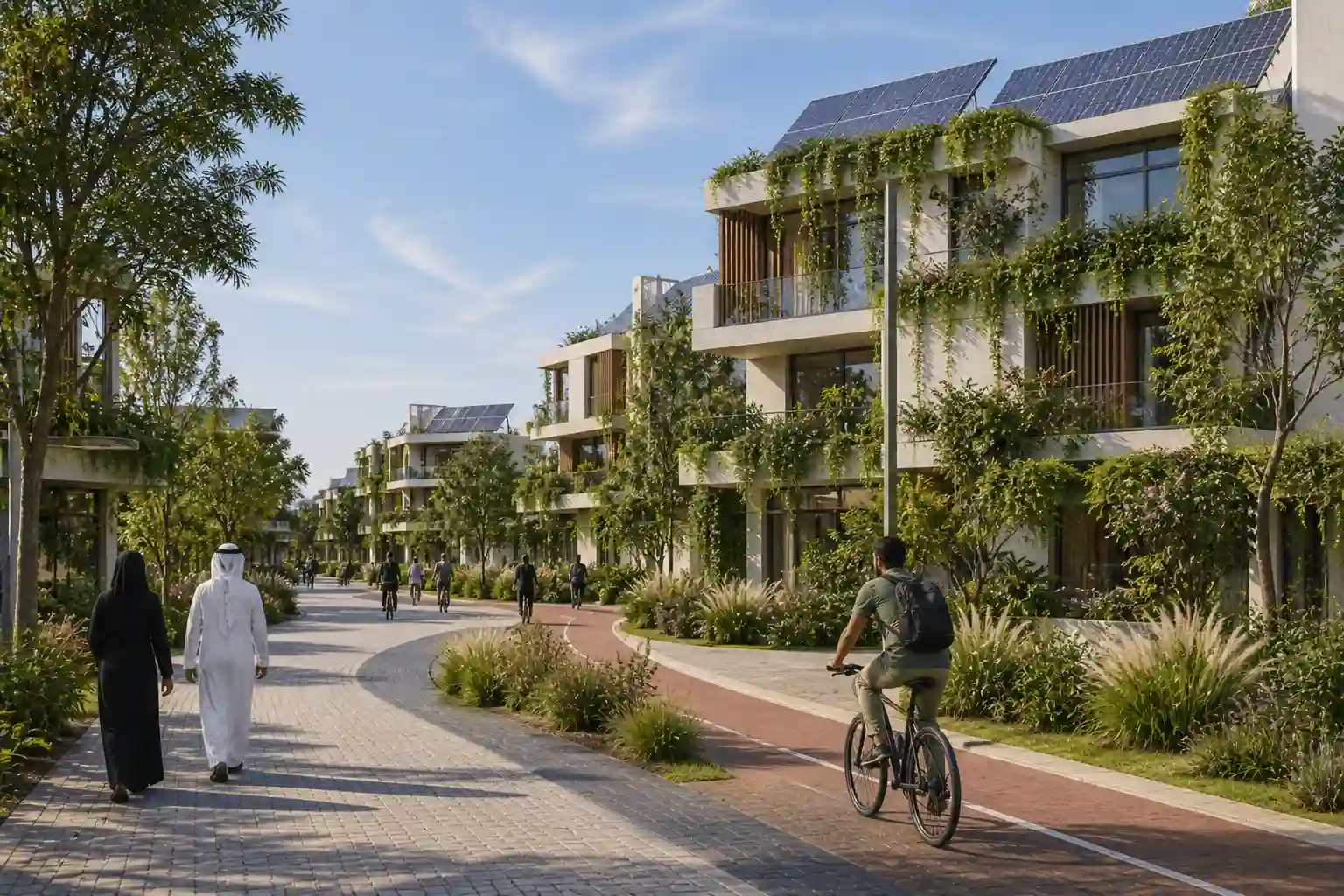
Rather than treating research as a separate academic activity, the UAE increasingly connects scientific development with practical applications. Government strategies, universities, research centres, technology companies and startups are contributing to an ecosystem designed to turn scientific knowledge into new products, services and solutions.
This approach is particularly important for a country addressing challenges such as water scarcity, desert agriculture, climate conditions, energy transition and the need to develop highly skilled technology talent.
Why Science and Innovation Matter to the UAE
The UAE’s science and technology agenda is closely connected to economic diversification and long-term development. The country’s official Science, Technology and Innovation Policy identifies strategic areas including education, health, water, renewable and clean energy, space, technology and transportation. It also identifies areas such as biotechnology, robotics, artificial intelligence, cybersecurity, smart cities, food security, autonomous vehicles and advanced aerospace technologies.
This broad focus reflects the fact that innovation can address both economic opportunities and practical national challenges.
For example, AI can improve digital services and data analysis, biotechnology can support food production, space technology can provide Earth-observation capabilities, while renewable-energy technologies can contribute to a lower-carbon energy system.
The UAE’s National Innovation Framework
The UAE has developed multiple strategies and programmes designed to strengthen research, advanced technology and innovation. The official government portal lists initiatives including the National Advanced Sciences Agenda 2031, National Space Strategy 2030, National R&D Leadership Programme, Dubai Research and Development Programme, Dubai Robotics and Automation Program and the Science, Technology and Innovation Roadmap.
The National Advanced Sciences Agenda 2031 is particularly relevant because it focuses on using advanced sciences to develop solutions to future challenges and support the UAE’s longer-term development objectives.
These initiatives create a framework in which research, technology development and commercialization can operate together rather than as isolated activities.
Artificial Intelligence Is a Major Innovation Priority
Artificial intelligence in the UAE has become one of the most visible areas of technological development.
The UAE launched its national AI strategy in 2017 with objectives connected to UAE Centennial 2071, government performance, digital transformation, investment and the development of new economic opportunities. The strategy identifies applications across sectors including transport, health, space, renewable energy, water, education and the environment.
AI is therefore not limited to software companies. It can be applied to scientific research, medical diagnostics, transport systems, environmental monitoring, energy management and government services.
Readers interested specifically in this area can explore artificial intelligence and intelligent agents in the UAE.
AI, Data and Scientific Research
Scientific research increasingly depends on large datasets. AI and machine-learning systems can help researchers identify patterns, classify information, analyse images and process large quantities of observations.
This is particularly relevant to fields such as astronomy, climate science, healthcare, genomics and environmental monitoring.
The UAE’s AI framework also places emphasis on capabilities, infrastructure, governance and responsible adoption. More recent government guidance includes resources covering AI ethics, adoption in government services, AI maturity, generative AI and AI hardware infrastructure.
Space Science and Exploration
Space science has become one of the UAE’s most visible scientific achievements.
The UAE Space Mission programme includes satellite technology, planetary science and future deep-space exploration. The Emirates Mars Mission’s Hope Probe entered Mars orbit in 2021 and has provided observations of the planet’s atmosphere and scientific data for researchers.
The UAE government identifies space science and technology as a key sector, including celestial exploration, satellite communications, remote sensing, environmental monitoring and terrestrial applications of space technologies.
The country’s future plans also include an interplanetary mission targeting the asteroid belt, demonstrating how the UAE’s space programme is moving beyond Earth-orbiting applications and Mars science.
The wider regional significance of this work is explored in Arabs to Mars, which examines how the UAE’s Mars programme is contributing to Arab participation in planetary science.
Biotechnology and Life Sciences
Biotechnology in the UAE is another important area of scientific development.
Life-science research can contribute to healthcare, food security, agriculture, environmental management and industrial applications. The UAE’s science and technology policy identifies biotechnology and genomics among its focus areas.
Biotechnology is particularly relevant to the UAE’s food-security challenges. Researchers and agricultural businesses are exploring technologies that can make food production more efficient in hot and water-constrained environments.
These include vertical farming, hydroponics, smart irrigation, controlled environments and crop research.
Explore the related EmiratesBeacon coverage on biotechnology in the UAE for a more focused look at this field.
Scientific Innovation and Sustainable Agriculture
Food production presents a unique scientific challenge in the UAE because agriculture operates in an arid climate with limited freshwater resources.
Innovation can help address these constraints through technologies that reduce water consumption, improve growing conditions and increase the efficiency of agricultural operations.
Smart irrigation systems, hydroponics, vertical farming, sensors, automation and data-driven agriculture can all contribute to more controlled production environments.
Biotechnology can complement these technologies by supporting crop research and the development of approaches suited to challenging environmental conditions.
Water Science and Rain Enhancement
Water security is another major area where the UAE applies science and technology to a practical national challenge.
The country’s research into rainfall enhancement combines atmospheric science, weather monitoring, cloud physics, numerical modelling and field experiments.
Dubai cloud seeding is part of this wider effort. Cloud seeding does not create rain from clear skies; instead, it attempts to influence precipitation processes within suitable existing clouds.
The UAE’s research programme is also investigating new seeding materials, artificial intelligence, unmanned systems and improved atmospheric measurement techniques.
Water research illustrates an important characteristic of the UAE innovation model: scientific research is frequently connected to a specific environmental or infrastructure challenge.
Renewable Energy and Clean Technology
Energy technology is another major part of the UAE’s science and innovation landscape.
Research and investment in solar power, energy systems, storage technologies and other clean-energy solutions are relevant to the country’s long-term energy transition.
The UAE’s science and technology policy specifically identifies renewable and clean energy among its strategic focus areas.
Readers can explore the related renewable energy in the UAE cluster for more information about how clean-energy technologies are developing in the country.
Healthcare and Medical Technology
Healthcare is another sector where scientific research and digital technology are increasingly interconnected.
Medical institutions can use AI, medical imaging, digital health platforms, robotics, predictive analytics and other technologies to support clinical and administrative processes.
AI can assist with analysing medical images and large datasets, while digital health systems can improve the way information is collected and managed.
However, healthcare innovation also requires careful attention to privacy, security, clinical validation, regulation and responsible use. Scientific progress is most useful when new technology is evaluated according to evidence and appropriate professional standards.
Robotics and Autonomous Technologies
Robotics is another area where science and engineering overlap with practical applications.
Robotic technologies can support manufacturing, logistics, healthcare, research and hazardous environments. Autonomous systems can also be valuable in sectors where remote operation or continuous monitoring is required.
The UAE government includes robotics and automation among its science, technology and innovation initiatives, including the Dubai Robotics and Automation Program.
Space exploration provides another application. Autonomous spacecraft must operate with limited opportunities for direct human intervention, making robotics, navigation and intelligent systems important parts of advanced mission design.
Smart Cities and Digital Infrastructure
Science and innovation also influence how UAE cities are designed and operated.
Smart-city systems can combine sensors, connectivity, data platforms and automation to support transportation, energy management, public services and infrastructure monitoring.
Dubai and Abu Dhabi have developed extensive digital-government and smart-city programmes, while the national digital-government strategy connects technology adoption with broader national strategies for AI, innovation and future planning.
Smart infrastructure can also create new opportunities for technology companies developing sensors, software, cybersecurity systems and data-management solutions.
Cybersecurity and Responsible Innovation
Greater dependence on connected technologies creates new risks as well as opportunities.
Cybersecurity, data protection, privacy and responsible AI are therefore important components of a modern innovation ecosystem.
The UAE’s recent AI policy developments include principles relating to ethics, privacy, data security, safety and responsible technological development.
This is particularly important as AI becomes embedded in government services, healthcare, finance, transportation and other sensitive systems.
Innovation cannot be measured only by how quickly a technology is adopted. Strong governance, security and appropriate safeguards are also necessary for sustainable technological development.
Education and the UAE’s Research Talent
Technology infrastructure alone cannot create a sustainable scientific ecosystem. The UAE also needs researchers, engineers, scientists, entrepreneurs and technical specialists who can develop and operate advanced systems.
Universities and research institutions therefore play an important role in developing capabilities in areas such as artificial intelligence, robotics, engineering, biotechnology, environmental science, space science and advanced computing.
Research partnerships can connect universities with government organisations, private companies and international institutions. These relationships can help move ideas from academic research toward practical applications.
Startups and Commercial Innovation
Startups can provide another route through which scientific research becomes commercially useful.
Technology entrepreneurs can develop products around AI, software, robotics, biotechnology, climate technology, financial technology and other emerging fields.
For the UAE, a strong startup ecosystem can complement government-funded research by creating opportunities for commercialization and private-sector investment.
The result can be a cycle in which research generates new technologies, entrepreneurs turn those technologies into products, and market demand creates further incentives for research and development.
International Research Collaboration
Modern science is highly collaborative. Advanced research often requires specialized equipment, datasets, facilities and expertise that no single institution can provide independently.
The UAE has therefore developed partnerships with international universities, research organisations, technology companies and space institutions.
International collaboration can help UAE researchers access global scientific networks while also providing opportunities for international researchers to participate in projects based in the country.
This approach is particularly important in fields such as space science, genomics, climate research and advanced engineering.
Key Challenges for Science and Innovation in the UAE
The UAE’s rapid technology development also creates challenges that require continued attention.
Developing Specialized Talent
Advanced industries need highly specialized skills. Building a sufficient pipeline of researchers, engineers and technical professionals requires long-term investment in education and training.
Research and Development Funding
Scientific breakthroughs can take years to produce practical results. Maintaining research funding and supporting long-term projects are therefore important for sustained innovation.
Cybersecurity and Data Protection
More connected systems create greater exposure to cyber threats. Strong cybersecurity and data-governance practices are necessary as digital infrastructure expands.
Responsible AI
AI development raises questions around privacy, safety, accountability, bias and appropriate human oversight. The UAE has introduced policy and governance frameworks addressing responsible AI adoption.
Moving From Research to Commercialization
Scientific research does not automatically become a successful commercial product. Researchers, entrepreneurs, investors and industry partners need mechanisms for testing, funding and scaling promising technologies.
What Does the Future of Science and Innovation in the UAE Look Like?
The UAE’s future science agenda is likely to remain broad rather than concentrating on one technology.
Artificial intelligence, advanced sciences, space exploration, biotechnology, clean energy, robotics, smart infrastructure and environmental technologies are all included within the country’s wider science and technology framework.
The government’s National Advanced Sciences Agenda 2031 also reflects a long-term focus on using advanced sciences to develop solutions to future challenges.
One important feature of the next phase will be greater integration between these fields. AI can support space science and healthcare; biotechnology can contribute to agriculture and food security; sensors and data platforms can support environmental research; and advanced materials can support aerospace and clean-energy technologies.
This cross-disciplinary approach could become increasingly important as scientific problems become more complex.
Frequently Asked Questions About Science and Innovation in the UAE
What are the main areas of science and innovation in the UAE?
Major areas include artificial intelligence, space science, biotechnology, healthcare technology, renewable energy, water research, robotics, cybersecurity, smart cities and advanced manufacturing.
What is the UAE’s National Advanced Sciences Agenda 2031?
It is a national framework focused on using advanced sciences to develop solutions to future challenges and support the UAE’s longer-term development objectives.
Why is AI important to science and innovation in the UAE?
AI can support data analysis, automation, scientific research, healthcare, transportation, environmental monitoring, space activities and government services. The UAE’s national AI strategy covers multiple sectors and emphasizes capabilities, infrastructure and responsible adoption.
How does space exploration contribute to UAE innovation?
Space missions develop capabilities in spacecraft engineering, robotics, communications, software, scientific research, autonomous systems and data analysis. The UAE also uses satellite technologies for applications such as environmental monitoring and resource mapping.
How is science being used to address water challenges?
The UAE researches rainfall enhancement, cloud physics, water management and other technologies as part of a broader approach to water security. Cloud seeding is one research and operational component rather than a standalone solution.
What challenges could affect UAE innovation?
Important challenges include developing specialized talent, maintaining research investment, protecting data and digital infrastructure, ensuring responsible AI adoption and successfully transferring scientific research into practical applications.
Conclusion
Science and innovation in the UAE have expanded into a broad ecosystem covering artificial intelligence, biotechnology, space exploration, healthcare, renewable energy, water science, robotics and digital infrastructure.
The country’s approach increasingly connects scientific research with practical national priorities. Whether the challenge involves water scarcity, food security, energy, healthcare, urban development or space exploration, advanced science and technology are being explored as tools for developing new solutions.
The next stage will depend not only on investment in technology but also on research quality, education, specialized talent, responsible governance and international collaboration.
With long-term programmes such as the National Advanced Sciences Agenda 2031, the UAE AI Strategy, the National Space Strategy and related research and innovation initiatives, science is positioned as an important part of the country’s continuing technological and economic development.