Sustainability Initiatives in the UAE: What Businesses Should Know About Green Initiatives
Sustainability initiatives in the UAE are becoming increasingly important for businesses across construction, manufacturing, retail, hospitality, real estate, logistics, technology, finance, and professional services. The country’s sustainability agenda increasingly connects environmental responsibility with energy efficiency, resource management, innovation, economic development, and long-term business resilience.
For companies operating in the UAE, green initiatives are no longer limited to planting trees or reducing paper consumption. Businesses can now consider sustainability across energy use, procurement, buildings, transportation, waste, supply chains, products, technology, and corporate reporting.
The UAE’s official policy landscape includes the UAE Net Zero 2050 Strategy, UAE Energy Strategy 2050, UAE Circular Economy Policy, UAE Green Agenda 2030, sustainable-development programmes, and emirate-level environmental strategies.
What Are Sustainability Initiatives in the UAE?
Sustainability initiatives are programmes, policies, investments, and operational practices designed to reduce environmental impact while supporting economic and social objectives.
For businesses, sustainability can include:
- Reducing electricity and water consumption.
- Increasing renewable-energy use.
- Reducing greenhouse-gas emissions.
- Improving waste segregation and recycling.
- Using resources more efficiently.
- Adopting sustainable procurement practices.
- Reducing unnecessary packaging.
- Improving building efficiency.
- Using cleaner transportation solutions.
- Developing sustainable products and services.
- Measuring environmental performance.
- Supporting employee and community sustainability programmes.
The UAE Government’s environmental policy identifies sustainable procurement as a way to improve environmental, social, and economic impacts across the life cycle of products and services.
Why Sustainability Matters for UAE Businesses
Sustainability can affect business operations in several practical ways. Energy efficiency can reduce resource consumption, better waste management can improve material recovery, and sustainable procurement can influence the environmental footprint of products and services.
There is also a strategic dimension. Businesses operating in a market increasingly focused on clean energy, climate action, circular economy principles, and resource efficiency may benefit from integrating sustainability into long-term planning rather than treating it as a separate corporate activity.
The UAE’s Green Business Toolkit 2.0 was developed specifically to help businesses contribute to the country’s net-zero transition. Its framework includes measuring current performance, setting targets, delivering actions, and communicating progress.
This approach is useful for both established organisations and companies developing new UAE SME business strategies.
Major Sustainability Initiatives Businesses Should Know
1. UAE Net Zero 2050 Strategy
The UAE Net Zero 2050 Strategy provides a long-term national framework for reducing greenhouse-gas emissions and supporting climate neutrality by 2050.
For businesses, the strategy is particularly relevant because the transition affects multiple economic sectors rather than only the energy industry. Companies can consider energy efficiency, lower-carbon operations, cleaner technologies, sustainable buildings, transportation, waste reduction, and other emissions-reduction opportunities.
The official UAE Government portal lists the Net Zero 2050 Strategy among the country’s major environment and energy strategies.
2. UAE Energy Strategy 2050
The UAE Energy Strategy 2050 focuses on increasing clean-energy capacity, improving energy efficiency, and supporting the country’s long-term energy transition.
The updated strategy sets targets around clean energy, energy efficiency, carbon-emission reductions from energy generation, and financial savings resulting from lower energy consumption.
This creates opportunities for businesses to review their own energy performance. Depending on the type of facility, companies can examine efficient lighting, cooling systems, building management, equipment, solar power, energy monitoring, and operational scheduling.
Businesses researching renewable options can also explore renewable energy in the UAE and solar energy in the UAE.
3. UAE Circular Economy Policy
The circular economy is another important part of the UAE’s sustainability direction. Instead of treating resources as products that are purchased, consumed, and discarded, a circular model seeks to extend product life, reduce waste, reuse materials, and recover resources.
The UAE Government describes its Circular Economy Policy as a comprehensive framework for determining the country’s approach to sustainable governance and the optimal use of natural resources.
Businesses can apply circular principles through:
- Product repair and refurbishment.
- Material reuse.
- Recyclable or reusable packaging.
- Responsible procurement.
- Resource recovery.
- Longer product lifecycles.
- Industrial by-product recovery.
- Waste reduction.
This makes circular economy planning relevant to companies across industrial and manufacturing sectors, retail, construction, hospitality, logistics, and consumer goods.
4. UAE Green Agenda 2030
The UAE Green Agenda provides a broader framework for building a green economy. It connects environmental protection with areas including clean energy, sustainable transportation, investment, agriculture, and urban development.
The UAE’s Green Growth Strategy was established around the objective of developing a green economy and positioning the country as a centre for green products and technologies while supporting long-term economic growth.
For businesses, this creates a broader context for developing products, services, technologies, and operating models that support resource efficiency and environmental performance.
Green Energy and Business Operations
Energy is one of the most practical areas where businesses can begin their sustainability journey. Offices, warehouses, factories, hotels, restaurants, retail stores, and commercial buildings can consume substantial amounts of electricity through cooling, lighting, equipment, refrigeration, computing, and other operations.
Companies can assess their energy use before selecting improvement measures. A basic energy audit can help identify areas where consumption is highest and where efficiency investments may have the greatest operational value.
Potential measures include:
- LED lighting.
- Efficient air-conditioning systems.
- Smart building controls.
- Energy monitoring systems.
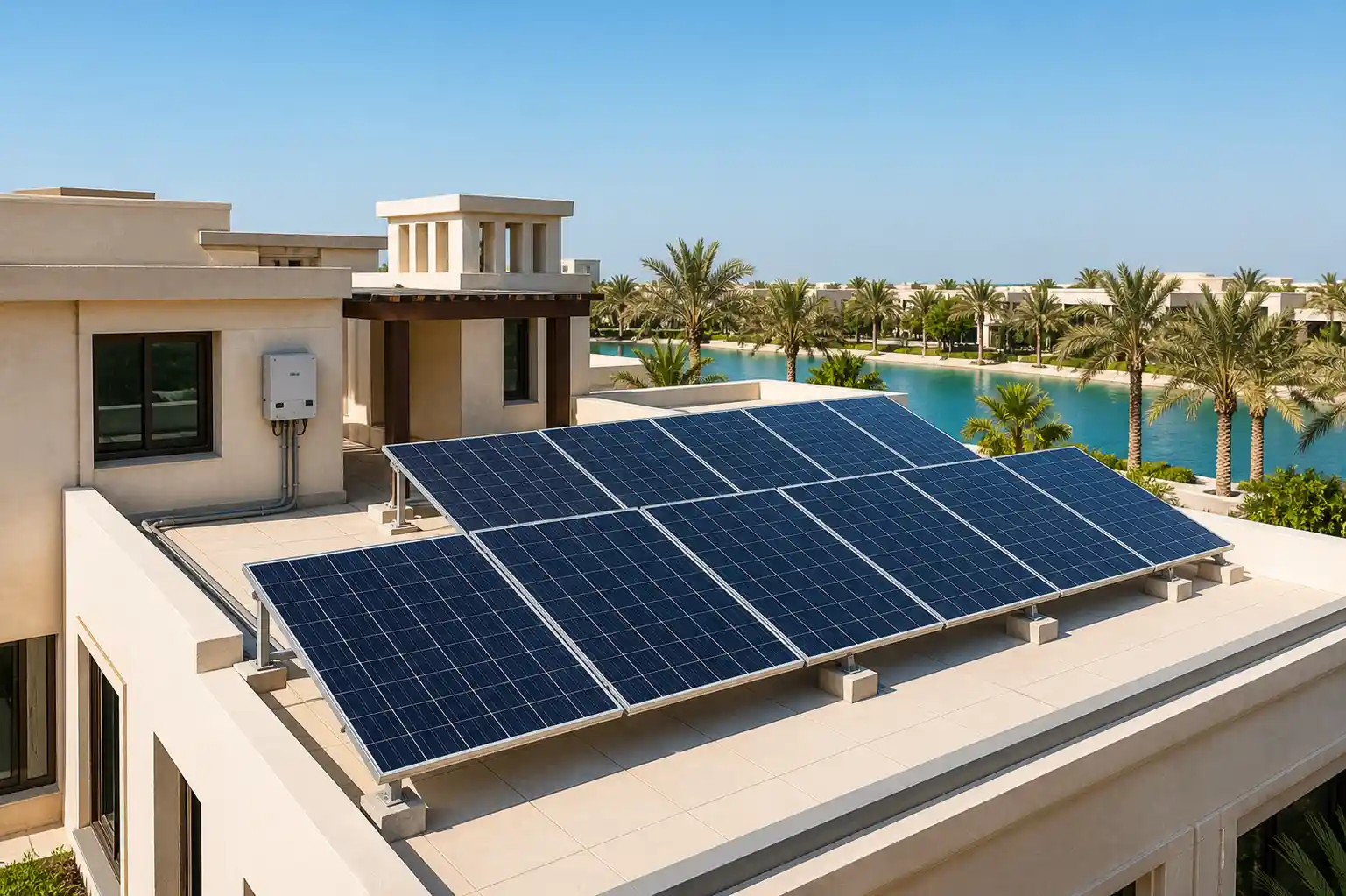
- Solar installations where appropriate.
- Efficient refrigeration.
- Building insulation and shading improvements.
- Equipment maintenance.
Businesses interested in solar technology can also review information about solar panels and solar systems as part of the wider renewable-energy landscape.
Green Buildings and Sustainable Construction
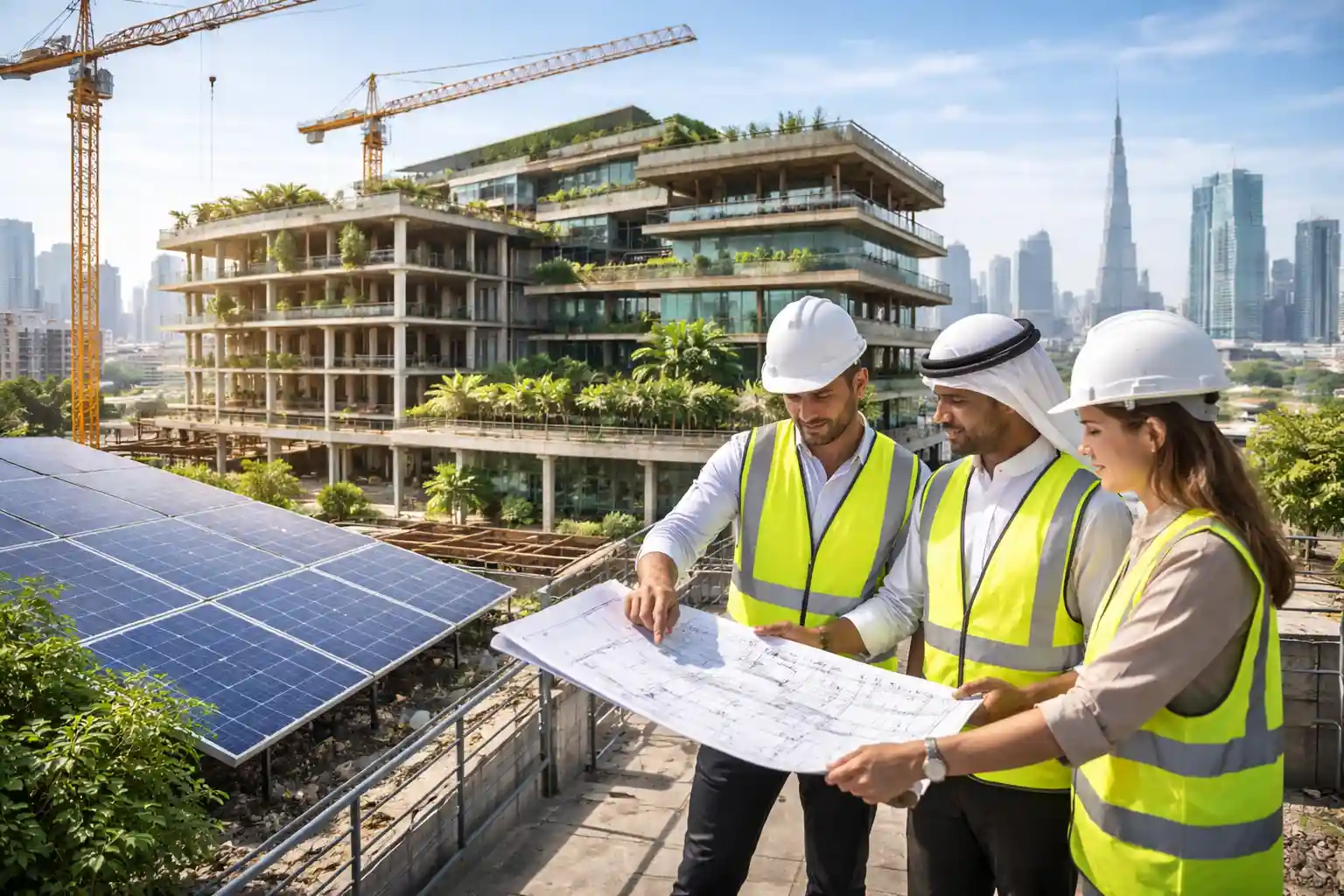
The built environment is another major sustainability opportunity in the UAE. Buildings influence energy consumption, water use, indoor comfort, material use, and operating costs throughout their lifecycle.
Businesses constructing or renovating offices, factories, retail spaces, warehouses, hotels, or other facilities can consider sustainability during the design stage rather than adding environmental features after construction.
Relevant measures can include:
- Energy-efficient building systems.
- Efficient cooling.
- Water-saving fixtures.
- Natural lighting where practical.
- Appropriate insulation.
- Efficient building controls.
- Responsible material selection.
- Construction-waste reduction.
- Landscaping designed for local conditions.
Our guide to sustainable construction trends in the UAE provides additional context for businesses and developers.
Companies involved in commercial interiors can also consider interior fit-out services in the UAE through a sustainability-focused planning approach.
Waste Management and Recycling
Waste reduction is one of the most accessible sustainability initiatives for many businesses. Offices, restaurants, retailers, construction companies, factories, warehouses, and hospitality businesses can generate different waste streams that require different approaches.
Businesses can start by identifying what they throw away and where that waste originates. From there, they can introduce source separation, recycling, reuse, improved purchasing, and better inventory management.
Our guide to waste management companies in the UAE explains how specialist providers can support collection, segregation, recycling, treatment, and responsible disposal.
The connection between waste management and sustainability is also important for businesses seeking to participate in the UAE’s circular-economy transition.
Sustainable Procurement for UAE Businesses
Procurement decisions can have an environmental impact long before a product reaches a business. Companies purchase furniture, office supplies, packaging, electronics, vehicles, equipment, construction materials, cleaning products, food, uniforms, and countless other goods.
A sustainable procurement process can consider factors such as:
- Product durability.
- Energy efficiency.
- Material composition.
- Packaging.
- Reusability.
- Repairability.
- Supplier environmental practices.
- Product lifecycle.
- Local sourcing where appropriate.
- End-of-life recovery or recycling.
The UAE Environment Policy specifically recognises sustainable procurement as a tool for improving environmental, social, and economic outcomes across the product or service lifecycle.
This approach can be integrated with broader logistics and storage operations in the UAE, especially for companies managing large inventories or complex supply chains.
Green Transportation and Business Mobility
Transportation can be another important source of emissions and operating costs. Businesses can evaluate company vehicles, employee commuting, deliveries, logistics, and business travel when developing environmental objectives.
Possible measures include:
- Route optimisation.
- Reducing unnecessary business journeys.
- Consolidating deliveries.
- Using shared transportation where practical.
- Evaluating electric or lower-emission vehicles.
- Using remote meetings when they replace unnecessary travel.
- Improving fleet maintenance.
These initiatives can be particularly relevant to logistics businesses and companies operating large commercial fleets.
Water Efficiency in UAE Businesses
Water efficiency is especially relevant in a water-scarce environment such as the UAE. Hotels, restaurants, landscaping companies, manufacturers, offices, residential communities, and other facilities can assess where water is being consumed and where losses occur.
Businesses can consider:
- Leak detection and repair.
- Water-efficient fixtures.
- Smart irrigation.
- Efficient cooling systems.
- Water monitoring.
- Appropriate landscaping.
- Employee awareness.
For companies managing commercial properties, understanding electricity and water costs in the UAE can also support more informed operational planning.
Sustainability in Retail and Consumer Businesses
Retailers interact directly with consumers, making sustainability visible through packaging, product choices, store operations, logistics, and customer communication.
Retail businesses can explore measures such as reducing unnecessary packaging, improving recycling, increasing product durability, reducing energy consumption in stores, and making responsible sourcing decisions.
These considerations are increasingly relevant to the evolving retail trends in the UAE.
Businesses should nevertheless ensure that sustainability claims accurately reflect their actual practices. Environmental messaging that cannot be supported by evidence can undermine customer trust.
Sustainability and UAE Manufacturing
Manufacturers can approach sustainability at a deeper operational level because their activities may involve significant material, energy, water, packaging, and waste flows.
Potential areas for improvement include:
- Production efficiency.
- Energy management.
- Water efficiency.
- Material optimisation.
- Waste reduction.
- Recycling of production materials.
- Equipment maintenance.
- Process automation.
- Supply-chain optimisation.
Businesses can connect these efforts with wider developments in manufacturing in Dubai and the UAE’s industrial economy.
Digital Technology Can Support Sustainability
Digital transformation can help businesses measure and manage sustainability performance. Technology can provide visibility into energy use, building performance, transportation, inventory, waste, water, and procurement.
For example, a company could use dashboards to monitor monthly electricity consumption or digital systems to identify inefficient delivery routes. Building sensors can provide information about temperature, occupancy, and equipment performance.
This creates a connection between sustainability and digital transformation in the UAE.
Artificial intelligence and analytics can also potentially help businesses identify patterns and operational inefficiencies, although technology should support clearly defined business and sustainability objectives rather than being adopted simply because it is new.
How Businesses Can Build a Sustainability Strategy
A practical sustainability programme does not need to begin with dozens of projects. A structured process can make it easier to identify priorities and measure progress.
Step 1: Measure the Current Situation
Start by collecting information about energy, water, waste, transportation, procurement, and other relevant business activities.
Step 2: Identify the Largest Impacts
Not every environmental issue will have the same importance for every business. A restaurant, factory, software company, hotel, and construction company will have very different sustainability priorities.
Step 3: Set Measurable Targets
Targets should be specific enough to measure. Instead of simply stating that the company will “be greener,” management could establish measurable objectives around energy consumption, waste recovery, water use, renewable energy, or procurement.
Step 4: Implement Practical Projects
Businesses can then prioritise projects based on environmental impact, operational feasibility, available technology, cost, and business requirements.
Step 5: Track Results
Measurement allows businesses to determine whether initiatives are producing the intended results. It can also help identify areas that require further improvement.
Step 6: Communicate Carefully
Businesses should communicate sustainability achievements accurately and avoid unsupported environmental claims. Clear evidence is more useful than vague statements about being “100% green” or “fully sustainable.”
What the UAE Green Business Toolkit Means for Companies
The UAE Green Business Toolkit 2.0 provides a useful business-oriented framework for organisations moving toward net zero. It emphasises four broad stages: measure, set a target, deliver, and communicate.
The toolkit also builds on earlier guidance around green offices, green procurement, and green products, while expanding the focus toward net-zero planning and private-sector participation.
For businesses, the practical lesson is that sustainability works best when it becomes part of management processes rather than remaining a standalone marketing campaign.
Benefits and Business Considerations
Sustainability initiatives can produce different types of business value, although the results vary by sector, project, implementation quality, and investment level.
| Area | Potential Business Relevance |
|---|---|
| Energy efficiency | Lower resource consumption and potentially lower operating costs |
| Waste reduction | Reduced disposal requirements and improved material recovery |
| Sustainable procurement | Better lifecycle management and supplier oversight |
| Water efficiency | Improved resource management and reduced unnecessary consumption |
| Green buildings | Potentially improved operational efficiency and workplace environment |
| Digital monitoring | Better visibility into environmental performance |
| Circular business models | Opportunities to reuse materials and reduce resource dependence |
These potential benefits should be assessed against the actual requirements and economics of each business rather than assumed to apply equally to every organisation.
Sustainability and Real Estate Development in the UAE
Real estate is an important area where sustainability principles can influence long-term outcomes. Developers can consider energy efficiency, water systems, landscaping, waste infrastructure, mobility, building materials, and community design during project planning.
For investors and businesses following the sector, our guide to real estate development trends in the UAE provides broader market context.
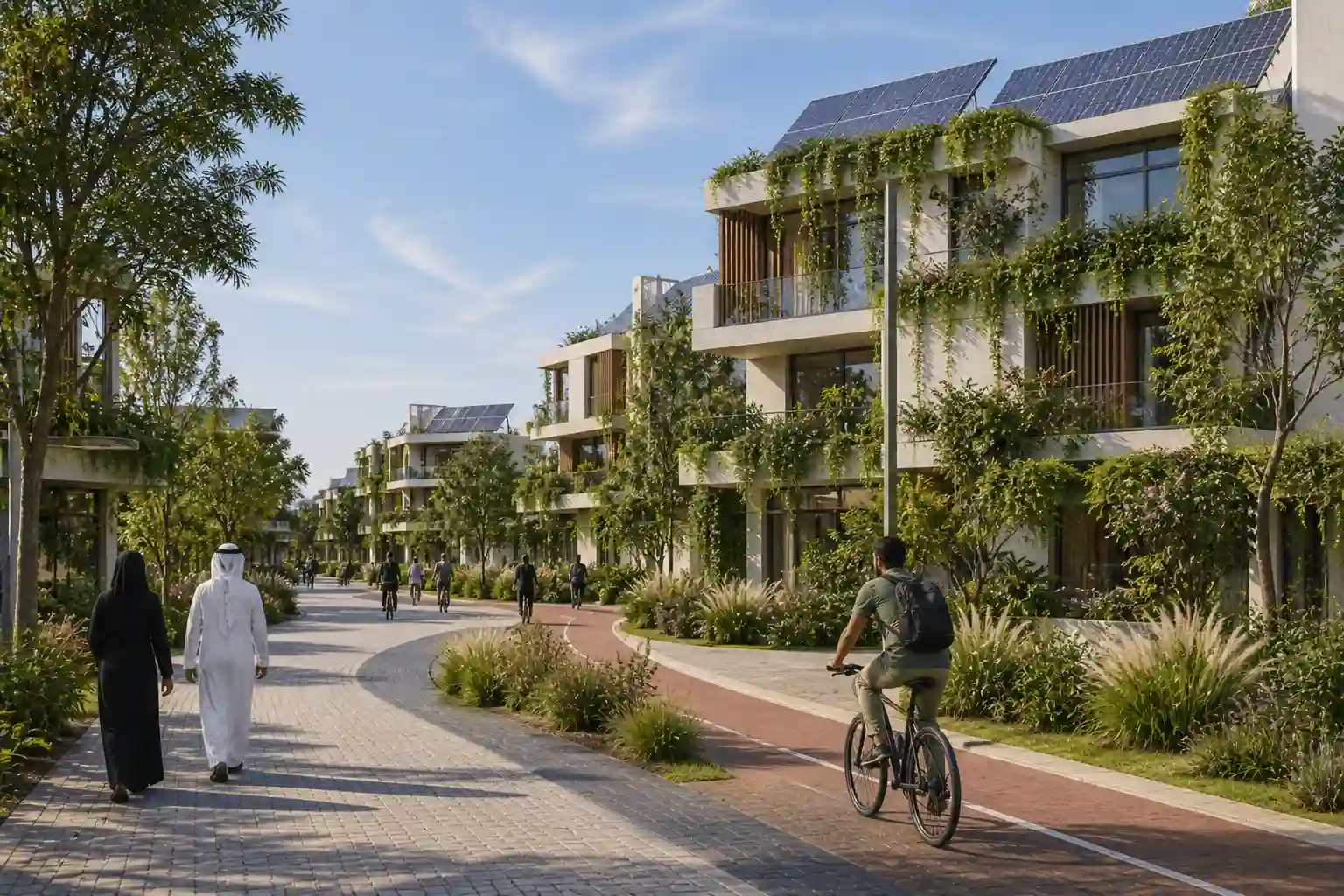
Sustainable urban planning is also increasingly connected with residential communities, commercial districts, infrastructure, and public spaces. This is why businesses should view environmental performance as part of the wider built environment rather than only an internal office issue.
How Sustainability Initiatives Can Support the UAE Economy
Green initiatives can create demand for new technologies, services, products, skills, and business models. Renewable energy, energy management, sustainable construction, recycling, environmental services, clean transportation, green finance, smart infrastructure, and resource-efficient technologies can all form part of a broader green economy.
The UAE Green Growth Strategy explicitly connects environmental sustainability with long-term economic growth and the development of green products and technologies.
This creates opportunities for entrepreneurs and established businesses to develop services that address practical sustainability challenges.
Common Mistakes Businesses Should Avoid
Focusing Only on Marketing
A sustainability strategy should be supported by actual operational improvements. Marketing should communicate verified progress rather than replace it.
Setting Targets Without Measurement
Without a baseline, it becomes difficult to determine whether environmental performance has improved.
Ignoring the Supply Chain
A company may improve its own office while overlooking significant environmental impacts associated with suppliers, transportation, packaging, or product manufacturing.
Trying to Change Everything at Once
Businesses can often achieve better management by prioritising the areas with the largest practical impact and expanding the programme gradually.
Using Generic Sustainability Solutions
Different industries have different environmental profiles. A software company, hotel, manufacturer, retailer, and construction contractor should not necessarily follow the same sustainability roadmap.
What UAE Businesses Should Do Next
Businesses considering sustainability initiatives can begin with a straightforward assessment:
- Identify the company’s largest environmental impacts.
- Collect baseline information.
- Review applicable UAE and emirate-level policies and requirements.
- Set realistic and measurable targets.
- Prioritise energy, water, waste, procurement, buildings, and transportation according to relevance.
- Assign responsibility for sustainability activities.
- Track progress regularly.
- Document evidence supporting environmental claims.
- Review results and improve the programme over time.
This approach turns sustainability from a general ambition into a practical business-management process.
Conclusion
Sustainability initiatives in the UAE cover a broad range of environmental and economic priorities, from clean energy and energy efficiency to circular economy practices, sustainable procurement, green buildings, waste management, water conservation, and cleaner transportation.
For businesses, the most useful approach is to connect these initiatives with actual operations. Measuring current performance, identifying the biggest impacts, setting realistic targets, implementing practical projects, and communicating verified results can create a more structured sustainability programme.
The UAE’s national strategies and policies provide an increasingly clear framework for the transition toward a more resource-efficient and lower-carbon economy.
As sustainability becomes more closely integrated with technology, infrastructure, finance, construction, manufacturing, retail, and business operations, UAE companies have an opportunity to treat green initiatives not simply as environmental activities but as part of long-term operational planning and resilience.