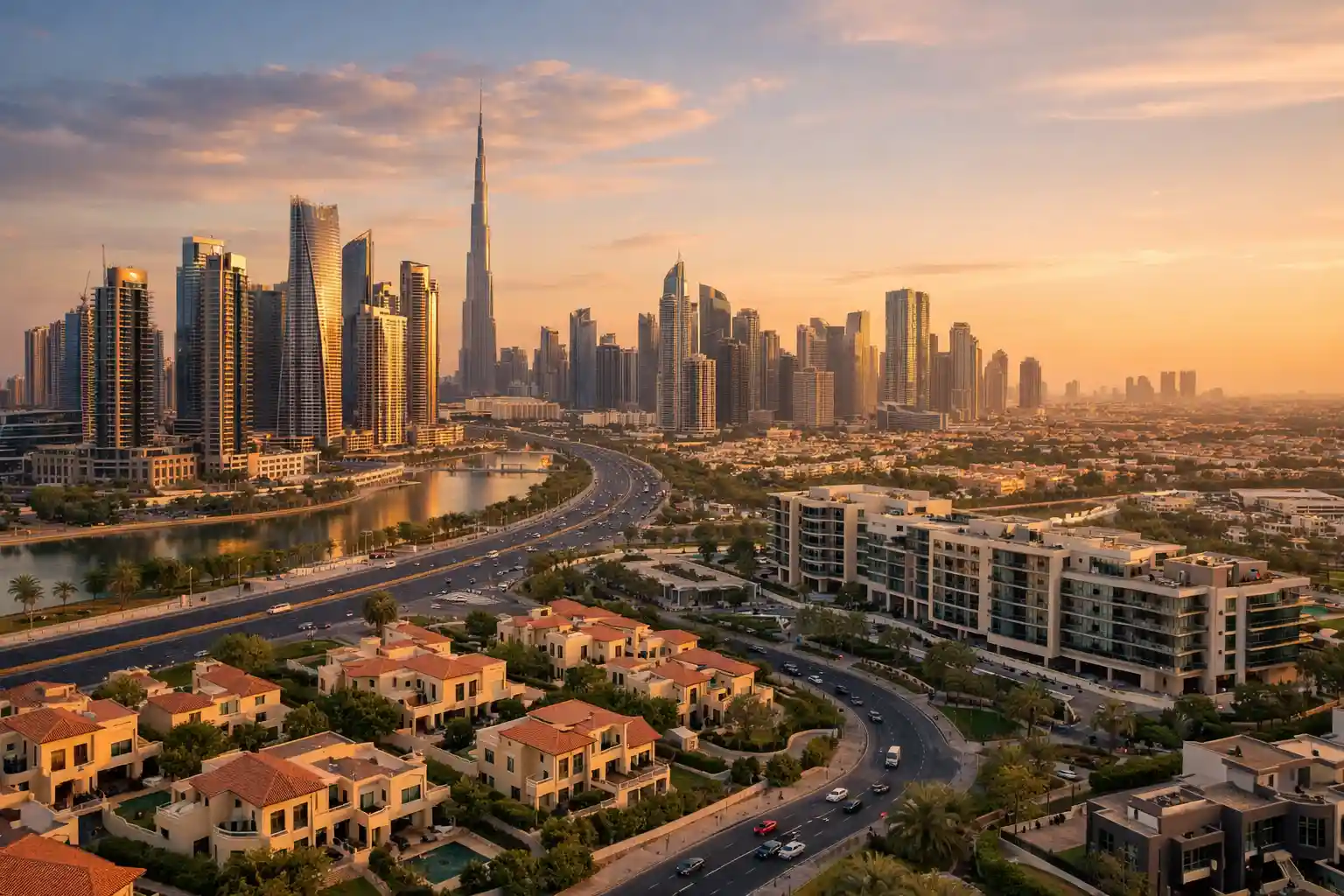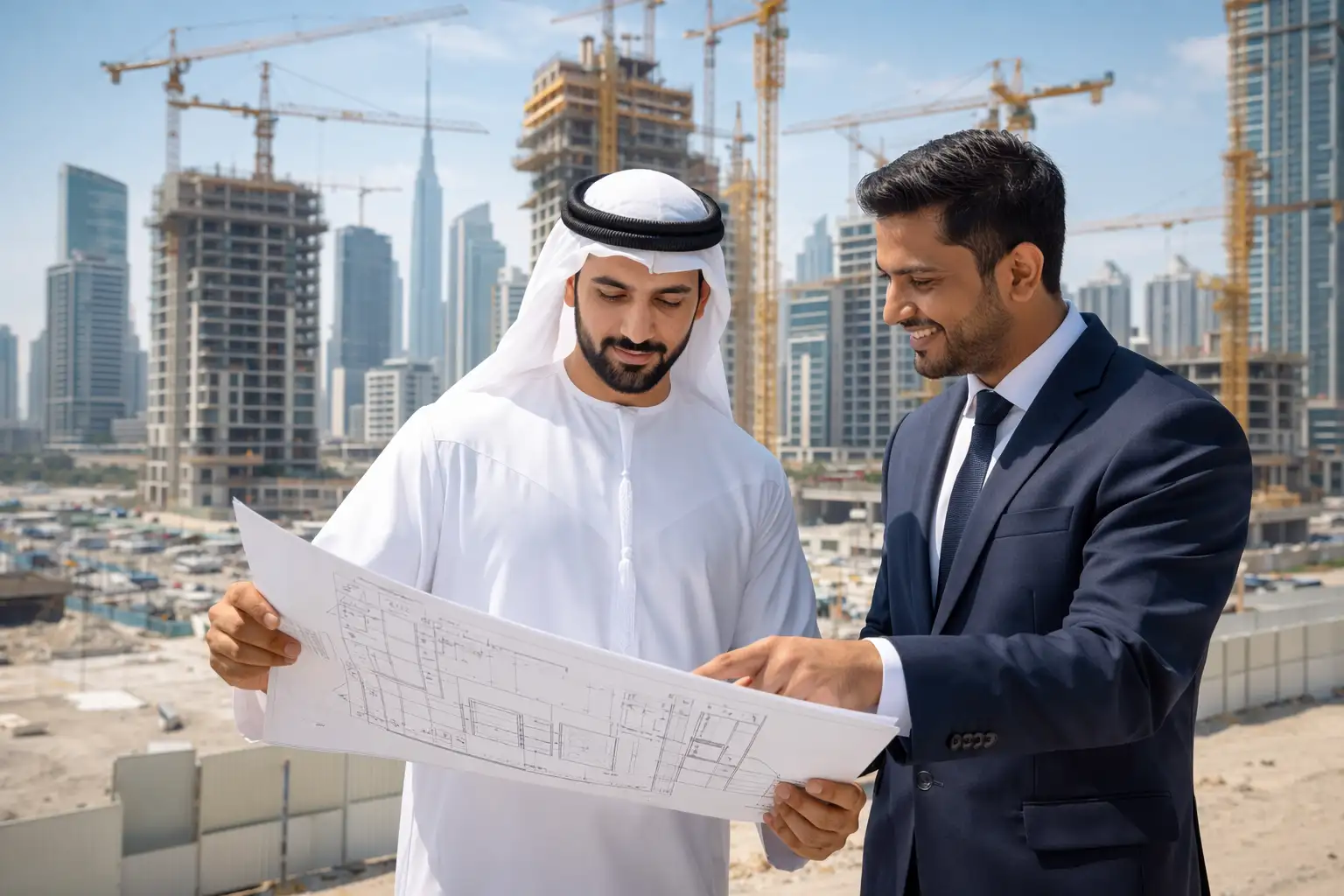
For developers, the market is becoming more sophisticated. Delivering attractive buildings is no longer enough. Successful projects increasingly need to combine location, connectivity, amenities, sustainability, technology, quality construction, and long-term community value.
Current market data illustrates the scale of development activity. Knight Frank’s Q1 2026 Dubai Residential Market Review identified a large pipeline of homes across the emirate, with apartments representing the overwhelming majority of forecast residential supply. Abu Dhabi also had approximately 36,900 residential units under construction for delivery through 2030 in Knight Frank’s latest review. Dubai residential market research and Abu Dhabi residential and office research provide additional market context.
What Is Driving Real Estate Development in the UAE?
The UAE property market is influenced by several interconnected factors. Population growth, international migration, economic diversification, tourism, infrastructure investment, business expansion, and demand from local and international buyers all affect development decisions.
Developers also have to consider how buyers’ expectations are changing. Modern residents increasingly want homes that provide convenient access to retail, schools, leisure, healthcare, green spaces, transportation, and community facilities.
This is encouraging a shift from isolated buildings toward larger master-planned communities and mixed-use developments.
1. Residential Development Remains a Major Growth Area
Residential projects continue to form a major part of the UAE development pipeline. Apartments, villas, townhouses, branded residences, and master-planned communities are being developed to serve different customer segments.
Dubai’s Q1 2026 residential research showed that apartments accounted for around 85% of the forecast residential supply pipeline, illustrating the importance of vertical living in the emirate.
At the same time, demand is not limited to standard apartments. Buyers are increasingly interested in well-planned communities, larger homes, waterfront properties, lifestyle developments, and projects that provide a strong collection of amenities.
2. Off-Plan Development Continues to Shape the Market
Off-plan property remains an important component of UAE real estate. Developers can use pre-completion sales to generate project funding and establish demand before a development is fully delivered, while buyers may be attracted by payment plans, new construction, and access to upcoming communities.
Dubai’s market has maintained a particularly strong off-plan component. Knight Frank’s 2026 research tracks a substantial development pipeline across numerous communities and developers.
However, off-plan buyers should evaluate more than promotional material. Location, developer track record, construction progress, payment schedules, expected completion, service charges, community infrastructure, and resale or rental demand can all influence the long-term outcome.
For a more detailed explanation, see our guide to off-plan properties in the UAE.
3. Master-Planned Communities Are Becoming More Important
Modern UAE development increasingly focuses on complete communities rather than individual buildings.
A master-planned development may combine residential buildings with:
- Retail areas
- Restaurants and cafés
- Parks and landscaped spaces
- Schools and nurseries
- Fitness facilities
- Community centres
- Walking and cycling routes
- Healthcare services
- Leisure attractions
- Transport connections
This model can improve convenience and create a stronger sense of place. It can also support property values by making a community more attractive to residents and investors.
4. Mixed-Use Development Is Expanding
Mixed-use development combines multiple functions within the same district or project. Residential, commercial, retail, hospitality, and entertainment uses can be planned together rather than separated into isolated zones.
The approach supports the UAE’s increasingly urban lifestyle. Residents may want to live closer to offices, restaurants, shops, entertainment, and leisure facilities.
Mixed-use communities can also reduce the need for long daily journeys when essential services are available within or near the development.
5. Branded Residences Are Attracting Premium Demand
Branded residences have become a prominent segment of the UAE’s premium property market. These developments combine residential ownership or occupancy with the identity, hospitality standards, or services associated with a recognized luxury brand.
The appeal can include concierge services, hotel-style amenities, distinctive interiors, premium locations, and a strong brand identity.
For developers, branded residences can create opportunities to differentiate a project in a competitive luxury market. For buyers, however, the brand should not replace careful evaluation of the property’s location, pricing, ownership structure, service charges, and long-term value.
6. Luxury Development Continues to Attract International Demand
Dubai’s luxury residential market remains an important driver of development activity. Knight Frank reported a record 296 residential transactions above US$10 million during the first half of 2026, with total value reaching US$5.1 billion.
This demand is encouraging developers to create increasingly specialized luxury projects, including waterfront residences, large villas, branded homes, private communities, and high-end apartment developments.
Luxury buyers are also becoming more selective. Design quality, privacy, views, amenities, service, location, and scarcity can all influence purchasing decisions.
7. Waterfront and Lifestyle Developments Remain Highly Attractive
Waterfront locations continue to carry strong appeal in the UAE because they combine residential demand with lifestyle value.
Developers are increasingly incorporating beaches, marinas, promenades, landscaped spaces, leisure facilities, and hospitality components into large-scale projects.
The emphasis is shifting from simply offering a property with a view toward creating an entire lifestyle environment around the property.
8. Sustainable Construction Is Becoming a Development Priority
Sustainability is increasingly influencing how new buildings are designed, constructed, operated, and maintained.
Developers are considering energy efficiency, water conservation, responsible materials, waste reduction, indoor environmental quality, landscaping, and long-term operating costs.
This direction aligns with the UAE’s broader environmental agenda. The UAE Government states that the country aims to support environmental sustainability, green innovation, and a clean, zero-emissions future under its national vision.
For developers, sustainability is therefore becoming both an environmental consideration and a long-term asset-management issue.
Read our related guide to sustainable construction trends in the UAE.
9. Energy-Efficient Buildings Are Becoming More Valuable
Energy efficiency can influence both development costs and long-term operating expenses. Developers are increasingly considering efficient cooling systems, building envelopes, glazing, lighting, smart controls, and renewable-energy integration where appropriate.
This is particularly relevant in the UAE because cooling demand is an important consideration in building design and operation.
Energy-efficient design can also contribute to occupant comfort while reducing resource consumption over the life of a building.
10. Smart Buildings Are Changing Development Strategies
Technology is becoming part of the physical infrastructure of modern buildings. Smart access systems, connected lighting, building-management platforms, energy monitoring, security systems, parking technology, and digital resident services can improve convenience and operational efficiency.
For developers, smart-building infrastructure can also create better visibility into how buildings are being used.
The key is to use technology where it provides meaningful value rather than adding unnecessary features simply because they are fashionable.
11. Artificial Intelligence Is Influencing Property Development
Artificial intelligence is beginning to influence multiple stages of real estate development. Developers and property professionals can use data-driven tools to analyze markets, identify customer preferences, forecast demand, support design decisions, optimize operations, and improve marketing.
AI can also contribute to smart-building management by helping analyze energy consumption, maintenance requirements, occupancy patterns, and other operational data.
However, AI works best when combined with reliable data, experienced professionals, and clear business objectives.
12. Data Is Becoming More Important in Development Decisions
Real estate development involves major capital commitments, making accurate market analysis essential.
Developers can evaluate:
- Population growth
- Household formation
- Buyer demographics
- Rental demand
- Sales activity
- Competing supply
- Infrastructure development
- Employment growth
- Tourism activity
- Future development pipelines
Using multiple data points can help developers avoid relying on short-term market excitement when evaluating a project.
13. Developers Are Paying More Attention to Changing Buyer Profiles
The UAE’s residential buyer is becoming more diverse. Local buyers, long-term residents, international investors, high-net-worth individuals, first-time buyers, and families can have very different expectations.
Recent Knight Frank analysis suggests that the UAE buyer profile has become more rooted, with longer-term residents increasingly viewing the UAE as a place to build their future rather than simply a temporary destination.
This shift can influence what developers build. Buyers who expect to remain in the country longer may place greater importance on schools, community facilities, storage, home offices, family spaces, and long-term neighbourhood quality.
14. Family-Oriented Communities Are Expanding
Family demand is encouraging developers to create communities that offer more than residential buildings.
Family-oriented developments may emphasize:
- Schools and nurseries
- Parks and playgrounds
- Pedestrian-friendly streets
- Sports facilities
- Community pools
- Retail and everyday services
- Healthcare access
- Larger residential layouts
These features can improve the practicality of a development for residents who intend to make the UAE their long-term home.
15. Smaller and More Efficient Homes Are Still Relevant
Not every buyer needs a large villa or luxury apartment. Efficiently planned apartments can provide attractive options for singles, couples, young professionals, and investors.
Developers are therefore paying attention to layouts that make better use of limited floor area.
Features such as integrated storage, flexible living spaces, efficient kitchens, home-working areas, and multifunctional rooms can improve the usefulness of smaller properties.
16. Build Quality and Delivery Reliability Matter More
As the development pipeline grows, buyers and investors are increasingly interested in whether projects can be delivered according to their stated timelines and specifications.
Construction quality, contractor performance, material availability, project management, regulatory approvals, and supply-chain conditions can all influence delivery.
Knight Frank has highlighted delivery risk and construction-cost pressures as considerations within the Abu Dhabi residential pipeline, particularly as new supply comes to market.
For developers, maintaining realistic schedules and transparent communication can therefore become an important part of reputation management.
17. Construction Technology Is Improving Development Efficiency
Construction technology is creating opportunities to improve planning, coordination, quality control, and project delivery.
Developers and contractors can use digital project-management platforms, building information modelling, drones, remote monitoring, prefabrication, automation, and data analytics to improve visibility across complex projects.
These technologies can help reduce errors and improve coordination between architects, engineers, contractors, consultants, and project owners.
For broader industry context, explore construction industry trends and opportunities in the UAE.
18. Interior Fit-Out Is Becoming Part of the Development Value Proposition
For residential and commercial developments, interior quality can strongly influence how customers perceive the finished property.
Developers are increasingly considering finishes, kitchens, bathrooms, lighting, built-in storage, smart-home systems, and common-area design as part of the overall product rather than treating interiors as an afterthought.
High-quality fit-out can help a project differentiate itself in a competitive market.
Learn more through our UAE interior fit-out services guide.
19. Commercial Real Estate Development Is Evolving
Residential property is only one part of the UAE development market. Commercial real estate is also changing as businesses reassess how they use offices, retail spaces, warehouses, logistics facilities, and mixed-use properties.
Office tenants increasingly value high-quality buildings, convenient locations, strong connectivity, amenities, and flexible working environments.
Abu Dhabi’s latest market review, for example, recorded a moderation in office leasing transactions during the year to June 2026 while also identifying approximately 428,000 square metres of new office space expected by the end of 2028.
This highlights why developers need to assess future tenant demand rather than simply increasing supply.
20. Industrial and Logistics Development Is Gaining Importance
The UAE’s role as a regional trade and logistics hub is supporting demand for industrial and logistics real estate.
Warehouses, distribution centres, industrial facilities, and logistics parks are increasingly important to businesses involved in e-commerce, manufacturing, retail, and international trade.
Knight Frank reported strong UAE industrial and logistics performance in 2025, with high occupancy and rental growth, while also warning that supply shortages would remain an important feature of the 2026 market.
This creates opportunities for developers that can provide modern logistics facilities in strategically connected locations.
21. Retail Development Is Becoming More Experience-Led
Retail property is also changing as consumers increasingly combine shopping with food, entertainment, leisure, and social activities.
Developers are therefore incorporating restaurants, cafés, entertainment venues, community spaces, events, and lifestyle services into retail destinations.
This can help shopping centres and mixed-use developments remain active beyond traditional retail hours.
22. Transit and Connectivity Are Influencing Property Development
Connectivity can have a major influence on the attractiveness of a development. Access to major roads, public transportation, airports, business districts, schools, and leisure destinations can affect both residential and commercial demand.
Developers increasingly evaluate transport infrastructure as part of the wider development ecosystem rather than treating it as a separate consideration.
Well-connected communities can offer residents greater convenience and potentially strengthen the long-term appeal of the project.
23. Community Amenities Are Becoming a Competitive Advantage
A modern development is increasingly judged by what surrounds the property as well as the property itself.
Amenities may include:
- Swimming pools
- Fitness centres
- Landscaped gardens
- Children’s play areas
- Co-working spaces
- Restaurants and cafés
- Retail stores
- Sports facilities
- Walking trails
- Community lounges
Developers need to balance amenity quality with service charges and long-term maintenance requirements. More amenities are not automatically better if they are expensive to maintain or underused.
24. Property Technology Is Changing the Customer Journey
PropTech is affecting how properties are marketed, sold, managed, and experienced.
Developers can use virtual tours, digital sales platforms, CRM systems, online booking tools, data analytics, automated customer communication, and digital property-management solutions to improve the customer journey.
Virtual reality and high-quality visualization can also help prospective buyers understand developments before construction is complete.
25. Real Estate Tokenization Is Emerging as a New Area of Interest
Tokenization has attracted attention because blockchain-based property structures may eventually create new approaches to ownership, investment access, liquidity, and transaction management.
However, tokenized real estate remains an emerging area and should not be treated as a replacement for conventional property ownership in every situation.
Investors should understand the legal structure, regulatory framework, underlying asset, ownership rights, fees, liquidity limitations, and risks before considering any tokenized property opportunity.
26. Developers Are Paying Greater Attention to Resilience
Real estate is a long-term asset, so developers increasingly need to think beyond the immediate market cycle.
Resilient development considers how a project can remain useful and attractive as technology, climate conditions, demographics, mobility patterns, consumer expectations, and economic conditions change.
Flexible layouts, adaptable infrastructure, efficient energy systems, durable materials, strong connectivity, and diverse community amenities can all contribute to long-term resilience.
27. The UAE’s Economic Diversification Supports Real Estate Demand
Real estate demand is closely connected to the wider economy. As the UAE expands sectors such as tourism, technology, finance, logistics, manufacturing, healthcare, education, and professional services, these industries create demand for homes, offices, retail, hospitality, and industrial facilities.
This diversification can help reduce reliance on a single economic sector and support a broader property ecosystem.
28. Dubai and Abu Dhabi Continue to Follow Different Development Patterns
Although both emirates have highly active property markets, their development dynamics are not identical.
Dubai has a particularly strong international investment profile, large-scale residential development pipeline, luxury market, tourism ecosystem, and extensive off-plan activity.
Abu Dhabi combines residential growth with government, energy, finance, industry, culture, and long-term economic development initiatives. Its residential pipeline also includes major communities such as Yas Island, Fahid Island, and Saadiyat Island.
Developers therefore need to understand local demand rather than treating the UAE as one uniform property market.
29. Other Emirates Are Creating New Development Opportunities
Development opportunities are also emerging outside Dubai and Abu Dhabi. Sharjah, Ras Al Khaimah, Ajman, Fujairah, and other emirates offer different combinations of affordability, tourism, residential demand, industrial activity, and lifestyle development.
These markets can appeal to buyers and tenants who want alternatives to the highest-priced locations.
For developers, the opportunity lies in identifying the specific demand drivers of each emirate rather than copying a Dubai development model without modification.
30. Real Estate Development Is Becoming More Customer-Centric
Perhaps the most important long-term trend is the shift toward customer-centric development.
Developers are increasingly expected to understand what buyers and residents actually need before designing a project.
That means studying:
- Who will live or work in the development
- How residents will use the space
- What amenities they value
- How much they are willing to pay
- How they travel
- What services they expect nearby
- How long they are likely to remain in the property
This approach can produce developments that are more useful and sustainable over the long term.
Key Challenges Facing UAE Real Estate Developers
Despite strong opportunities, development remains a complex business. Developers must manage multiple risks simultaneously.
Construction Costs
Material prices, labour costs, logistics, financing, and insurance can influence project economics and delivery schedules.
Competition
A large development pipeline means projects need clear differentiation. Location alone may not be enough.
Supply and Demand Balance
Developers need to avoid creating unnecessary supply in locations or property segments where demand may not keep pace.
Financing
Large developments require significant capital, making interest rates, cash flow, sales velocity, and project financing important considerations.
Regulatory Requirements
Planning, approvals, registration, construction standards, environmental requirements, and other regulations can affect project timelines and costs.
Delivery Risk
Delays can affect buyers, investors, financing, reputation, and project profitability. Strong project management is therefore essential.
What Developers Should Consider When Planning a New UAE Project
A successful development strategy should begin with market research rather than design alone.
1. Define the Target Customer
Identify whether the project is aimed at families, young professionals, investors, luxury buyers, businesses, tourists, or another clearly defined segment.
2. Study Existing Supply
Analyze competing projects, pricing, amenities, occupancy, transaction activity, and upcoming developments.
3. Evaluate Location Carefully
Consider transport, infrastructure, schools, employment centres, retail, healthcare, leisure, and future development around the site.
4. Build a Clear Value Proposition
The development should offer a reason for customers to choose it instead of competing projects.
5. Plan for Long-Term Operations
Service charges, maintenance, energy consumption, amenities, security, and property management can influence long-term customer satisfaction.
6. Incorporate Technology Strategically
Smart systems should solve real problems and create measurable benefits rather than simply adding complexity.
7. Design for Sustainability
Energy efficiency, water management, materials, landscaping, waste reduction, and long-term operating performance should be considered from the beginning.
What the Future of Real Estate Development in the UAE May Look Like
The UAE property market is likely to remain highly diverse. Residential development will continue to be important, but the strongest opportunities may increasingly come from projects that combine several elements into one integrated experience.
Future developments are likely to place greater emphasis on:
- Smart buildings
- Sustainable construction
- Mixed-use communities
- Walkable neighbourhoods
- Flexible residential layouts
- Branded residences
- Luxury lifestyle communities
- Modern logistics facilities
- Experience-led retail
- Digital property services
- Data-driven development
- Long-term community value
At the same time, market cycles will continue to matter. Developers will need to distinguish between sustainable demand and short-term speculation when planning future supply.
Final Thoughts
Real estate development in the UAE is becoming more sophisticated, technology-driven, sustainable, and focused on the complete customer experience.
Residential projects remain at the centre of the market, but the development landscape now includes mixed-use communities, branded residences, luxury waterfront projects, commercial districts, logistics facilities, smart buildings, and lifestyle destinations.
The strongest developers will be those that combine market intelligence with disciplined planning. Understanding demand, selecting the right location, controlling construction risk, incorporating useful technology, improving sustainability, and creating genuinely valuable communities can help projects remain competitive beyond the initial sales cycle.
As the UAE continues to attract residents, businesses, investors, and visitors, real estate development will remain closely connected to the country’s wider economic and urban transformation. The opportunity is significant, but long-term success will depend on building projects that are not only attractive today but useful, resilient, and relevant for years to come.