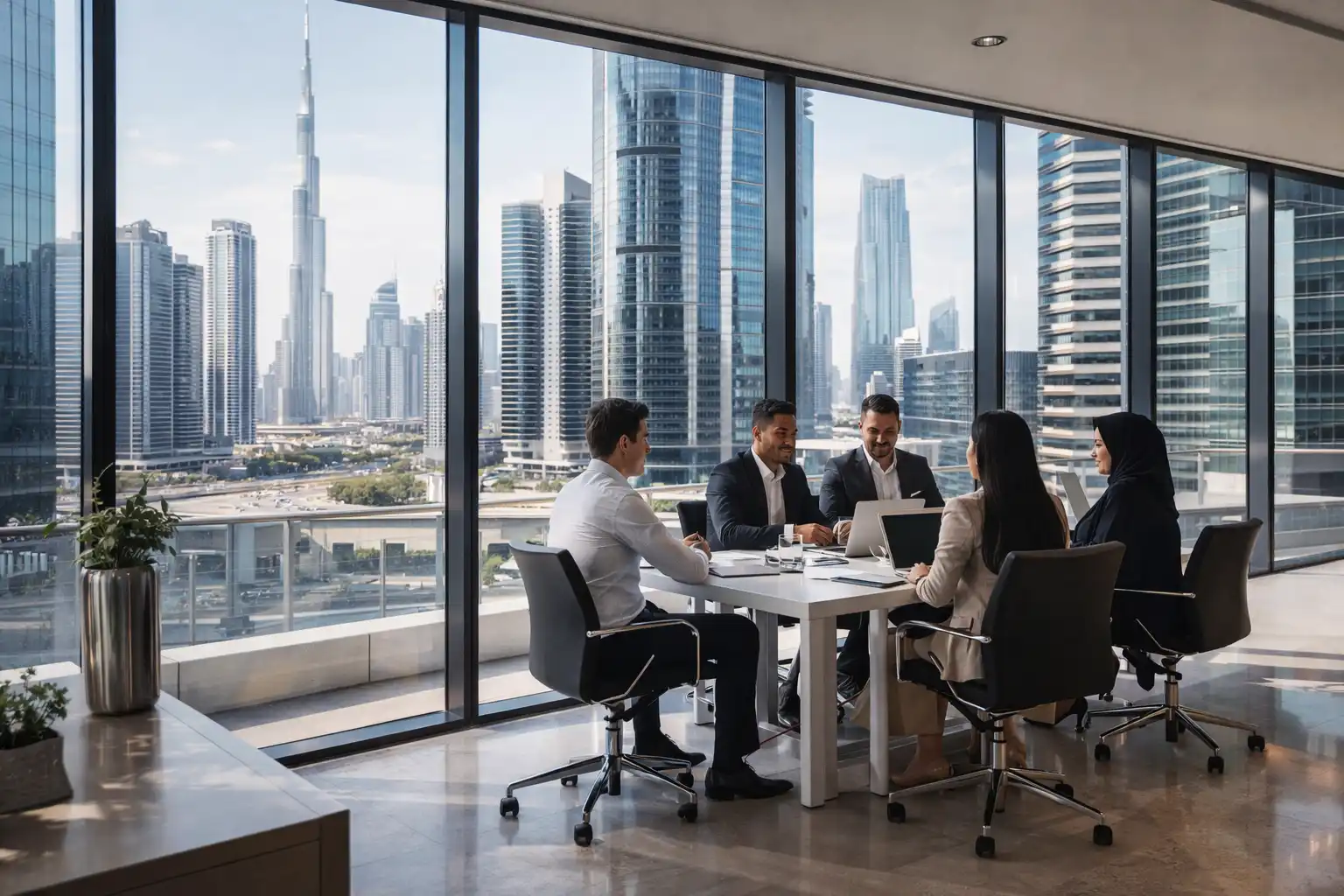
Construction Industry in UAE: Trends and Opportunities:
In 2026, the UAE construction market is also benefiting from the country’s broader economic diversification and continued investment in infrastructure, real estate, tourism, logistics, technology, and industrial development. The UAE’s official long-term roadmap places infrastructure and future-oriented development among its strategic priorities.
This guide explores the major construction industry trends in the UAE, the opportunities available to contractors and businesses, the challenges they need to manage, and the factors likely to shape the sector in the years ahead.
Overview of the UAE Construction Industry
The UAE construction sector covers a wide range of activities, including residential construction, commercial development, infrastructure, industrial projects, hospitality, retail, healthcare, education, roads, utilities, and large-scale master-planned communities.
Dubai and Abu Dhabi remain major construction centres, but development activity extends across all seven emirates. Sharjah, Ras Al Khaimah, Ajman, Fujairah, and Umm Al Quwain also offer opportunities linked to residential development, tourism, industry, logistics, infrastructure, and community growth.
The construction sector is closely connected to real estate development. New residential and commercial projects create demand for contractors, consultants, engineers, specialist trades, suppliers, interior fit-out companies, and project-management professionals.
At the same time, infrastructure investment supports wider economic activity by improving transportation, logistics, utilities, connectivity, and access to growing communities.
Why Construction Is Important to the UAE Economy
Construction contributes to the development of physical infrastructure that supports almost every major part of the economy.
Buildings provide homes and workplaces. Roads and transport systems connect communities. Industrial facilities support manufacturing and logistics. Hotels and entertainment venues support tourism. Schools and healthcare facilities contribute to community development.
This means construction demand is closely connected to the UAE’s broader economic strategy rather than operating as an isolated sector.
The country’s investment environment also supports development activity. The UAE Government highlights factors such as foreign ownership opportunities, international talent, infrastructure, and economic diversification as part of the country’s investment proposition.
1. Sustainable Construction Is Becoming a Core Priority
Sustainability is one of the most important trends shaping construction in the UAE.
Developers, contractors, consultants, and building owners are increasingly considering energy efficiency, water conservation, waste reduction, material selection, indoor environmental quality, and long-term operating performance.
This shift is supported by national climate objectives. The UAE’s Net Zero 2050 framework specifically identifies construction as one of the sectors where climate action and emissions reduction are important.
Sustainable construction is therefore becoming more closely connected with both environmental responsibility and long-term asset performance.
2. Green Building Practices Are Expanding
Green construction can involve many different strategies rather than one specific technology.
Projects may incorporate:
- Energy-efficient building envelopes
- High-efficiency lighting
- Efficient cooling systems
- Water-saving fixtures
- Efficient landscaping
- Renewable energy systems
- Low-impact materials
- Construction waste management
- Indoor air-quality measures
- Smart energy monitoring
The most effective approach is to integrate sustainability into the design from the beginning rather than attempting to add environmental features after construction decisions have already been made.
3. Energy Efficiency Is Becoming More Important
Energy efficiency is particularly relevant to UAE buildings because cooling represents a major operational consideration in the country’s climate.
Developers and building owners can evaluate insulation, glazing, shading, efficient HVAC systems, lighting controls, building-management systems, and renewable-energy options when planning new projects.
Reducing energy consumption can potentially lower operating costs while also supporting wider sustainability objectives.
4. Water Efficiency Is Gaining Attention
Water conservation is another important consideration in UAE construction.
Projects can use efficient plumbing fixtures, smart irrigation, water monitoring, drought-tolerant landscaping, greywater systems where appropriate, and other water-management strategies.
Abu Dhabi’s Environment Vision 2030 specifically identifies efficient management and conservation of water resources as one of its priority areas.
5. Building Information Modeling Is Transforming Project Planning
Building Information Modeling, commonly known as BIM, has become an important digital approach for managing complex construction projects.
BIM allows project teams to work with coordinated digital representations of buildings and infrastructure. Depending on the project, BIM can support architectural, structural, mechanical, electrical, plumbing, quantity, scheduling, and facility-management processes.
Better coordination can help identify clashes before construction, improve communication between disciplines, and reduce the risk of expensive rework.
6. Artificial Intelligence Is Entering Construction Workflows
Artificial intelligence is increasingly being explored across construction planning and management.
Potential applications include:
- Project scheduling
- Risk analysis
- Cost forecasting
- Document analysis
- Design optimization
- Progress monitoring
- Predictive maintenance
- Safety analysis
- Resource planning
AI is unlikely to replace the need for experienced construction professionals. Instead, its value is likely to come from helping teams process large amounts of information and identify potential issues earlier.
7. 3D Printing Is Creating New Construction Possibilities
3D printing has attracted significant interest in the UAE because it can potentially reduce material waste, automate parts of construction, and accelerate the production of selected building components.
The technology can be particularly relevant to projects involving repetitive components or designs that benefit from automated fabrication.
However, 3D printing is not suitable for every construction requirement. Project economics, building regulations, structural requirements, materials, site conditions, and available expertise all need to be evaluated.
8. Modular and Prefabricated Construction Is Growing
Modular construction and prefabrication can move part of the manufacturing process from the construction site into controlled factory environments.
This can provide advantages such as:
- More controlled production conditions
- Potentially faster installation
- Consistent quality
- Reduced site waste
- Better material planning
- Improved worker productivity
These methods can be particularly useful when projects require repeated building components or when developers want greater predictability in the construction process.
9. Smart Cities Are Creating New Construction Opportunities
The UAE continues to invest in smart and connected urban environments.
Smart-city development involves more than constructing buildings. It can include digital infrastructure, connected transportation, intelligent energy systems, sensors, public services, data platforms, and automated building systems.
Construction companies that understand how physical infrastructure connects with digital systems can therefore access opportunities beyond traditional building work.
10. Infrastructure Development Remains a Major Opportunity
Infrastructure remains one of the most important areas of construction activity in the UAE.
Opportunities can include:
- Road construction
- Bridges and tunnels
- Public transport infrastructure
- Airports
- Ports
- Utilities
- Water infrastructure
- Energy infrastructure
- Digital infrastructure
- Logistics facilities
Recent infrastructure plans also demonstrate the strategic importance of connectivity. In July 2026, DP World announced plans for two new terminals in Fujairah, with construction expected to take place in phases over 24 to 30 months.
Such projects illustrate how infrastructure investment can create opportunities for contractors, engineering firms, specialist suppliers, logistics businesses, and related service providers.
11. Industrial Construction Is Becoming More Important
The UAE’s economic diversification strategy is supporting industrial development alongside traditional real estate and infrastructure projects.
Industrial construction opportunities can include manufacturing facilities, warehouses, processing plants, logistics centres, industrial parks, and specialized production environments.
The UAE’s Operation 300bn strategy aims to increase the industrial sector’s contribution to GDP and promote sustainable economic growth, innovation, clean-energy solutions, and responsible production.
This creates potential demand for specialized construction and engineering capabilities.
12. Logistics and Warehouse Construction Are Expanding
The UAE’s role as a regional trade and logistics hub supports demand for modern logistics facilities.
E-commerce, manufacturing, retail distribution, food supply chains, and international trade all require warehouses and distribution infrastructure.
Modern logistics facilities increasingly require advanced fire protection, automation, loading systems, temperature control where necessary, energy-efficient lighting, security, and digital inventory infrastructure.
Construction companies with experience in industrial and logistics projects can therefore access a specialized segment with different requirements from traditional residential construction.
13. Residential Construction Continues to Drive Demand
Residential development remains a major source of construction activity in the UAE.
Demand includes apartments, villas, townhouses, branded residences, affordable housing, luxury developments, and master-planned communities.
Developers are increasingly looking for residential projects that combine homes with amenities such as retail, parks, fitness facilities, schools, restaurants, and community spaces.
This creates opportunities for contractors across multiple disciplines rather than only building structures.
14. Mixed-Use Development Is Changing Construction Requirements
Mixed-use developments combine different functions within one project or district.
A single development may contain:
- Residential buildings
- Offices
- Retail stores
- Restaurants
- Hotels
- Entertainment venues
- Community facilities
- Public spaces
These projects require extensive coordination because different building uses have different structural, MEP, fire-safety, accessibility, acoustic, operational, and fit-out requirements.
15. Tourism and Hospitality Are Supporting Construction Demand
The UAE’s tourism industry creates construction opportunities across hotels, resorts, restaurants, entertainment venues, attractions, visitor centres, and supporting infrastructure.
Hospitality projects can require highly specialized construction and fit-out capabilities because guest experience, design quality, durability, back-of-house operations, and technical systems all need to work together.
Tourism growth can therefore create opportunities for both major contractors and specialist suppliers.
16. Interior Fit-Out and Finishing Services Are Growing
Construction demand does not end when a building’s structure is complete. Interior fit-out is a major stage of delivering usable residential, commercial, retail, hospitality, and institutional spaces.
Fit-out opportunities include:
- Partitions
- Ceilings
- Flooring
- Lighting
- Joinery
- Electrical installations
- Plumbing
- Decorative finishes
- Furniture and fixtures
- Smart systems
Our related guide to interior fit-out services in the UAE explains what clients should consider when planning this stage of a project.
17. Skilled Construction Professionals Remain Essential
Technology may change construction processes, but experienced people remain essential to successful project delivery.
The sector requires professionals such as:
- Civil engineers
- Structural engineers
- Architects
- Project managers
- Quantity surveyors
- Site managers
- MEP specialists
- Health and safety professionals
- Skilled technicians
- Specialist tradespeople
As projects become more technically complex, the ability to combine traditional construction knowledge with digital skills is becoming increasingly valuable.
18. Construction Safety Remains a Critical Priority
Construction involves significant physical and operational risks, making safety management essential.
Effective safety programmes can include worker training, site inspections, protective equipment, hazard identification, equipment maintenance, access control, emergency planning, and clear site procedures.
Safety is not only a regulatory obligation. Strong safety management can reduce disruptions, protect workers, improve productivity, and support project continuity.
19. Quality Control Is Becoming More Data-Driven
Quality control is increasingly supported by digital documentation, inspection platforms, photographs, checklists, BIM coordination, testing records, and automated reporting.
These tools can make it easier for project teams to document defects, assign responsibilities, track corrective action, and confirm completion.
Better documentation can also be useful during handover and future maintenance.
20. Regulatory Compliance Is Increasingly Important
Construction companies operating in the UAE must understand the regulations and approval requirements relevant to their specific emirate and project type.
Compliance can cover areas such as:
- Building requirements
- Planning approvals
- Fire and life safety
- Structural standards
- Environmental requirements
- Worker safety
- Accessibility
- Utility connections
- Site management
Requirements can differ depending on location, building type, project scale, and authority jurisdiction. Contractors should therefore establish the applicable approval pathway before construction begins.
21. Public-Private Partnerships Can Create New Opportunities
Public-private partnerships can provide opportunities for private companies to participate in infrastructure and public-service projects.
These arrangements can bring together government objectives, private-sector capital, technical expertise, project management, and operational capabilities.
For construction companies, understanding procurement structures and partnership models can open opportunities beyond conventional developer-contractor relationships.
22. Construction Companies Are Becoming More Technology-Driven
Digital transformation is changing how construction businesses manage their projects and operations.
Companies can use software for:
- Project scheduling
- Budget management
- Procurement
- Document control
- Site reporting
- Quality management
- Safety management
- Resource planning
- Client communication
Digital systems can improve transparency and help management identify problems earlier.
23. Drones and Remote Monitoring Are Improving Site Visibility
Drones and remote-monitoring systems can provide project teams with visual information about construction progress and site conditions.
When used appropriately and in compliance with applicable requirements, aerial imagery can support progress documentation, inspections, surveying, and communication.
It can also provide clients and project managers with a clearer understanding of how construction is progressing without relying entirely on manual reports.
24. Construction Data Is Becoming a Competitive Asset
Companies that collect reliable project data can improve future decision-making.
Useful data can include:
- Labour productivity
- Material usage
- Project delays
- Defect rates
- Procurement lead times
- Equipment utilization
- Safety incidents
- Cost variations
- Energy consumption
Analyzing this information can help businesses identify recurring problems and improve project planning.
25. Construction Waste Management Is Becoming More Important
Large construction projects can generate significant amounts of waste. Better planning can reduce unnecessary material consumption and improve the recovery or reuse of suitable materials.
Waste management strategies may include:
- Accurate material estimation
- Better procurement planning
- Material storage controls
- Reuse of suitable materials
- Recycling
- Responsible disposal
- Digital material tracking
Reducing waste can provide both environmental and financial benefits.
26. Local Manufacturing Can Strengthen Construction Supply Chains
Greater local manufacturing capacity can help construction companies access materials and products closer to project sites.
This can potentially reduce dependence on long international supply chains and improve procurement resilience for selected products.
The UAE’s industrial strategy is explicitly focused on strengthening domestic industrial capacity, innovation, and sustainable production, creating potential opportunities for construction-material manufacturers and suppliers.
27. Construction Supply Chain Management Is Critical
Construction projects depend on hundreds of materials, components, machines, and specialist services.
Delays in one part of the supply chain can affect multiple activities on site.
Strong procurement planning should therefore consider:
- Supplier reliability
- Material availability
- Lead times
- Shipping
- Storage
- Quality requirements
- Alternative suppliers
- Price fluctuations
Early procurement of long-lead items can sometimes reduce the risk of project delays.
28. The Role of Construction Consultants Is Expanding
Complex projects often require specialist consultants to coordinate design, engineering, cost, compliance, project management, sustainability, and technical requirements.
Consultants can help developers identify problems before construction and create better coordination between different disciplines.
This creates opportunities for specialized engineering, project-management, cost-consulting, sustainability, and technical advisory firms.
29. Opportunities for SMEs in the Construction Sector
Large developers and contractors receive significant attention, but small and medium-sized companies can also find opportunities within the UAE construction ecosystem.
SMEs can specialize in areas such as:
- Interior fit-out
- MEP services
- Joinery
- Landscaping
- Specialist finishes
- Maintenance
- Construction technology
- Building materials
- Energy-efficiency services
- Project consultancy
Specialization can help smaller companies compete by developing strong expertise in a specific project requirement.
30. Maintenance and Renovation Offer Recurring Opportunities
Construction opportunities do not end after a building is completed.
Existing properties require maintenance, refurbishment, renovation, upgrades, energy improvements, technology installations, and periodic replacement of building components.
This creates a potentially recurring market for companies that provide reliable maintenance and refurbishment services.
31. Retrofitting Existing Buildings Is Becoming More Relevant
As sustainability and energy efficiency become more important, existing buildings can provide opportunities for improvement.
Retrofit projects may involve:
- Lighting upgrades
- HVAC improvements
- Building-envelope improvements
- Smart controls
- Water-efficiency measures
- Solar installations
- Building-management systems
Retrofitting can improve the performance of existing properties without requiring complete redevelopment.
32. Modular Construction Can Help Address Time Pressure
Developers often want projects completed quickly, but accelerating construction can create quality and coordination risks.
Modular construction offers one possible approach by allowing selected components to be manufactured in parallel with site preparation.
The method is particularly interesting for projects with repeatable layouts and standardized components.
33. Construction Opportunities Are Expanding Beyond Dubai
Dubai remains one of the UAE’s most visible construction markets, but businesses should not overlook opportunities elsewhere.
Abu Dhabi has major residential, infrastructure, industrial, cultural, and economic-development projects. Sharjah has residential, educational, cultural, and industrial demand. Ras Al Khaimah continues to attract tourism and hospitality investment, while Fujairah has strategic logistics and port-related opportunities.
Other emirates can offer different cost structures, customer segments, and project types.
34. Logistics Infrastructure Is Becoming Strategically Important
The UAE’s geographic position makes logistics infrastructure particularly important to its economic model.
Ports, warehouses, roads, distribution facilities, industrial zones, and related infrastructure support international trade and domestic supply chains.
New infrastructure investment can therefore create construction opportunities far beyond conventional buildings.
35. Construction Is Becoming More Closely Connected to Real Estate
Construction companies need to understand the wider real estate market because development pipelines influence future demand.
When developers expand residential communities, commercial districts, hospitality projects, or mixed-use developments, they create downstream demand for contractors and specialist suppliers.
Our related guide to real estate development trends in the UAE provides broader context on the development patterns shaping the market.
36. The Interior Fit-Out Sector Creates Downstream Demand
As buildings move toward completion, interior fit-out becomes an important stage of the construction lifecycle.
This is particularly significant for offices, retail stores, restaurants, hotels, healthcare facilities, and high-end residential properties.
Construction companies that can coordinate structural work with fit-out and finishing requirements can offer a more complete project-delivery capability.
37. Sustainability Creates New Business Opportunities
Sustainability is not only a compliance issue. It is also creating new business categories.
Companies can specialize in:
- Energy-efficient systems
- Green building consulting
- Solar solutions
- Water-efficiency systems
- Sustainable materials
- Construction waste management
- Building performance monitoring
- Environmental assessment
- Green retrofits
As sustainability requirements become more important, specialist expertise can become a competitive advantage.
38. The Main Challenges Facing UAE Construction Companies
Strong demand does not eliminate the challenges associated with construction.
Rising Material Costs
Changes in commodity prices, transportation, manufacturing, and international supply chains can affect project budgets.
Labour Availability
Large projects require substantial numbers of skilled workers and specialists. Recruiting and retaining qualified people can become difficult when multiple projects compete for the same skills.
Project Delays
Design changes, approvals, procurement, labour, weather, site conditions, and coordination issues can all affect project schedules.
Cash Flow
Construction businesses often have to manage substantial upfront costs while waiting for progress payments. Strong financial controls are therefore essential.
Quality Management
Fast project delivery should not come at the expense of workmanship. Poor quality can result in rework, disputes, delays, and reputational damage.
Compliance
Regulatory requirements can be complex, particularly for large or technically specialized projects.
39. How Construction Companies Can Stay Competitive
Companies operating in the UAE construction market can strengthen their competitive position by focusing on several areas.
- Invest in skilled employees.
- Adopt useful digital tools.
- Develop strong project-management systems.
- Improve procurement planning.
- Build reliable supplier relationships.
- Strengthen quality control.
- Prioritize site safety.
- Understand sustainability requirements.
- Develop specialist capabilities.
- Maintain transparent client communication.
Technology alone does not create a successful contractor. The strongest companies combine technology with experienced people, disciplined management, and reliable execution.
40. What Clients Should Look for in UAE Construction Companies
Property owners and developers should evaluate contractors carefully before awarding major projects.
Important considerations include:
- Relevant project experience
- Company credentials
- Technical capabilities
- Financial capacity
- Safety record
- Quality systems
- Project-management expertise
- Subcontractor network
- Supplier relationships
- References
- Communication processes
- Ability to meet deadlines
Our related guide to construction companies in the UAE provides additional guidance for clients comparing contractors.
41. The Future of Construction in the UAE
The UAE construction sector is likely to become increasingly connected, data-driven, sustainable, and specialized.
Several trends are likely to remain important:
- Smart buildings
- Sustainable construction
- BIM and digital coordination
- Artificial intelligence
- Modular construction
- 3D printing
- Construction automation
- Energy-efficient buildings
- Infrastructure investment
- Industrial development
- Logistics infrastructure
- Retrofitting
- Advanced fit-out
These developments are likely to create opportunities for both established construction companies and specialized technology and service providers.
Key Opportunities for Businesses in the UAE Construction Sector
For companies evaluating where to enter or expand within the sector, the strongest opportunities may come from specialized capabilities rather than attempting to compete across every construction discipline.
Potential growth areas include:
- Green construction
- Energy efficiency
- Smart-building systems
- Construction technology
- Interior fit-out
- Industrial facilities
- Logistics and warehousing
- Infrastructure
- Renovation and retrofit
- Construction consultancy
- Specialist MEP services
- Building maintenance
Final Thoughts
The construction industry in the UAE is moving into a more technology-driven and sustainability-focused phase. Strong real estate activity, infrastructure investment, economic diversification, tourism development, industrial expansion, and logistics growth continue to create opportunities across the sector.
At the same time, competition is increasing. Construction companies must manage costs, quality, labour, procurement, compliance, safety, and delivery while adapting to new technologies and changing client expectations.
The businesses most likely to remain competitive are those that combine technical expertise with strong project management, digital capabilities, sustainability knowledge, and reliable execution.
For investors, developers, contractors, and specialist suppliers, the UAE construction market offers significant opportunities. The key is to identify where long-term demand is developing and build capabilities that solve real project requirements.
As the UAE continues investing in future-ready infrastructure, communities, industrial capacity, and sustainable development, construction will remain a critical part of the country’s economic and urban transformation.