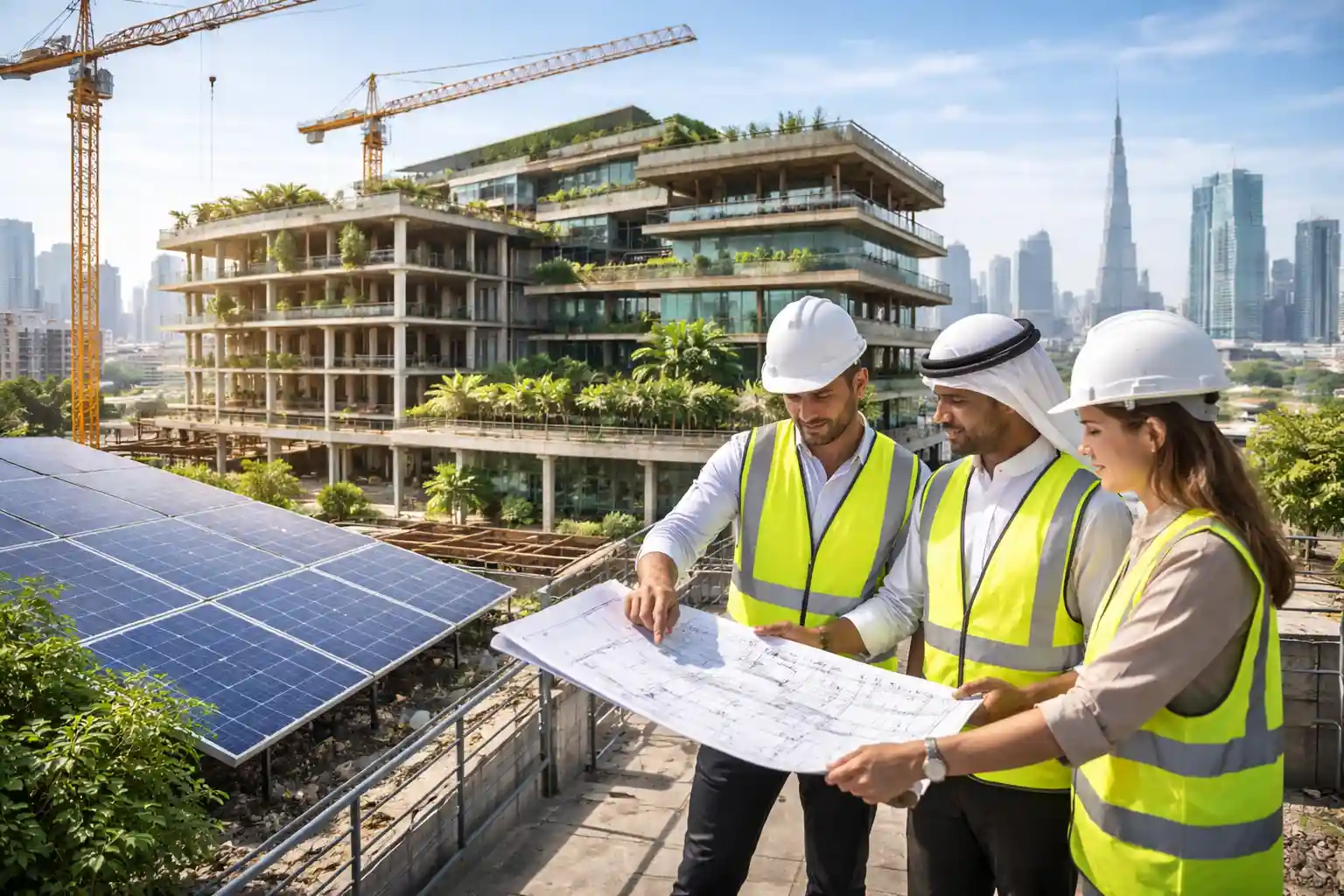
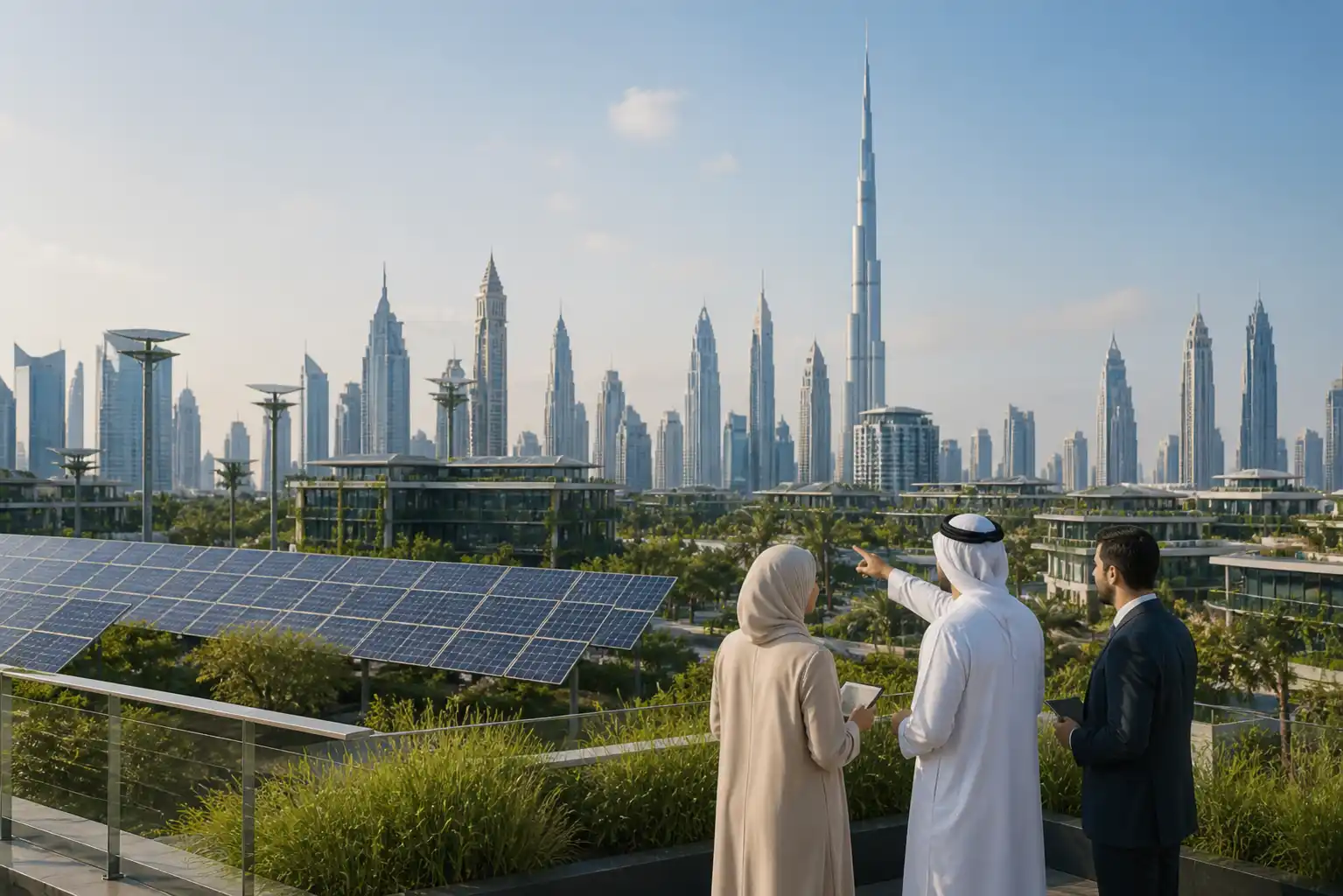
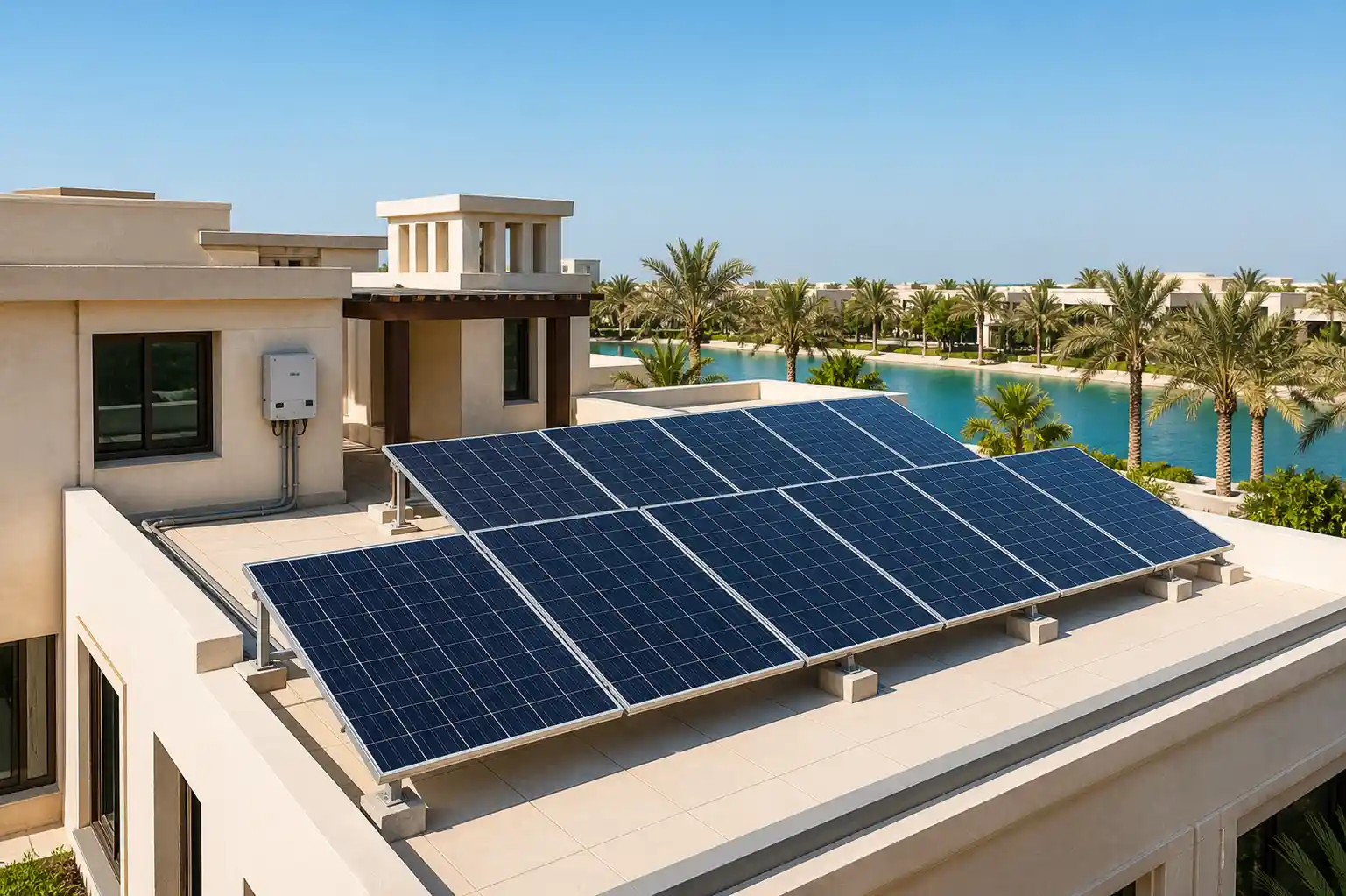
One of the clearest examples is Sustainable City Dubai, a residential development designed around energy efficiency, renewable energy, green spaces, sustainable mobility, resource conservation, and community living. The development demonstrates how sustainability can be incorporated into everyday residential life rather than treated as a separate environmental initiative.
However, green living in the UAE extends far beyond one community. Residents across Dubai, Abu Dhabi, Sharjah, and other emirates can adopt practical measures involving homes, transportation, shopping, food, water, electricity, waste, and outdoor spaces.
What Does Green Living Mean in the UAE?
Green living means making everyday decisions that reduce unnecessary resource consumption and environmental impact while maintaining a comfortable quality of life.
For UAE residents, this can involve:
- Using electricity more efficiently.
- Reducing unnecessary water consumption.
- Choosing energy-efficient appliances.
- Using renewable energy where practical.
- Reducing single-use products and unnecessary packaging.
- Separating recyclable materials.
- Choosing walking, cycling, public transport, or shared mobility where practical.
- Adding plants and green areas to homes.
- Buying durable products instead of frequently replacing them.
- Supporting businesses with responsible environmental practices.
These choices complement the UAE’s broader environmental and sustainability framework, which includes policies covering energy, water, waste, biodiversity, sustainable development, and climate action.
Why Sustainable City Dubai Is an Important Example
Sustainable City Dubai provides a useful example of how sustainability can be incorporated into residential planning. The community was developed around environmental, economic, and social sustainability, combining renewable energy, energy-efficient buildings, green spaces, sustainable transportation, and resource-conscious infrastructure.
Features associated with the development include rooftop solar panels, green areas, car-free zones, energy-efficient appliances, biodomes, organic farming, and spaces designed to encourage interaction between residents and nature.
This approach demonstrates an important principle: sustainable living is easier when the surrounding environment makes sustainable choices convenient.
For residents exploring similar ideas at home, our guide to home design ideas in the UAE provides a useful starting point for combining comfort with practical design choices.
1. Energy-Efficient Homes Are Becoming More Important
Air conditioning is an essential part of comfortable living in the UAE, particularly during the hotter months. As a result, household energy efficiency can have a meaningful impact on both resource consumption and utility costs.
Residents can improve household efficiency through practical measures such as:
- Using appropriately sized and efficient air-conditioning systems.
- Maintaining AC filters and equipment.
- Improving insulation and reducing unnecessary heat gain.
- Using LED lighting.
- Choosing energy-efficient appliances.
- Using smart controls where appropriate.
- Turning off equipment that is not needed.
- Managing cooling temperatures sensibly.
Residents interested in technology-enabled improvements can explore smart home upgrades in the UAE, particularly where connected systems can help monitor energy consumption.
2. Solar Energy Is Supporting Greener Living
Solar energy is another important part of the UAE’s sustainability landscape. The country’s strong solar resource makes photovoltaic systems particularly relevant to long-term clean-energy planning.
At the household level, residents may consider solar solutions depending on their property type, technical requirements, ownership arrangements, location, and applicable approvals.
Our guides to solar energy in the UAE, solar panels, and solar systems for homes provide additional context for residents researching renewable-energy options.
Solar power is especially relevant to the broader model demonstrated by sustainable developments, where renewable generation can be integrated into building design and community infrastructure.
3. Water Conservation Is Essential in the UAE
Water is another area where green living has practical importance. Residents can reduce unnecessary consumption without compromising normal household activities by paying attention to leaks, fixtures, irrigation, cleaning routines, and appliance use.
Simple measures include:
- Repairing leaking taps and pipes promptly.
- Using water-efficient fixtures.
- Avoiding unnecessary water use when cleaning outdoor areas.
- Using efficient irrigation methods.
- Choosing plants that are appropriate for local conditions.
- Running washing machines and dishwashers with efficient loads.
Understanding household consumption is also useful when managing utility expenses. See our guide to electricity and water costs in the UAE for additional household-planning context.
4. Sustainable Homes Can Be Comfortable and Stylish
Green living does not require residents to sacrifice comfort or aesthetics. Interior design choices can contribute to a more efficient home while maintaining a modern appearance.
For example, residents can consider durable furniture, efficient lighting, natural materials where appropriate, indoor plants, shading solutions, and layouts that make better use of natural light.
UAE residents interested in this approach can explore current UAE interior design trends while also considering sustainability during renovation and furnishing decisions.
For villas and larger homes, modern Arabic home decor ideas for UAE villas can also be adapted to combine local aesthetics with practical environmental considerations.
5. Green Living Includes Waste Reduction
Sustainability does not end when a product is thrown away. Residents can reduce their environmental footprint by preventing unnecessary waste, reusing suitable items, separating recyclable materials, and choosing products with less packaging.
Households can start with straightforward habits:
- Separate recyclable materials where collection systems support it.
- Reuse containers and suitable household items.
- Donate usable clothing and furniture instead of discarding them.
- Reduce unnecessary disposable products.
- Plan grocery purchases to reduce food waste.
- Dispose of electronic and specialist waste through appropriate channels.
Waste management is an important part of sustainable communities. Residents and businesses can learn more from our guide to waste management companies in the UAE.
For a broader understanding of how resource recovery contributes to sustainable urban development, see what makes a city sustainable.
6. Sustainable Transportation Is Changing Urban Living
Transportation is another important part of sustainable urban life. Communities designed around walkability, public transportation, cycling, and shared mobility can reduce dependence on individual car journeys for some daily activities.
Sustainable City Dubai provides an example of how residential planning can encourage lower-impact mobility through pedestrian-friendly spaces and car-free areas.
For residents elsewhere in the UAE, sustainable transportation choices may include:
- Using public transport when convenient.
- Walking for short journeys.
- Cycling where safe infrastructure is available.
- Using shared transportation.
- Combining errands into fewer journeys.
- Considering electric vehicles where they suit individual requirements.
The objective is not to eliminate private vehicles for every resident, but to create more opportunities for efficient and lower-emission mobility.
7. Green Spaces Improve Residential Communities
Green spaces are an important part of sustainable urban development. Trees, landscaped areas, gardens, shaded pathways, and community parks can make residential areas more pleasant while contributing to urban environmental quality.
Residents can introduce smaller versions of these principles into their own homes through balconies, terraces, gardens, and indoor planting.
Even limited greenery can contribute to a stronger connection between residents and their surrounding environment.
8. Urban Farming and Local Food Production
Food production is another element associated with sustainable communities. Sustainable City Dubai incorporates agricultural and food-production features, including biodomes and organic farming areas.
For individual residents, urban farming does not necessarily mean establishing a large garden. Herbs, vegetables, and suitable plants can sometimes be grown in balconies, terraces, gardens, or other appropriate spaces.
Residents can also reduce food waste by planning meals, storing food correctly, and purchasing quantities that match household consumption.
These practices connect with broader sustainability and green living in the UAE by bringing environmental thinking into everyday food decisions.
9. Sustainable Shopping Is Becoming Part of Everyday Life
Consumer choices can have a significant influence on resource use. Residents can consider product durability, repairability, packaging, energy efficiency, and actual long-term usefulness before purchasing.
Instead of focusing only on whether an item is inexpensive, sustainable shopping considers its entire practical lifecycle.
This can include:
- Buying durable products.
- Repairing items where practical.
- Choosing reusable alternatives.
- Reducing unnecessary packaging.
- Buying only what is needed.
- Donating or reselling usable items.
This approach can be particularly relevant to households furnishing or upgrading properties. Residents can combine sustainable purchasing principles with our home decor shopping guide for Dubai and Abu Dhabi.
10. Sustainable Renovation Choices Matter
Home renovations can generate construction debris, packaging, discarded fixtures, and unwanted furniture. Sustainable renovation therefore involves more than choosing environmentally preferable materials.
Residents can consider reusing suitable fixtures, donating usable furniture, planning material quantities carefully, choosing durable products, and arranging responsible disposal of renovation waste.
For larger projects, our guide to home renovation costs and ideas in the UAE can help homeowners think about the wider planning process.
Bathroom renovations also create specific material and fixture waste, making responsible disposal an important part of the project. See our guide to bathroom renovation costs in Dubai for related planning considerations.
11. Sustainable Construction Shapes Future Homes
Green living is also influenced by how buildings are designed and constructed. Efficient building envelopes, appropriate materials, energy-conscious systems, water efficiency, shading, landscaping, and smart technologies can all contribute to better resource performance.
Residents do not control every feature of a building, but buyers, tenants, developers, and homeowners can increasingly consider sustainability when selecting properties or planning new projects.
Our guide to sustainable construction trends in the UAE explores how these principles are influencing the built environment.
The relationship is particularly important as the UAE continues to develop new residential and commercial communities.
12. Sustainable Living Is Also About Community
A sustainable community is not simply a collection of energy-efficient buildings. Social interaction, shared spaces, accessibility, recreation, health, and community participation are also important.
Sustainable City Dubai demonstrates this broader approach by combining environmental features with residential and community facilities designed to support everyday life.
This reflects a wider concept of sustainable urban development: communities need to work for people as well as for environmental objectives.
13. How Residents Can Start Living More Sustainably
Residents do not need to transform their entire lifestyle overnight. A practical approach is to begin with changes that are easy to maintain.
- Review electricity use: Identify appliances and systems that consume the most energy.
- Reduce water waste: Check for leaks and inefficient fixtures.
- Separate waste: Create simple household recycling habits where suitable collection options exist.
- Reduce disposable products: Replace frequently used single-use items with reusable alternatives where practical.
- Choose durable products: Consider longevity before purchasing.
- Add greenery: Use suitable plants in balconies, gardens, terraces, or interiors.
- Improve home efficiency: Consider smart controls and efficient appliances during upgrades.
- Consider transportation: Use public transport, walking, cycling, or shared mobility when convenient.
- Reduce food waste: Plan purchases and store food appropriately.
- Think about sustainability during renovations: Reuse, donate, recycle, and dispose of construction materials responsibly.
14. Green Living Beyond Sustainable City Dubai
Sustainable City Dubai is a useful example, but sustainable living is not restricted to one master-planned community.
Residents throughout the UAE can apply similar principles in apartments, villas, workplaces, schools, retail environments, and neighbourhoods.
Other communities and projects also demonstrate different approaches to sustainable development. For example, residents interested in environmentally focused communities can explore our coverage of the Sustainable City Equestrian Club Dubai and its relationship with sustainable community living.
At the national level, these local examples connect with the UAE’s wider sustainability direction, including renewable energy, resource efficiency, sustainable cities, climate action, and responsible consumption.
15. The Role of Smart Technology in Green Living
Technology can make sustainable behaviour easier to monitor and manage. Smart thermostats, connected lighting, energy monitoring, smart irrigation, sensors, and automated controls can help residents understand and potentially reduce unnecessary consumption.
The most useful technology is not necessarily the most complicated. A simple system that provides residents with understandable information about electricity, water, temperature, or equipment usage can support better everyday decisions.
Smart technology can also connect sustainability with convenience, which is one reason it is increasingly relevant to modern UAE homes.
16. The Future of Green Living in the UAE
The future of green living in the UAE is likely to involve greater integration between homes, technology, energy systems, transportation, waste management, landscaping, and urban planning.
Future residential developments may increasingly incorporate energy-efficient buildings, renewable energy, sustainable mobility, smart infrastructure, water-conscious landscaping, recycling systems, and community facilities from the planning stage.
At the same time, existing residents can contribute through everyday decisions. Sustainability does not depend exclusively on large developments or government programmes; household behaviour and consumer choices also influence resource demand.
The UAE’s wider sustainability framework includes initiatives and strategies covering clean energy, sustainable cities, waste management, climate action, water security, food security, and resource efficiency. These national and emirate-level efforts create a broader context for the lifestyle changes taking place within individual communities.
Conclusion
Green living in the UAE is increasingly becoming part of everyday residential life. Sustainable City Dubai demonstrates how energy efficiency, renewable energy, green spaces, sustainable mobility, agriculture, and community planning can be combined within a residential environment.
But residents do not need to live in a purpose-built sustainable community to adopt greener habits. Energy efficiency, water conservation, responsible shopping, waste reduction, sustainable transportation, home greenery, smart technology, and thoughtful renovation choices can all contribute to a more sustainable lifestyle.
As the UAE continues developing its cities and environmental programmes, the most meaningful progress will come from connecting large-scale sustainability planning with practical choices made by residents every day.