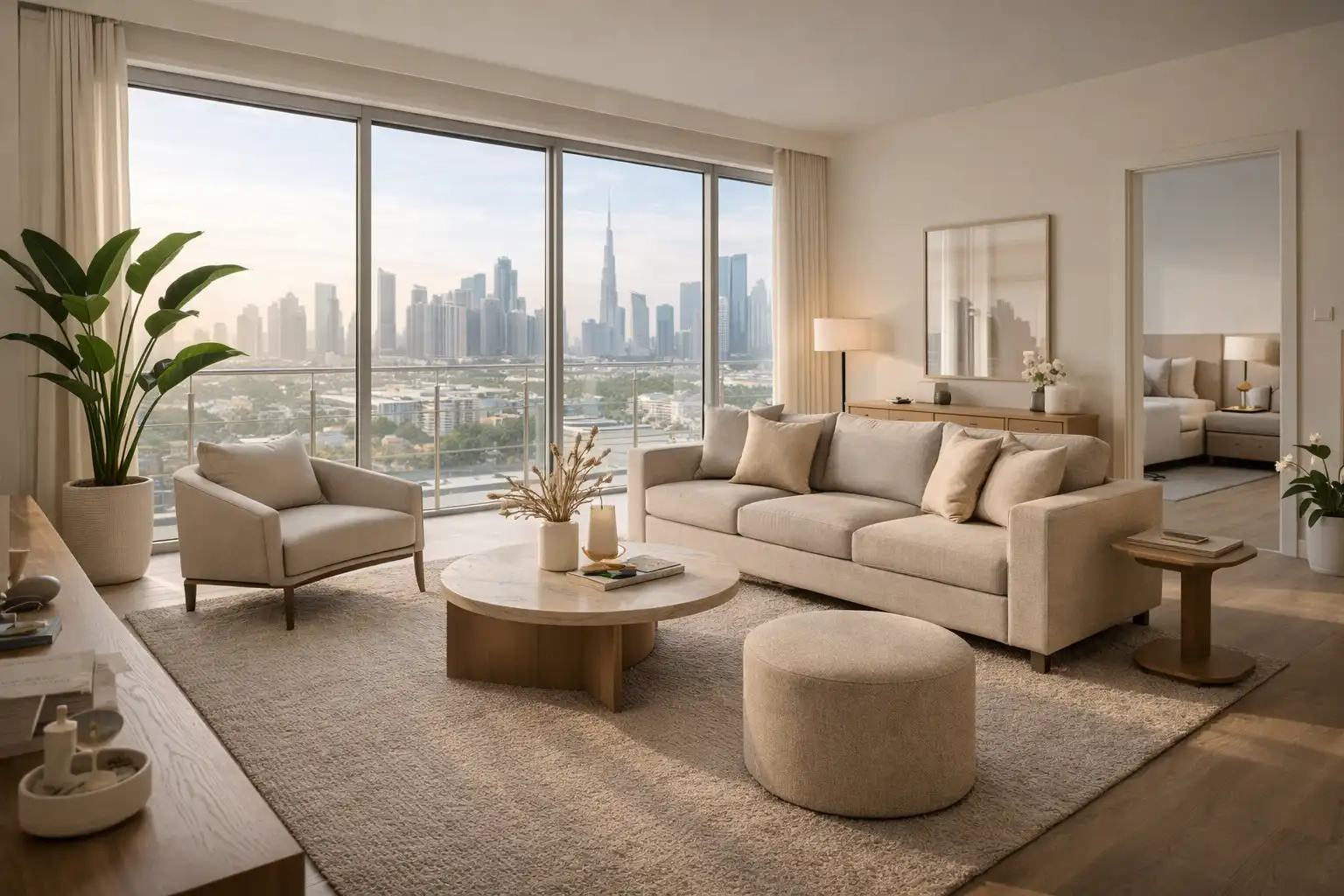
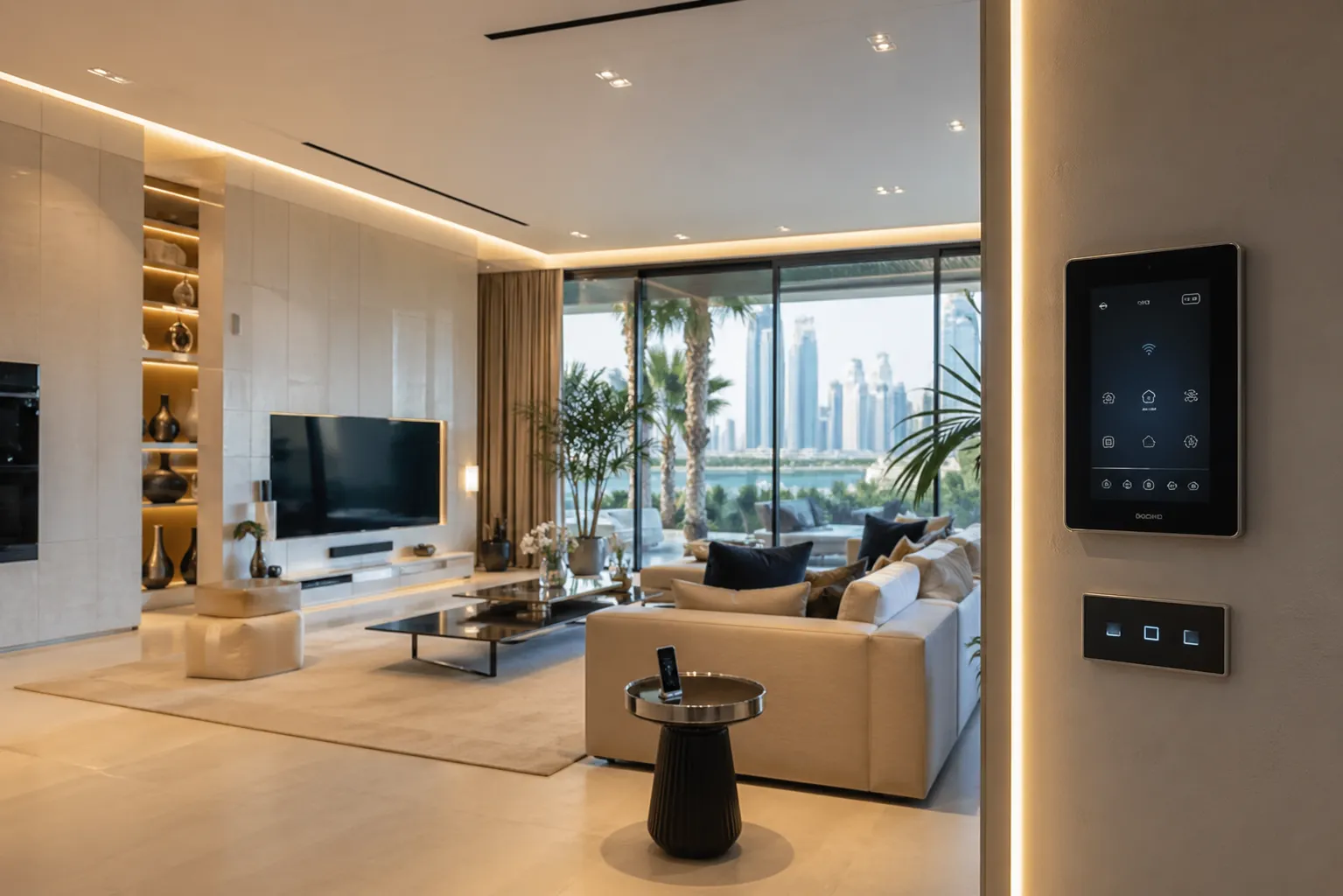
The right interior design company should do more than create attractive 3D renders. A strong partner should understand space planning, materials, lighting, joinery, project management, technical coordination, budgets, approvals and on-site execution.
This guide explains how to compare interior design firms in the UAE, what services to expect, which questions to ask before signing a contract and how to match a design company to your specific project.
Why Interior Design Companies Matter in the UAE
Interior design in the UAE combines aesthetics with practical considerations such as climate, lifestyle, property type, technology and increasingly sustainable materials.
A Dubai apartment renovation, for example, may require a very different approach from a large Abu Dhabi villa or a commercial office in a business district. The designer needs to understand the property’s limitations before proposing materials, layouts or construction work.
For homeowners planning a broader property transformation, it can also help to review current UAE interior design trends before meeting design firms.
What Services Do Interior Design Companies in UAE Offer?
Not every interior design company offers the same level of service. Understanding the difference can prevent confusion when comparing quotations.
Residential Interior Design
Residential designers work on apartments, villas, penthouses and private homes. Services may include space planning, furniture selection, colour schemes, lighting, flooring, curtains, cabinetry, kitchens, bathrooms and decorative styling.
Some companies provide design-only services, while others combine design with renovation and turnkey execution.
Commercial Interior Design
Commercial interior design covers offices, retail stores, restaurants, clinics, salons and other business premises. In these projects, designers must balance aesthetics with workflow, customer experience, branding, employee requirements and technical considerations.
For business owners, the interior can also become part of the customer experience. This makes professional planning particularly important for retail and hospitality environments.
Businesses considering a physical retail concept can also explore our guide to retail stores in the UAE.
Interior Fit-Out
Fit-out services take a project beyond design drawings and into physical execution. Depending on the company, this can include partitions, ceilings, flooring, electrical work, MEP coordination, painting, joinery, furniture and final finishing.
Our guide to interior fit-out services in the UAE provides additional context on this part of the process.
Turnkey Interior Design
A turnkey company manages multiple stages under one coordinated process. This can be useful for clients who prefer one primary point of contact rather than managing separate designers, contractors, suppliers and specialist trades.
Types of Interior Design Companies in the UAE
The term “interior design company” covers several different business models. Before comparing firms, determine which type fits your project.
| Company Type | Best Suited For | Typical Scope |
|---|---|---|
| Boutique Design Studio | Custom residential and design-led projects | Concept, layouts, materials, furniture and styling |
| Design & Fit-Out Company | Renovations and complete interiors | Design plus construction and installation |
| Architecture & Interior Practice | Large villas and complex developments | Architecture, interiors and technical coordination |
| Commercial Interior Specialist | Offices, retail and hospitality | Branding, space planning, technical design and fit-out |
| Luxury Interior Studio | High-end villas and penthouses | Bespoke finishes, furniture, lighting and detailing |
Examples of Established Interior Design Firms in the UAE
The UAE market includes both large established firms and smaller specialist studios. Current 2026 industry and property guides mention firms such as Depa Group, KCA International, LW Design Group, Bishop Design, Swiss Bureau, ALEC Fitout, Roar, 4SPACE Design, Summertown Interiors and XBD Collective, among many others. Their project sectors and delivery models differ, so they should not be treated as interchangeable options.
For residential projects, the relevant shortlist may look very different from one for a hotel, restaurant or corporate headquarters. Current Dubai guides, for example, identify firms specialising in luxury residential work, hospitality, F&B, workplace design and sustainable commercial fit-outs.
The practical lesson is simple: choose by project fit rather than by a generic online “top 10” list.
How to Choose the Right Interior Design Company in UAE
1. Start With Your Project Brief
Before contacting companies, write down what you actually need.
- Property type
- Location and community
- Approximate size
- Number of rooms
- Design style
- Renovation requirements
- Desired completion date
- Approximate budget
- Furniture requirements
- Smart-home requirements
A clear brief allows designers to provide more relevant proposals and prevents you from comparing companies that offer completely different services.
2. Check the Portfolio
A portfolio is one of the most useful ways to determine whether a company has experience with your type of project.
Do not look only at the most attractive photographs. Ask whether the company has completed projects similar in size, property type, style and complexity.
If you are renovating a small apartment, for example, a portfolio consisting entirely of enormous villas may not demonstrate the same space-planning expertise you require.
3. Look for Relevant Specialisation
Different firms have different strengths. One may focus on luxury residential interiors while another concentrates on offices, restaurants or retail.
Ask for examples of projects that resemble yours. For residential work, review living rooms, bedrooms, kitchens and bathrooms. For commercial work, look at workplace layouts, customer circulation, branding and technical execution.
4. Ask Who Will Actually Manage the Project
The person presenting the initial concept may not be the person managing construction. Ask who your day-to-day contact will be and who is responsible for site coordination.
Good project communication becomes especially important when several trades are working simultaneously.
5. Compare the Scope, Not Just the Price
A low quotation is not necessarily comparable with a higher one. One company may include detailed drawings, project management, MEP coordination, joinery, site supervision and installation while another provides design concepts only.
Ask every company to explain exactly what is included and excluded.
6. Request a Detailed Proposal
A professional proposal should make the project scope understandable. Depending on the project, it may include:
- Concept design
- Space planning
- 3D visualisation
- Material specifications
- Furniture selection
- Lighting design
- Joinery drawings
- MEP coordination
- Authority or building-management coordination
- Site supervision
- Fit-out execution
- Snagging
- Handover
Interior Design Approvals and Technical Requirements in Dubai
Clients should not assume that every interior change is simply a decorative exercise. Dubai’s official services include a self-permit for decorative works as well as permits related to modifications and additions to buildings. Certain locations can also require specific interior-design approvals.
Dubai’s official building-permit system provides a unified route for building-permit services and involves initial submission, payment and final approval before a permit is issued.
This is why your designer or fit-out contractor should clearly explain which approvals, NOCs or building-management permissions apply to your particular project.
For more complex projects, ask whether the company has appropriate technical professionals and experience coordinating approvals. Dubai also regulates engineering consultancy activities, including architectural and other engineering fields, through specific professional requirements.
Interior Design in Abu Dhabi
Abu Dhabi has its own approval and regulatory environment, so a company working there should understand the requirements applicable to the project location.
For larger or technically complex developments, the Abu Dhabi regulatory framework distinguishes the role of the engineering company responsible for design, supervision and other technical work.
When interviewing an interior design company for an Abu Dhabi project, ask who handles technical drawings, consultant coordination, approvals and site supervision rather than assuming these services are automatically included.
Interior Design Trends in the UAE
Minimalist Luxury
Minimalist luxury combines clean architecture with premium materials rather than excessive decoration. Neutral palettes, natural textures, integrated storage and carefully selected statement pieces can create a sophisticated appearance.
Modern Arabic Influences
Contemporary UAE homes can combine modern layouts with regional materials, patterns, textures and architectural references. Our guide to modern Arabic home decor ideas for UAE villas explores this direction in greater detail.
Smart Home Integration
Interior design is increasingly connected with technology. Lighting, climate control, entertainment, security and automated shading can be incorporated into the design rather than added as an afterthought.
See our guides to smart home upgrades in the UAE and smart home interior design ideas for UAE residents for more ideas.
Sustainable Materials
Durability and resource efficiency are becoming increasingly relevant to interior projects. Designers can consider long-lasting materials, efficient lighting, responsible sourcing and systems that reduce unnecessary energy consumption.
For broader context, see green living in the UAE.
Interior Design for Different Areas of a UAE Home
Living Room
The living room often determines the visual language of the rest of the home. Furniture scale, circulation, lighting and wall treatments should work together rather than being selected independently.
For inspiration, explore these living-room wall painting ideas and luxury living room decor ideas for UAE homes.
Bedroom
Bedrooms generally require a softer approach focused on comfort, storage, lighting and privacy. A well-planned master bedroom can combine concealed storage with a strong feature wall and layered lighting.
Our guide to bedroom interior design trends in Dubai provides additional inspiration.
Kitchen
Kitchens need to balance appearance with workflow and storage. Cabinet layout, appliance placement, countertop material and lighting should be decided together.
See kitchen design trends for modern UAE families when developing your kitchen brief.
Bathroom
Bathrooms require particular attention to waterproofing, ventilation, plumbing, lighting and material selection.
If your project involves a full renovation, review our guide to bathroom renovation cost in Dubai before setting your budget.
How Much Does Interior Design Cost in the UAE?
There is no single UAE-wide interior design price because fees depend on project size, design complexity, location, service scope and whether construction is included.
A design-only package may be priced differently from a complete design-and-build project. Luxury residential projects can also involve bespoke furniture, imported finishes, custom joinery and specialist lighting, all of which can significantly increase the overall budget.
Instead of asking only “How much do you charge?”, ask the company to separate:
- Design fees
- Consultation fees
- Technical drawings
- 3D visualisations
- Project management
- Material procurement
- Furniture
- Joinery
- MEP and electrical work
- Construction and fit-out
- Authority-related services
- Post-handover support
For a wider property renovation budget, compare the scope with our guide to home renovation costs and ideas in the UAE.
Questions to Ask Interior Design Companies Before Hiring
Use these questions during your initial meetings:
- Have you completed projects similar to mine?
- Who will manage my project?
- Do you provide design only or design and fit-out?
- Are technical drawings included?
- Who coordinates MEP work?
- Who handles authority or building-management requirements?
- Are furniture and joinery included?
- How are design changes charged?
- What is the estimated project timeline?
- What happens if materials are delayed?
- How are defects and snagging handled?
- What warranty or post-handover support is provided?
Red Flags to Watch For
Be cautious if a company:
- Cannot show relevant completed projects.
- Provides only vague lump-sum pricing.
- Refuses to explain exclusions.
- Promises an unrealistically short completion period.
- Cannot explain who will supervise the site.
- Changes the scope significantly after the initial proposal.
- Cannot clearly explain approval responsibilities.
- Pushes expensive upgrades without explaining their practical benefit.
A polished portfolio is useful, but it should be supported by a clear process and realistic documentation.
How to Compare Three Interior Design Companies
Rather than contacting ten companies and choosing the cheapest quotation, create a shortlist of three to five firms that genuinely match your project.
| Comparison Factor | What to Check |
|---|---|
| Portfolio | Similar property type, size and style |
| Experience | Relevant UAE projects and local knowledge |
| Scope | Design-only, fit-out or turnkey |
| Technical Capability | Drawings, MEP and coordination |
| Approvals | Building management and authority experience |
| Budget | Transparent, itemised proposal |
| Timeline | Realistic programme and milestones |
| Communication | Named project manager and reporting process |
| Aftercare | Snagging, defects and handover support |
Interior Design for Apartments vs Villas
Apartments
Apartment projects often require careful attention to space efficiency, building rules, access, working hours and noise restrictions. Furniture scale and storage become especially important in smaller layouts.
For smaller properties, these small apartment decor ideas for UAE urban living can help shape your design brief.
Villas
Villas provide more opportunities for customised layouts, larger kitchens, dressing rooms, landscaped areas, entertainment spaces and smart-home systems. The greater scale can also make project management and coordination more complex.
Homeowners can explore additional home design ideas for UAE properties before finalising a brief.
How to Get Better Results From Your Interior Designer
Clients can improve the design process by communicating clearly from the beginning.
Share inspiration images, explain how you use each room, identify must-have features and distinguish between essential requirements and preferences. If you have a fixed budget, communicate it early so the designer can allocate money strategically.
It is also better to approve materials and drawings in stages rather than making numerous changes after construction has started.
Final Thoughts
The UAE has a broad and competitive interior design market, ranging from boutique residential studios to major design-and-fit-out companies serving commercial and hospitality projects.
The right choice depends on your project rather than on a generic ranking. A luxury villa, compact Dubai apartment, restaurant, retail store and corporate office all require different skills.
Start by defining your brief, shortlist companies with relevant portfolios, compare detailed scopes, confirm technical and approval responsibilities, and understand exactly what is included in the quotation.
Most importantly, choose a company that can combine creative design with practical execution. When the designer understands your lifestyle, budget, property and long-term goals, the finished space is more likely to be both visually impressive and genuinely functional.